

Bengal orders holding centres for Bangladeshis, Rohingyas awaiting deportation
West Bengal's new order on holding centres has added fresh momentum to its anti-infiltration campaign, with district administrations now preparing infrastructure for suspected illegal foreigners awaiting deportation and citizenship verification.
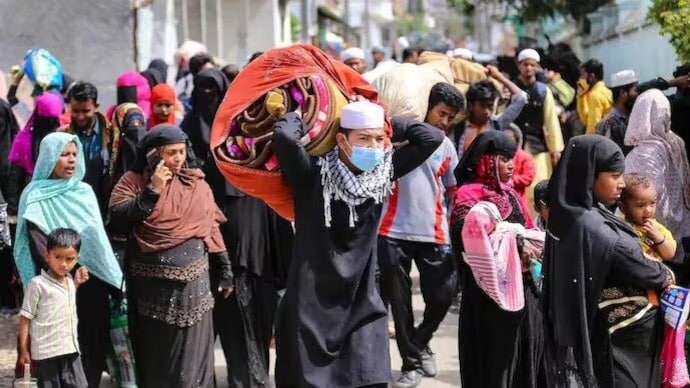


West Bengal has moved to formalise its crackdown on illegal immigration by directing all district administrations to set up holding centres for Bangladeshi and Rohingya nationals awaiting deportation, giving administrative shape to the government’s “detect, delete and deport” policy.
The order, issued by the Home and Hill Affairs Department’s Foreigners’ Branch on May 23, instructed district magistrates to create facilities for “apprehended foreigners” and “released foreign prisoners” until deportation and repatriation procedures are completed.
The move comes days after Chief Minister Suvendu Adhikari publicly unveiled a tougher anti-infiltration framework and declared that the government had adopted a “detect, delete and deport” policy, a phrase closely associated with the BJP’s long-running political campaign around border infiltration in Bengal.
DISTRICTS ASKED TO CREATE INFRASTRUCTURE
According to the communication, district administrations have been asked to establish the infrastructure required to temporarily house those suspected of staying illegally in India as well as foreign nationals whose deportation process is underway.
“In this connection, it is requested to take initiative/appropriate action for setting up of Holding Centres in the district for apprehended foreigners as well as for the released foreign prisoners awaiting deportation/repatriation,” the order said.
Copies of the directive have also been sent to the director general of police, police commissionerates, superintendents of police and the Foreigners Regional Registration Office in Kolkata.
Officials said the centres would function as transit facilities while nationality verification and legal formalities are completed.
Under Union Home Ministry guidelines issued in May last year, suspected illegal entrants can be kept in such facilities for up to 30 days while authorities verify documents and nationality status. District magistrates or officers of equivalent rank would take the final decision on citizenship determination.
The framework also provides for biometric data collection, uploading information onto a central portal and transferring confirmed illegal immigrants to border authorities for repatriation.
A senior official said the purpose of the exercise was to ensure district administrations remain “prepared and compliant” with existing procedures.
“The districts have been asked to create the necessary infrastructure so that such cases can be dealt with in a regulated manner till legal formalities are completed,” the official said.
ANTI-INFILTRATION PUSH
The order has come amid a sharper political and administrative focus on infiltration and border security in the state.
Only days earlier, Adhikari announced that infiltrators detained by state police would be handed over directly to the BSF for deportation instead of being routed through lengthy legal procedures.
At a meeting with senior BSF officers regarding fencing work along stretches of the Bangladesh border, the chief minister said the state’s anti-infiltration agenda had entered the implementation stage.
“Those who are outside the purview of the CAA are illegal entrants and will be arrested by the state police and handed over to the BSF,” Adhikari had said.
According to the proposed mechanism, the BSF would coordinate with Border Guards Bangladesh for deportation.
LINK TO IMMIGRATION LAW
Officials indicated the evolving framework appears linked to the Immigration and Foreigners Act, 2025, enacted by Parliament last year.
The law replaced multiple earlier legislations governing immigration and foreign nationals, introducing a more technology-driven system for surveillance, detention and deportation.
It also empowered police officers of head constable rank and above to arrest, without warrant, persons suspected of violating immigration rules.
However, the Union government later issued an exemption order protecting certain minority communities from Afghanistan, Bangladesh and Pakistan from prosecution if they entered India before December 31, 2024, citing religious persecution.
Adhikari has repeatedly maintained that communities covered under the Citizenship Amendment Act would remain outside the scope of enforcement action.
For years, infiltration has remained one of the BJP’s most prominent political themes in Bengal, particularly in border districts and refugee-dominated constituencies. With the latest directive, that campaign now appears to be moving from political rhetoric to administrative execution.