
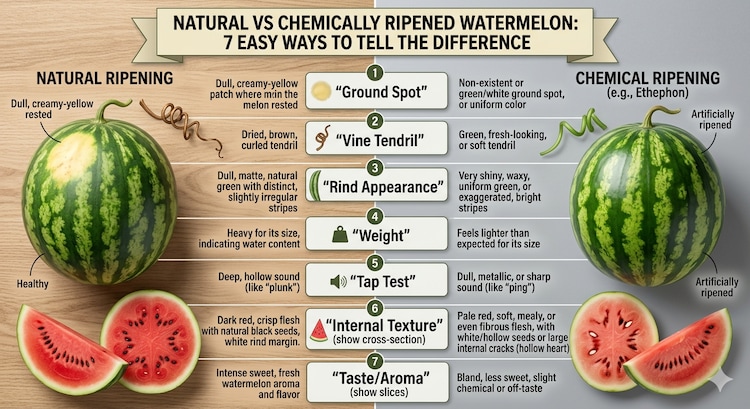
Natural vs chemically ripened watermelon: 7 easy ways to tell the difference
Worried about chemically ripened watermelon this summer? From strange colour to dull taste, here are 7 easy ways to spot the difference between natural watermelon and chemically treated fruit before you buy.
From rind texture to seed colour, here are 7 simple ways to spot chemically ripened watermelon and choose naturally ripened, safe and fresh summer fruit. (AI generated image)

New Delhi,UPDATED: May 19, 2026 11:07 IST
A cold slice of watermelon is a summer favourite, especially during heatwaves. But growing concern around chemically ripened watermelon has made many buyers more careful. Social media is full of videos claiming to expose “fake” or chemically treated fruits, though not every viral trick is scientifically correct.
Experts say the safest approach is to check the fruit carefully instead of depending on internet myths.
From the rind and seeds to the smell and texture, there are a few simple ways to understand whether a watermelon is naturally ripened or possibly chemically treated. However, it is important to be careful while picking one.
1. CHECK THE OUTER SKIN
Natural watermelon usually has uneven stripes and a slightly dull surface. If the fruit looks extremely shiny, smooth and almost too perfect, it may have been polished or treated to improve its appearance. A natural watermelon often looks less “camera ready."
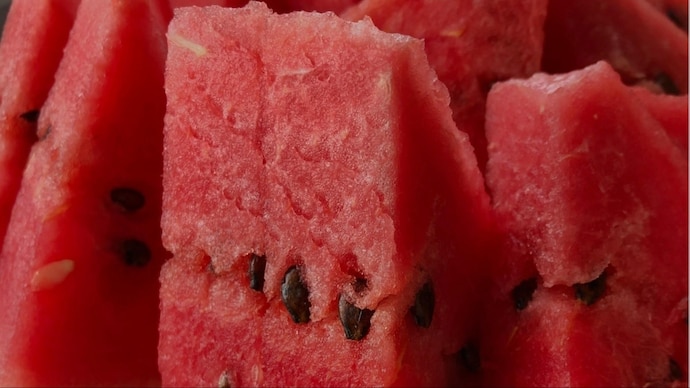
2. LOOK AT THE FLESH COLOUR
A naturally ripened watermelon is usually pinkish-red to deep red, depending on the variety. If the inside looks unnaturally bright, almost neon red, be cautious. Some reports say chemically treated fruit may appear overly coloured and may not taste naturally sweet. At the same time, experts also warn that colour alone is not proof because some varieties are naturally dark red.
3. PAY ATTENTION TO THE SMELL
Fresh watermelon has a light, sweet aroma. If there is no smell at all, or the fruit gives off a strange chemical-like odour, avoid buying it. Smell is often one of the easiest signs people notice first.
4. CHECK THE SEEDS
Dark brown or black seeds usually suggest the fruit ripened naturally. Pale, thin or underdeveloped seeds may point towards forced ripening. Seedless varieties are different, so this trick mainly works for regular watermelon.
5. NOTICE THE TEXTURE
Natural watermelon feels juicy and crisp. If the flesh is mushy, patchy or too watery in certain areas, it may be overripe or poorly stored. Uneven texture can also affect taste.
6. DON’T TRUST EVERY VIRAL TEST
Many social media videos claim that rubbing cotton or tissue on watermelon can reveal artificial colour. However, experts say this is not a reliable test. Watermelon naturally contains lycopene, the pigment that gives it its red colour, and some juice transfer is normal.
7. BUY SEASONAL AND CUT FRESH
Buying watermelon during peak summer season improves your chances of getting naturally ripened fruit. If possible, ask the seller to cut a small piece. A fresh, naturally ripened watermelon usually tastes balanced, sweet and refreshing.
Chemically treated fruits remain a concern in many markets, but panic buying or viral myths are not the answer. A careful visual check, combined with smell, taste and texture, can help buyers make smarter choices this summer.
- Ends