
Before ACs existed, these Indian cooling hacks kept homes comfortable
Natural cooling methods, traditional Indian homes and sustainable architecture are gaining renewed interest. These centuries-old techniques helped keep homes comfortable long before air conditioners became common.
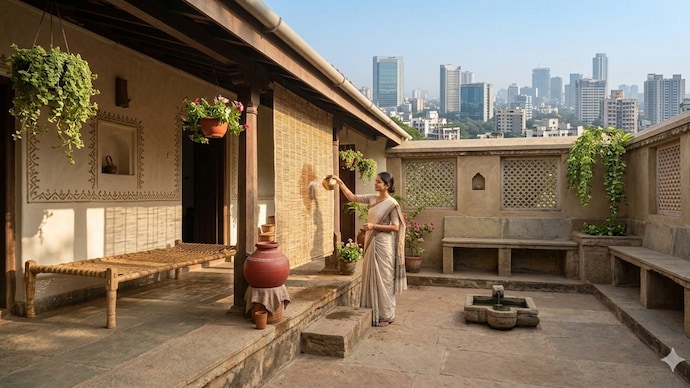

Air conditioners may be a modern necessity for many households, but for centuries Indian homes stayed comfortable without them. Long before electricity-powered cooling became common, people relied on smart architectural designs, natural materials and simple household practices to beat the heat.
Many of these techniques were inexpensive, environmentally friendly and perfectly suited to India's climate.
Today, as temperatures rise and energy bills climb, some of these traditional cooling solutions are finding their way back into modern homes.
THE CLAY POT THAT WORKED LIKE A NATURAL FRIDGE
One of India's oldest cooling traditions is storing drinking water in a clay pot, commonly known as a matka.
The technique dates back thousands of years and relies on evaporation. Water slowly seeps through the porous clay surface and evaporates, drawing heat away from the water inside.
How matkas cool water:
KHUS SCREENS CREATED A NATURAL AIR COOLER
Before electric coolers became common, many homes used khus (vetiver) screens near windows and doorways.
The screens were regularly sprinkled with water. As hot air passed through the damp fibres, evaporation cooled the air before it entered the house. An added bonus was the pleasant earthy fragrance released by the vetiver roots.
WET CURTAINS AND JUTE MATS HELPED LOWER TEMPERATURES
Another simple cooling trick involved hanging jute or khus mats and keeping them damp during the hottest part of the day.
As air moved through the wet material, evaporation reduced the temperature of the incoming breeze. The method worked especially well in dry climates and required very little maintenance.
COURTYARDS WERE BUILT-IN COOLING SYSTEMS
Traditional Indian homes often featured a central courtyard. While visually appealing, these open spaces also played an important role in temperature control.
Hot air naturally rose and escaped through the open area, while cooler air moved through surrounding rooms. In many homes, plants and water features further enhanced the cooling effect.
WHY COURTYARD HOMES STAYED COOLER
THE COOLING POWER OF LIME-WASHED WALLS
Before synthetic paints became popular, many homeowners applied lime coatings to walls and roofs during summer.
The light-coloured surface reflected sunlight instead of absorbing it, helping keep indoor spaces cooler. Even today, lime coating remains a practical option in many parts of India.
BAMBOO FURNITURE AND VERANDAS MADE A DIFFERENCE
Natural materials such as bamboo, cane and wood absorb less heat than many modern synthetic materials. Traditional charpais and woven furniture also allowed air to circulate freely.
Verandas added another layer of protection by shading homes from direct sunlight and creating comfortable outdoor spaces where people could relax during hot afternoons.
THE THINNAI: TAMIL NADU'S SMART COOLING DESIGN
A traditional feature found in many Tamil Nadu homes was the thinnai, a semi-open porch located at the front of the house.
What made the thinnai effective?
Beyond cooling, the thinnai also served as a social space where neighbours gathered and visitors could rest away from the sun.
WHY THESE METHODS STILL MATTER
As energy costs rise and cities become hotter, many homeowners are revisiting these traditional ideas.
Traditional cooling vs Modern challenges
ALSO READ: How to prevent AC fires during peak summer heat in India
Traditional Indian homes were designed with climate in mind. From clay pots and khus screens to courtyards and verandas, these methods helped families stay comfortable without relying on electricity.
As sustainability becomes increasingly important, these centuries-old cooling techniques offer useful lessons for modern architecture and everyday living.