
Space shuttle, India style
Not a flight of fancy, reusable launchers are a necessity for ISRO to stay in business.
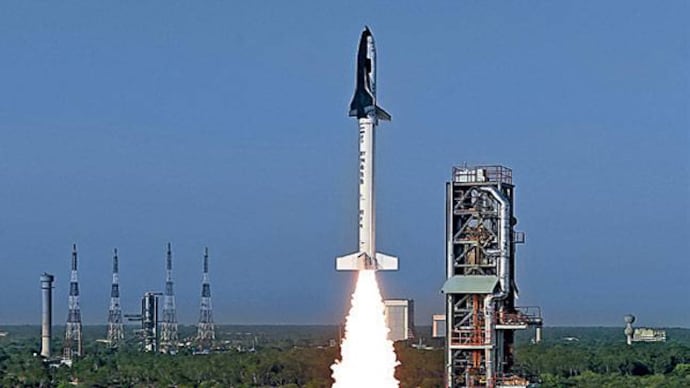


In many ways, the successful flight of India's first reusable space launch vehicle is a tribute to the vision of A.P.J. Abdul Kalam, the late former president of India and top rocket scientist. Way back in 1973, when Kalam took over as the project director of India's first satellite launch vehicle, SLV-3, he dreamt of doing what the Indian Space Research Organisation (ISRO) eventually accomplished on May 23, 2016. While developing SLV-3, Kalam would watch the restless sea at Thumba in Kerala, the headquarters of ISRO's rocketry. Kalam told me it was then that he visualised building a rocket launcher that could be reused after it ejected a satellite into orbit. He explained that instead of letting the launcher tumble uselessly into the ocean as junk, if it could be guided back and reused, the cost of launching a satellite could be cut to a tenth. He even worked out the dimensions and trajectory of such a launcher and circulated it to ISRO scientists.
