
Get 37% off on an annual Print +Digital subscription of India Today Magazine

SUBSCRIBE

Mumbai 26/11: One year after...

On 26/11, India, arguably the most wounded victim state of Islamist terror, surrendered once again. One year later, where are we? And whatever happened to the so-called spirit of Mumbai? The city remains divided and disillusioned; and in the higher echelons of governance, it is business as usual.
Advertisement
Mumbai terror attacks
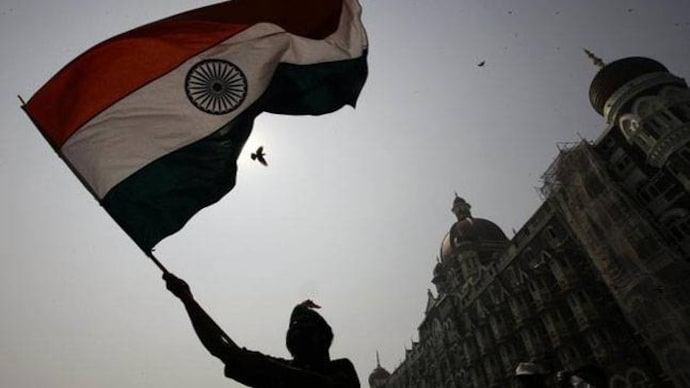
A man waves the tricolour outside the Taj Mahal hotel, on the first anniversary of the attacks in Mumbai, on November 26, 2009. (AP File photo)

It's the metropolis that doesn't sleep even as the rest of India dozes off. In our urban mythology, Mumbai is the permanent enchantment, and the enchanted Mumbaikar will tell you that it's the city where dreaming is living. On November 26 last year, it became not only a flaming reminder of the nihilistic fury of radical Islam. As 10 young jihadis with hate in their eyes and guns in their hands took over the city and declared war on India, it also brought out the pathology of a passive nation. For almost 60 hours, a few mad men, their movement choreographed by masters in Pakistan, would hold a country of one billion people, a country that aspires to be a global power player, as a shivering, helpless hostage. The image of the Taj Mahal Hotel in flames-an image as iconic as the burning towers of 9/11-won't go away from national memory. The shame too lingers.

advertisement
Taj Hotel
Renovation work at the Taj Mahal Hotel, Mumbai.
I still remember that tableau of a state in denial. It was absolute chaos as I reached outside the attacked Trident Hotel with my colleagues from our Mumbai bureau in a literally hijacked taxi as my hotel refused to provide one. Hasan Gafoor, the then police commissioner of the city, stood there leaning back on his white Ambassador, staring at the 34-storey hotel, as if he was waiting for some divine intervention. He looked as clueless as the 150 reporters and over 200 policemen waiting for instructions from their boss. Till five in the morning, he was there as a mute witness. He had nothing to offer except that blankness on his face. Amidst all this, there was that other spectacle of the chief minister Vilasrao Deshmukh's cavalcade zooming past the crowds, and it would turn out to be a journey to Destination Disgrace. For the next three days that shook India, one of history's longest terrorist attacks would be telecast live to the satisfaction of the attackers and their sponsors. India, arguably the most wounded victim state of Islamist terror, surrendered once again. Oh yes, some proverbial heads did roll: the Union home minister, the state home minister and the chief minister. Affordable casualty in retrospect.