
Indian diplomats in the past failed to make a case for non-alignment in the US
International diplomacy is a game of signals, of gestures, of words not spoken, issues omitted from joint communiques, of subtle posturings. And experienced diplomatic analysts in all nations spend a lifetime learning to recognise and decode these subtleties.

ISSUE DATE: Jan 15, 1981 | UPDATED: Sep 18, 2014 15:06 IST


American signal readers have already begun sending their feedback to the State Department transition team which is responsible for easing out Carterites from policy-making positions and replacing them with Reaganites. By January 20 the transition will be complete and the entire diplomatic corps in Washington will be dealing with new faces and unknown quantities.
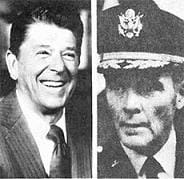
Reagan's choice for Secretary of State, Alexander Haig, while certainly a familiar figure in North Atlantic Treaty Organisation (NATO) circles, is more or less an enigma to the Third World. He has been largely silent on issues which concern these countries. While some analysts believe that he reacts to the Third World in terms, of preconceived notions and stereotypes-either pro-communist or anti-communists, and therefore to be rewarded or punished by America accordingly-others believe that Haig is an astute politician who will heed unconventional advice.
"Positive Signals":Even though he is portrayed as a military man, the key to Haig's rapid rise in the Nixon Administration and his appointment later as NATO commander was his grasp of politics. "If Haig understands NATO politics there is no reason why he cannot grasp South Asian politics," one source remarked. "And there's always the career diplomatic force to advise him." The advice is already flowing to Reagan's incoming foreign policy team. State Department insiders say that Indians' signals to the Reagan team are being assiduously monitored and transmitted to high places. "And so far the signals have been positive." a US policy analyst said.
If preconceived notions-looking at all nations through cold war glasses-are to be put to rest. India, these US analysts believe, is as good a place to start as any. India houses more than one-fifth of all mankind. It is the world's tenth largest industrial power. It is a poor country but it still remains a democracy with countless free enterprise addicts. With so much in common, America and India ought to be natural allies. The Carter Administration, for the first time, recognised India as the predominant power in the region, but the commonly-held American view of India is that the nation is virulently anti-American and dwells for the most part in the Soviet Union's hip pocket.
Indian diplomats in the past have failed to make a case for non-alignment in the United States. They have failed to promote it and sell it in a convincing fashion. While a handful of American intellectuals and members of Congress have understood the concept, most Americans do not even know its meaning. They equate non-alignment with Krishna Menon.