Anti-Saddam consensus withers away as US fails to rally support for its military response
The anti-Saddam consensus withers away as the US fails to rally support for its military response to the Iraqi dictator's intervention in Kurdish factional fighting.

ISSUE DATE: Sep 30, 1996 | UPDATED: Jun 7, 2013 17:02 IST


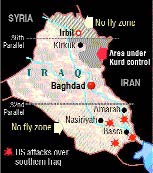
In the end, only Britain unequivocally stood by the US as 44 Tomahawk cruise missiles were directed at Iraq's southern air defences. Washington's virtual isolation was perhaps best exemplified by the fact that the B-52s used in the attack had to be flown half way across the world, from Guam.
How did it come to this? Whatever became of the international coalition so painstakingly put together by the US nearly six years ago, which provided the cover of a near-global consensus to Desert Storm, the operation to drive Saddam's forces out of Kuwait?
To put it bluntly, it has withered away. And Washington only has itself to blame. Saddam remains a brutal dictator, but he has effectively demonstrated his staying power over the past five years, even as half-hearted US support for his domestic rivals has failed to provoke either a popular rebellion or a military coup.
Then, there is a growing perception in the Middle East - particularly in the Persian Gulf area - that the main danger to regional stability is posed by Iran rather than Iraq. Notwithstanding the general absence of sympathy for Saddam, the fact that his forces were thwarting the surreptitious infiltration by Iranian troops was viewed not unsympathetically.
It is notable that most Arab reactions to Operation Desert Strike have invoked Iraq's sovereignty as well as its integrity. Maintaining the country's geographic unity is a goal that is widely shared even beyond the Arab world and this partly explains the overwhelming opposition to Turkey's plan to establish a "temporary security zone" in northern Iraq. This, Arab nations feared, would lead to a carve-up of the Kurd homeland, with Iran conceivably emerging as the chief beneficiary.
Although the Kurds - a non-Arab people with distinctive linguistic and cultural characteristics and an undimmed national consciousness - have lived in a territory straddling present-day Iraq, Turkey and Iran for over 4,000 years, their relations with the governments of these countries have invariably been hostile. There is little or no support for an independent Kurdistan anywhere in the Middle East, if only because it is feared that such an entity would further complicate regional equations.