
The good, the sub-par, the OG: Ranbir's Ramayana teaser reminds of its predecessors
Ranbir Kapoor's Ramayana teaser has sparked widespread nostalgia and debate, reminding audiences of the epic's rich cinematic history from Ramanand Sagar's devotional classic to Japan's acclaimed animation and the controversial Adipurush.
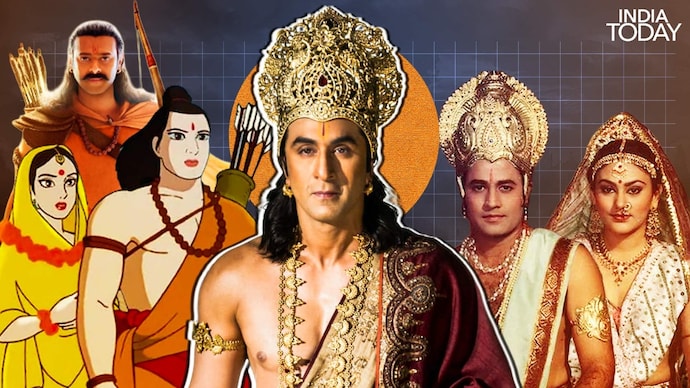
The many lives of Ramayana on screen. Photo: IndiaToday/Ankit Kumar Dwivedi

New Delhi,UPDATED: Apr 3, 2026 08:30 IST
Nitesh Tiwari's Ramayana teaser has landed, offering audiences their first glimpse of Ranbir Kapoor as Lord Rama, and once you’ve seen it, there’s no looking away. The short preview has already garnered over three million views and sparked the kind of debate that only a story this classic and beloved can – who's your favourite Ram? Which actor did it best? And, importantly, can anyone top Arun Govil's OG act?
Which brings us to the real question this teaser has quietly raised: just how many times has Ramayana been told on screen, and how did each version hold up?
Goswami Tulsidas wrote it best in Ramcharitmanas - "Hari ananta, hari katha ananta." God is infinite, and so are His stories. That line has never felt more true than today, when a single teaser sent half of India spiralling into nostalgia.
Where it all started for the modern era
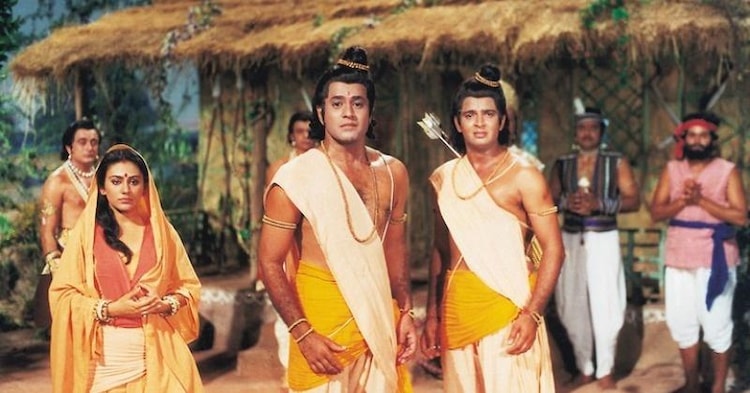
Let's start where we must - with Ramanand Sagar's Ramayan on Doordarshan. It first aired on January 25, 1987. And if you think Sunday mornings are quiet today, imagine 1987. Roads were deserted, not because of a holiday or a cricket match, but because the entire country had gone home – or, more accurately, refused to leave home – to catch what people didn't quite call "watching TV." They called it darshan. Because that's what it was.
Arun Govil and Dipika Chikhlia, who played Ram and Sita on the Ramanand Sagar show, weren't treated like actors. They were received like the actual deities they portrayed. People would touch their feet on the streets. Garlands were hung across TV sets while the show aired. This wasn't fandom, this was faith. No show before or since has done that to India.
The Japanese Ramayana PM Modi praised
Here's one that not enough people bring up in these conversations, though they really should. In 1993, Japan released an animated film titled Ramayana: The Legend of Prince Rama, created by Koichi Sasaki, Ram Mohan and Yugo Sako. Critics called it the best adaptation of Valmiki's epic. And it came from Japan, a country that doesn't speak our language, doesn't share our traditions, and yet produced something that left Indians genuinely moved.
The story behind the film is almost as fascinating as the film itself. Yugo Sako first visited India in 1985 and filmed a documentary about an archaeological excavation near Ayodhya. That's where he stumbled onto Rama's story — and never quite let go of it. He went on to work with Ram Mohan, widely regarded as the father of Indian animation, and around 450 artists to bring the epic to life.
When Prime Minister Narendra Modi returned from Japan, he spoke about the film on Mann Ki Baat with visible emotion — praising the dedication of people "thousands of kilometres away" who didn't know our language but understood our culture.
As for why Sako chose animation over live action, his answer was simple and rather beautiful: "Because Ram is God, I felt it was best to depict him in animation, rather than by an actor."
Adipurush: The cautionary tale
And then there's the one everyone remembers for the wrong reasons. Adipurush, the Prabhas and Saif Ali Khan-starrer, directed by Om Raut, had everything a big-ticket release needs on paper – a massive star, a beloved source material, and sky-high expectations. What it delivered was something else entirely.
The backlash was swift and brutal. The CGI looked unconvincing, the dialogue felt weak, and Saif's Ravana, a character who should have been terrifying, layered, and larger than life, fell disappointingly flat. Audiences who had been waiting for India's answer to Baahubali walked out feeling cheated.
So, what about Ranbir's Ramayana?
Nitesh Tiwari is a director who has earned his credibility and Dangal is proof enough that he knows how to handle scale without losing heart. But the bar, as this quick history lesson shows, is both high and wildly varied. Ramanand Sagar's Ramayan set a standard not just of storytelling but of devotion. The Japanese animated film showed that reverence for this story transcends borders and languages. And Adipurush showed, painfully, what happens when spectacle overtakes substance.
Ranbir's teaser has done its job. It's got people talking, debating, and most importantly, waiting. Whether the film lives up to the weight of the story it's carrying, we'll find out at Diwali.
Until then, Hari ananta, hari katha ananta. The story goes on.
- Ends