
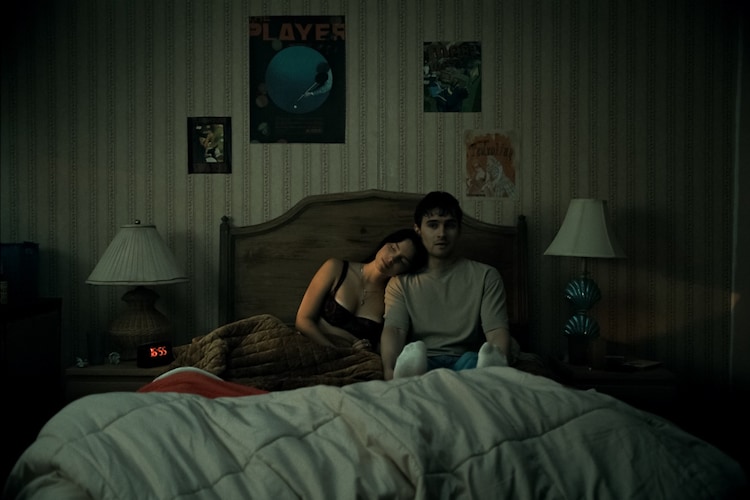
Exclusive: Obsession cast breaks down toxic love, emotional fear and modern romance
Curry Barker, Michael Johnston and Inde Navarrette discuss how Obsession turns romance into psychological horror, in an exclusive chat with India Today. They said the film draws its fear from emotional dependence, blurred boundaries and the line between love and obsession.
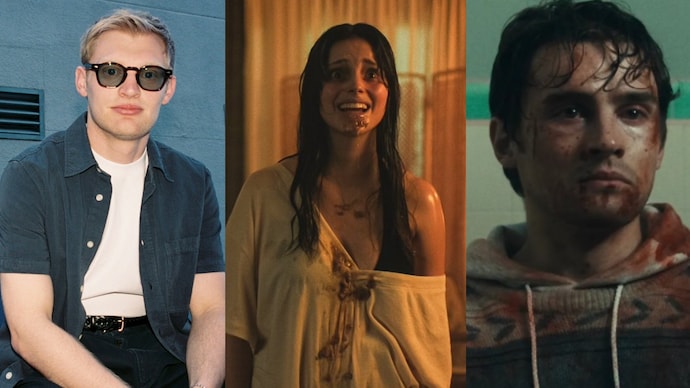
Obsession cast interview: Curry Barker, Michael Johnston, Inde Navarrette. Credit: Universal Pictures

Mumbai,UPDATED: May 28, 2026 15:47 IST
Horror films often rely on visible monsters in the form of ghosts, creatures, blood-soaked villains lurking in shadows. But in Curry Barker’s Obsession, the real terror lies somewhere far more familiar: emotional dependence, blurred boundaries, and the dangerous confusion between love and fixation.
In an exclusive conversation with India Today, writer-director Curry Barker and actors Michael Johnston and Inde Navarrette opened up about the film’s emotional core, modern dating culture, and how Obsession turns psychological vulnerability into horror. The conversation began with a simple question: after living inside such emotionally intense characters, did the film leave them feeling cynical about modern relationships?
Michael Johnston, who plays Bear, admitted the story resonated with lessons he had already learned in his own life. “That’s a good question,” he said. “I went into this knowing that Bear has this idea that this girl is somehow going to make his life better instead of dealing with his own issues. I’ve already learned that lesson in my life. So it was really therapeutic to go into this movie and bake that into the character.”
For Johnston, Bear’s emotional dependency was less fictional exaggeration and more an uncomfortable reflection of how people sometimes expect romance to fix personal emptiness.
Barker, however, viewed the story differently while writing it. “Being the writer of it, I think I was able to separate it from any lessons,” he explained. “I was mostly excited to be on set making the film that I had written.” When jokingly asked whether the film made anyone feel like “if this is love, I don’t want it,” Inde Navarrette immediately clarified what she believes sits at the centre of Obsession.
“There’s a difference between love and romance. There’s a difference between love and obsession,” she said. “That’s really what we wanted to drive home.”
Despite the film’s unsettling emotional spiral, Navarrette insisted she still believes in love. “No, because I love love,” she said with a laugh. “But obsession is different. Maybe it taught me the difference between love and romance.”
That distinction became one of the film’s strongest thematic threads. Obsession is not simply about romance turning toxic; it is about emotional imbalance, projection, and the dangerous idea of attaching self-worth to another person.
Beyond the relationship drama, Obsession also stands apart for how it handles horror itself. The film avoids relying heavily on physical monsters, instead allowing emotion and psychological deterioration to become the real source of fear.
When asked whether that metaphorical approach to horror was intentional, Barker pointed toward one of cinema’s oldest tricks.
“Oh yes, definitely intentional,” he said. “Don’t show the shark, right? That’s what we learned from Jaws. Not showing your monster is a psychological trick people have been using for years. I think the mind is way more effective sometimes than what you can visually create on screen.”
He continued, “Letting the mind run wild is a pretty old trick in the book. I’m not reinventing the wheel, but it’s something I really like.”
That emotional realism also shaped the performances. Both Bear and Nikki are emotionally demanding characters, requiring the actors to oscillate between vulnerability, fear and emotional collapse without losing authenticity.
Johnston recalled how collaborative the filming process became between takes. “I was always impressed with what Inde brought to the table,” he said. “I don’t think I was surprised because she had that from the jump. But I was very aware while we were doing this that: Wow, we are killing it.”
He added that Barker encouraged experimentation on set. “Once we got what we needed, if we had time, we could play around and try different things. Sometimes we discovered tiny little moments in scenes that made everything feel more real and grounded.”
For Navarrette, some of Johnston’s strongest work came in scenes she did not witness during filming. “My favourite moments in the film are actually when Michael is by himself,” she said. “It’s in his eyes. It’s in the groundedness of how he plays Bear. It’s very low-key, but it’s so real and so impressive.”
Because many of those scenes were filmed separately, watching the final cut became an emotional experience for her. “We watched 15 minutes of it before a Q&A last night, and I was crying,” she revealed. “He does a phenomenal job.”
One of the most emotionally devastating arcs in the film belongs to Nikki, a strong-headed woman whose sense of agency slowly begins slipping away under the emotional weight of the story.
That complexity, Johnston revealed, almost led the film toward a much darker ending. Originally, Nikki was supposed to die. “There was an ending where her character decides to end it all,” Johnston shared. But Barker explained that one particular take changed everything.
“She did such an amazing job with the version where she survives,” he said. “And we only gave her one take. It was so fantastic. Everyone on set went silent afterward.”
The mutual admiration between the cast and director became impossible to miss during the conversation. Navarrette described Barker’s directing style as a careful balance between structure and freedom.
“This was his baby. He wrote it, he directed it, it was his vision,” she said. “But he also gave us room to play. It was very collaborative. He found the perfect balance.”
Johnston echoed the sentiment, describing the atmosphere on set as unusually comfortable for an independent horror production.
“He created one of the most fun and comfortable environments I’ve ever worked in,” he said. “Sets can be very stressful, especially on indie films, but everyone got along so well. Curry is really good at building a team.”
Obsession releases in India on May 29.
- Ends