
Artemis astronauts mastered photography in 20 hours, snapped stunning Moon shots
The training, led by professional photography instructors Paul Reichert and Katrina Willoughby, was designed to prepare the crew for capturing scientifically valuable images.
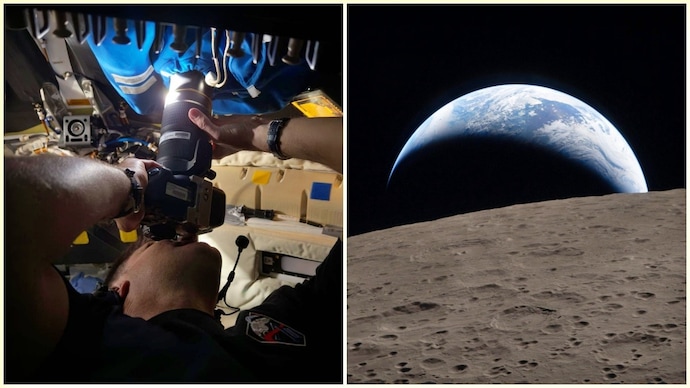

Astronauts aboard Artemis II stunned scientists and the public alike with breathtaking images of the Moon and Earth, after receiving just 20 hours of specialised photography training, according to Nasa.
The training, led by professional photography instructors Paul Reichert and Katrina Willoughby, was designed to prepare the crew for capturing scientifically valuable images during humanity’s first return to the Moon in over 50 years.
Both instructors, trained at the Rochester Institute of Technology, said the results far exceeded expectations.
PICS TAKEN BY ARTEMIS 2 ASTRONAUTS


“Most people can take a decent photo, but in space we’re aiming for scientific precision,” Willoughby told Reuters. Despite the limited training time, the astronauts delivered images that combined technical accuracy with stunning visual detail.
To prepare, astronauts practised on Earth using mock-ups of the Orion spacecraft. One exercise involved photographing a giant inflatable model of the Moon in a darkened environment to simulate real space conditions.
Mission pilot Victor Glover noted that such drills were critical in helping the crew adapt to shooting in microgravity and extreme lighting.
A key factor behind the success was the choice of equipment. The crew primarily used the Nikon D5, a camera already proven reliable aboard the International Space Station. Its ability to withstand radiation and perform exceptionally well in low light made it ideal for space photography.
The astronauts also used a Nikon Z9 and even an iPhone 17 Pro Max for certain shots, although transmitting large image files posed challenges due to limited bandwidth.
The results were remarkable. Among the standout images was a dramatic view from the Moon’s far side, showing the Sun completely eclipsed by the lunar surface, surrounded by a faint glowing halo. Other images captured the Moon’s rugged, crater-filled terrain in unprecedented detail, as well as distant views of Earth rising and setting over the lunar horizon.
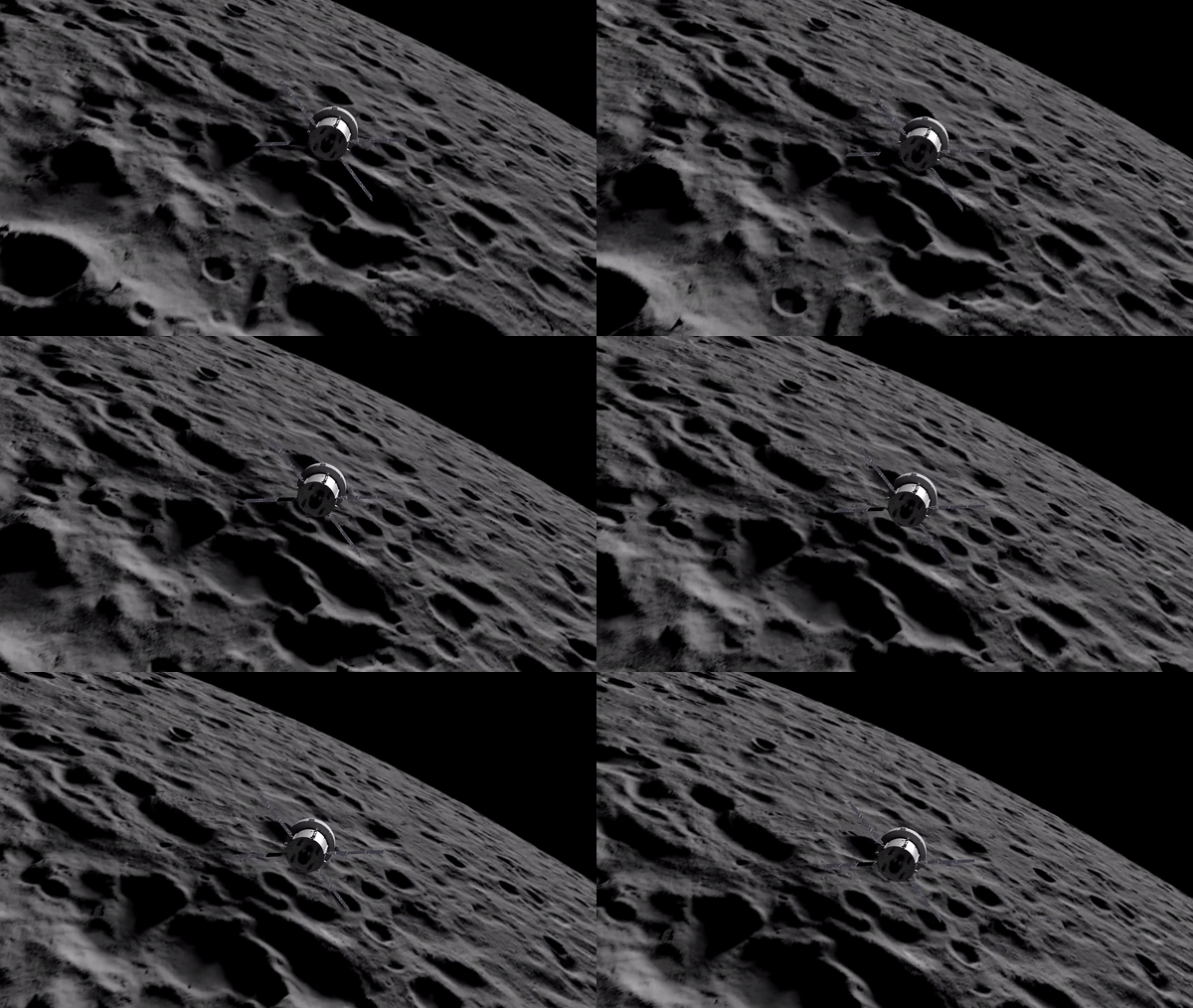
Unlike the Apollo era, when film had to be developed after returning to Earth, Artemis II astronauts could instantly review digital images. Live video streams using GoPro cameras also allowed audiences on Earth to witness parts of the mission in real time.
Back at mission control in Houston, excitement grew as the images began to arrive. “The energy in the room was incredible,” Willoughby said, recalling the moment the first visuals were received.
The success of Artemis II’s photography highlights not just technological advances, but also the adaptability of astronauts, proving that even with limited training, they can deliver extraordinary results in the harsh environment of deep space.