
IMD retains monsoon forecast: Expect below-normal rain across India
India's monsoon is expected to be worse than previously forecasted, raising concerns over agriculture, food inflation and water availability. What's happening?


For the first time in three years, India is heading into a monsoon season that is officially expected to fall short.
On Friday, May 29, the India Meteorological Department (IMD) confirmed that rainfall this June to September period is likely to reach only 90% of what is considered normal, and notably, that is even worse than what forecasters had feared just weeks ago.
For a country where the rains are not just a weather event but the backbone of its agricultural economy, this latest forecast has rung ominous bells around the nation.
HOW WILL THE MONSOON BE THIS YEAR?
The IMD had already sounded an early alarm in April when it pegged monsoon rainfall at 92% of the long-period average, technically below normal, but still within reach of recovery.
That forecast alone was enough to rattle farmers, experts, and those closely watching how India's weather is behaving in 2026.
Now that number has dropped to 90%, with a margin of error of plus or minus 5%. There is also a 35% probability that rainfall could slip below even that.
For context, the historical odds of such a deficient season are around 16%. Now it's more than double at 35%.
Overall, the monsoon around the nation is expected to be uneven.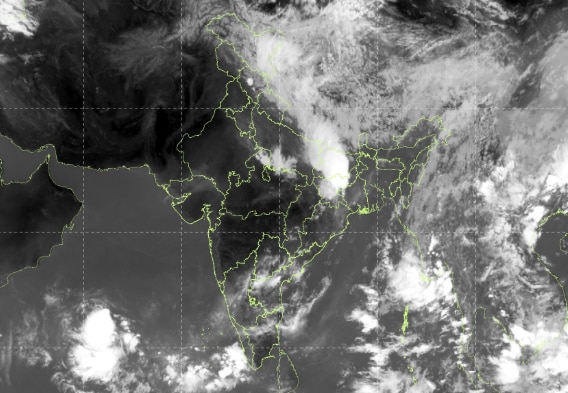
While the northeast can expect normal rainfall of between 94-104% of the long-period average (LPA), central, southern, and northwest India are set to receive below-normal rains, with the northwest likely seeing as little as 92% of average.
The month of June, when farmers begin sowing their kharif crops, is also forecast to be below normal at 94% of the long-period average.
The IMD has also warned that El Nino is rapidly developing in the Pacific, with ocean temperatures rising quickly, and that it could further suppress rainfall as the season progresses.
Given that about 60% of India's farmers have no irrigation backup and depend entirely on the seasonal rains, the forecast is a major concern.
WHAT DOES IT MEAN FOR INDIA?
A below-normal monsoon sets off a chain reaction.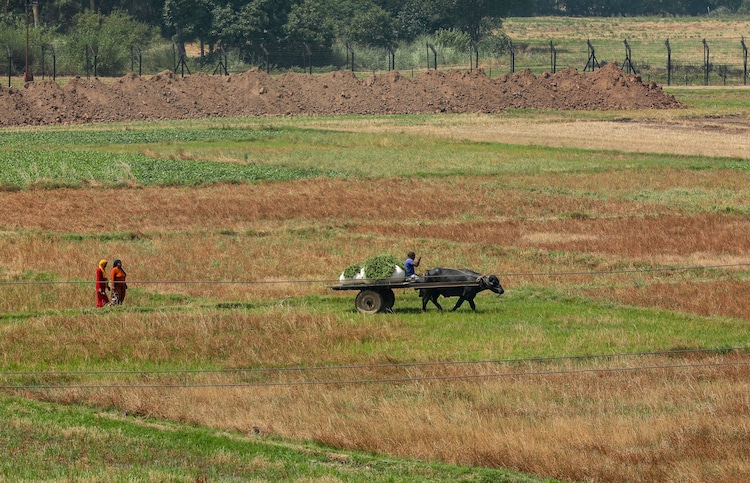
Weaker rains mean less water in fields, lower crop yields, and tighter supplies of staples like vegetables, pulses, and cereals.
Food makes up roughly 37% of India's inflation basket, so when harvests shrink, prices at the grocery store and the vegetable cart tend to climb, and the burden falls hardest on households.
For now, the southwest monsoon is approaching Kerala and the weeks ahead will be under the microscope as they will set the tone for the entire country.