North India to witness brutal heatwave on Monday, South will be drenched
India faces severe heat wave conditions on May 25, 2026, with temperatures touching 45 degrees Celsius in Delhi and 47.1 degrees Celsius already recorded in Vidarbha.

The Southwest Monsoon is India’s main rainy season and one of the most important weather systems affecting the country’s economy, agriculture and water security. Arriving usually in early June over Kerala, the monsoon spreads across most parts of India by mid-July and continues until September.
The monsoon develops because land areas over northern and central India heat up faster than the surrounding oceans during summer, creating low pressure over the subcontinent. Moisture-laden winds from the Indian Ocean then move towards the land, bringing widespread rainfall. These winds, known as southwesterlies, split into two branches — the Arabian Sea branch and the Bay of Bengal branch.
The Arabian Sea branch brings rain to the western coast and central India, while the Bay of Bengal branch moves towards eastern and northeastern India before spreading into the northern plains. Mountain ranges such as the Western Ghats and the Himalayas force the moist winds to rise, cool and produce rainfall.
Nearly 75 per cent of India’s annual rainfall comes during the Southwest Monsoon season, making it crucial for farming, hydropower, rivers, groundwater and drinking water supplies. Around 64 per cent of Indians depend on agriculture, much of which relies heavily on monsoon rains.
However, the monsoon is highly unpredictable. Delayed arrival, uneven rainfall, floods, droughts and long dry spells can severely affect crops, rural incomes and overall economic growth.
Several people were forced to wade through water-logged streets after heavy rain lasted Amritsar on Saturday. The Indian Meteorological Department (IMD) has predicted rainfall in the coming days in Amritsar with the advancement of the Southwest Monsoon.
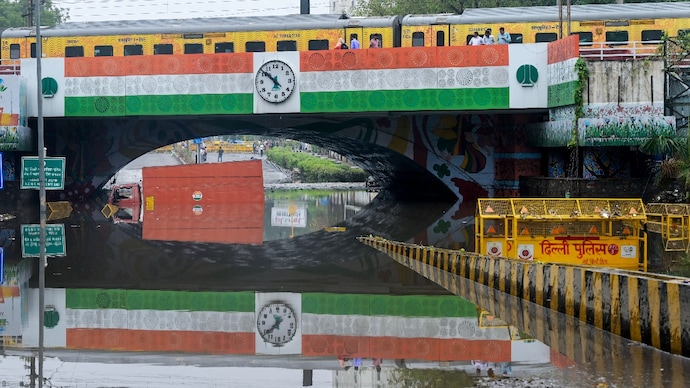
The southwest monsoon has arrived in Delhi with heavy rain.
With Southwest monsoon intensifying in Kerala two days after its onset, heavy downpours lashed several parts of the state, especially in south and central districts triggering landslides, uprooting trees and power cuts.
Heavy rainfall was observed in parts of Karnataka and the weather agency has predicted more downpour in the region.
Several parts of Delhi were hit by heavy rainfall and thunderstorms early on Sunday as the monsoon arrived in the national capital. The India Meteorological Department (IMD) said on Sunday that the southwest monsoon has advanced over Delhi and Mumbai, a rare occurrence.
The stubble burning counts in Punjab and Haryana have increased recently after the withdrawal of the southwest monsoon. Stubble burning is one of the biggest factors of air pollution in Delhi. As Punjab is now under AAP’s control, the government will now have to see what measures should be taken to reduce pollution. Meanwhile, the BJP is putting out videos showing how stubble burning is happening in Punjab.