
Indian team discovers over 100 unstable hanging glaciers in Himalayas of Uttarakhand
Using satellite imagery, terrain analysis, and hazard modelling, the researchers created one of the most comprehensive inventories of such glaciers in the Indian Himalayas.
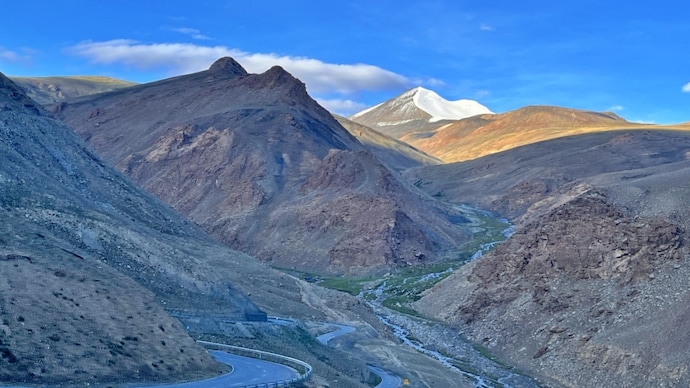

A team of researchers from the Indian Institute of Science, DRDO, and IIT-Bhubaneswar has identified hundreds of potentially unstable hanging glaciers in the Central Himalayas, flagging a growing but under-recognised threat to mountain communities and critical infrastructure in Uttarakhand.
The findings, published in the journal npj Natural Hazards, focus on the Alaknanda river basin, a region that has witnessed multiple disasters in recent years, including flash floods and landslides.
Unlike large valley glaciers, hanging glaciers sit precariously on steep mountain slopes, often suspended above valleys. Their sudden collapse can trigger powerful avalanches, debris flows, and even glacial lake outburst floods.
Using satellite imagery, terrain analysis, and hazard modelling, the researchers created one of the most comprehensive inventories of such glaciers in the Indian Himalayas.
The study mapped over 200 hanging glaciers, many of them located above populated valleys, roads, and hydropower installations.

Crucially, the team found that while some of these glaciers rest above other ice masses, reducing immediate risk, a significant number hang directly over exposed slopes or river valleys, making them far more dangerous.
In the event of a collapse, ice and debris could travel rapidly downhill, impacting settlements and infrastructure within minutes.
Areas around Joshimath and Vishnuprayag have emerged as key hotspots, where clusters of large hanging glaciers coincide with dense human activity.
These regions are already considered geologically fragile, and the added risk from unstable ice masses could amplify the scale of future disasters.
The study also highlights the role of climate change in increasing instability. Rising temperatures are weakening glacier structures, while freeze-thaw cycles are making slopes more prone to failure. At the same time, expanding infrastructure, such as roads and hydropower projects, is increasing exposure in high-risk zones.
Researchers warn that the danger is not just theoretical. Similar glacier-related collapses in the Himalayas in recent years have triggered cascading disasters, where an initial ice fall leads to floods and landslides downstream.
Such events are often sudden and leave little time for evacuation.
The findings points to the urgent need for continuous monitoring, early warning systems, and risk-informed planning in Himalayan regions. Experts suggest that mapping hazardous glaciers should be integrated into development planning, especially in ecologically sensitive zones.
As India continues to expand infrastructure in the mountains, the study serves as a stark reminder: the Himalayas are not only warming, they are becoming increasingly unstable, with risks hanging, quite literally, above vulnerable communities.