
Iran oil tanks on cusp of being full? Why Tehran can't just turn it off
Under normal conditions, oil flows continuously from wells to refineries and export terminals. But when exports are blocked, storage tanks begin to fill.
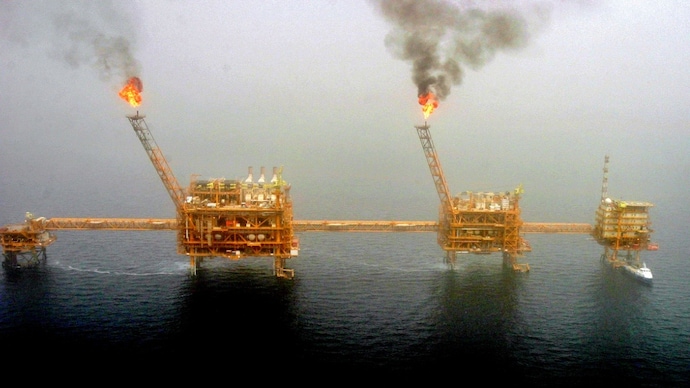
Gas flares from an oil production platform at the Soroush oil fields in the Persian Gulf, 1,250 km (776 miles) south of the capital Tehran. (Photo: Reuters)

New Delhi,UPDATED: Apr 22, 2026 15:52 IST
As tensions in the Persian Gulf escalate, a less visible but critical crisis is building beneath the surface of the global energy system.
With the US naval blockade restricting exports, Iran is rapidly running out of space to store its crude. Officials have warned that storage at key hubs like Kharg Island could fill within days, forcing the country to begin shutting in oil wells, a move with consequences far beyond geopolitics.
At first glance, stopping oil production might sound straightforward: just turn off the taps.
But in reality, shutting down oil production is a complex, delicate, and often irreversible process rooted in geology, pressure dynamics, and engineering constraints.
WHY CAN’T OIL JUST BE SWITCHED OFF?
Oil reservoirs are not underground lakes; they are porous rocks saturated with hydrocarbons, held in place by pressure from gas, water, and surrounding rocks. Production works by carefully managing this pressure so oil flows to the surface.
When wells are abruptly shut, this balance is disturbed. In mature fields like many of Iran’s, shutting production can allow water from below to seep upward, a phenomenon known as water coning.
Once water invades the oil-bearing rock, some of the oil becomes permanently trapped and unrecoverable.
This is why shutdowns are not just temporary pauses. They can reduce a field’s lifetime productivity and permanently destroy part of the resource.
HOW IS OIL PRODUCTION SHUT?
Shutting in an oil well involves several technical stages, each requiring precision:
Gradual reduction in flow: Operators cannot halt production instantly. Flow rates are slowly reduced to avoid sudden pressure shocks that can damage the reservoir or well structure.
Pressure stabilisation: Engineers monitor reservoir pressure closely. Sudden changes can collapse pore spaces in the rock or trigger unwanted fluid movement (like gas or water intrusion).
Mechanical closure: Valves at the wellhead are closed in a controlled sequence. In offshore or high-pressure wells, this involves multiple redundant safety systems.
Reservoir management: Even after closure, wells are monitored. In some cases, fluids are injected to maintain pressure and prevent long-term damage.
Surface system shutdown: Pipelines, separators, and storage facilities must also be depressurised and secured, a process that can take hours to days.
WHY DO STORAGE LIMITS FORCE SHUTDOWNS?
Under normal conditions, oil flows continuously from wells to refineries and export terminals. But when exports are blocked, storage tanks begin to fill.
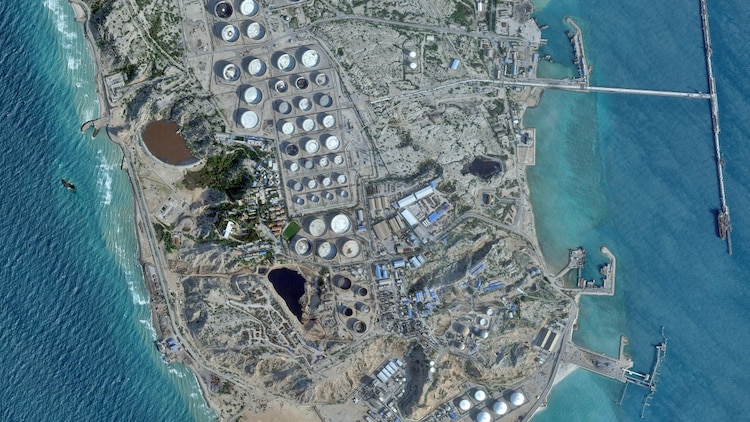
Iran has limited onshore storage, roughly 50-55 million barrels, and once that capacity is exhausted, production has nowhere to go. At that point, operators are forced to shut wells regardless of the risks.
Analysts estimate that surplus production can fill remaining storage in just days to weeks during a blockade, creating a hard physical limit on how long output can continue.
WHY IS RESTARTING AN OIL EVEN HARDER?
Restarting oil production after a shutdown is far more complex than simply turning operations back on.
When wells are shut in, reservoir pressure often declines, which reduces the natural force that pushes oil to the surface and makes extraction more difficult.
At the same time, water can seep into the oil-bearing rock, a process that is extremely hard to reverse and can permanently contaminate parts of the reservoir.
The infrastructure itself also takes a hit: pipelines, pumps, and well systems may require recalibration, repairs, or even replacement after being idle. Together, these factors mean that some portion of the oil becomes permanently unrecoverable, reducing the field’s long-term output.
In ageing oilfields, especially, such forced shutdowns can lead to lasting damage, potentially wiping out hundreds of thousands of barrels per day in future production capacity.
THE BIGGER PICTURE
The situation unfolding around Iran highlights a fundamental truth about the oil industry: it is built for continuity, not interruption.
Sudden disruptions, whether due to war, sanctions, or infrastructure failures, ripple through a tightly balanced system of reservoirs, pipelines, and global trade routes. Even when production stops, the damage can persist for years, affecting both supply and prices.
That is why the prospect of Iran being forced to shut in its wells is not just a regional issue. It is a reminder that in the world of oil, stopping production is often harder and costlier than starting it.
- Ends