
Nasa orders space station crew to shelter over air leaks in Russian segment
The International Space Station is dealing with ongoing air leaks in the ageing Zvezda module. Experts are working to ensure crew safety while managing these structural challenges in orbit.
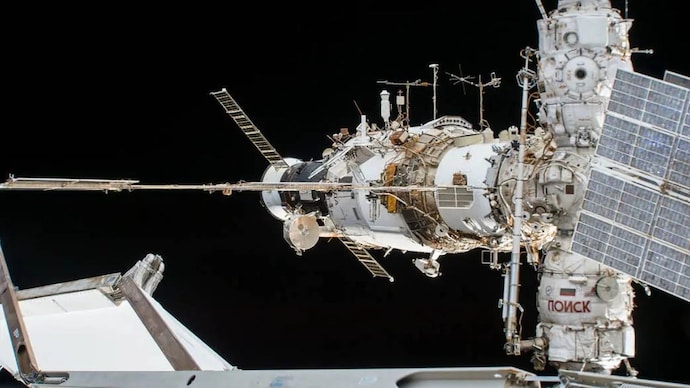

The International Space Station (ISS) remains humanity's greatest achievement in low-Earth orbit, yet even this massive laboratory is showing signs of age.
For years, a persistent air leak in the Zvezda service module has challenged engineers at Nasa and Roscosmos.
Located in a small passage known as the PrK transfer tunnel, this microscopic leak has become a regular headache for those keeping the orbital outpost running.
THE HIDDEN CRACKS IN SPACE
The Zvezda module is a foundational piece of the station, launched back in July 2000. It serves as the primary living quarters for Russian cosmonauts and provides essential life support systems.
The leak stems from tiny, near-invisible cracks in the metal welds of the PrK tunnel.
These are the joints where pieces of metal are fused together.
Over decades, the station has endured extreme temperature swings, moving from scorching sunlight to freezing shadows every 90 minutes.
This constant thermal expansion and contraction, combined with vibrations from onboard machinery, causes the metal to undergo high-cycle fatigue, which is a structural weakening process caused by repetitive stress.
MANAGING THE PRESSURE DROP
While the term air leak sounds alarming, the situation is far from a sci-fi disaster movie. The station operates at a pressure of approximately 14.7 pounds per square inch, which is identical to the pressure we experience at sea level on Earth.
When a leak occurs, air escapes into the vacuum of space, causing the total pressure inside the station to drop very slowly. Nasa and Roscosmos have sophisticated sensors that track these changes in real time.
To maintain safety, crews often close the hatch, which is a sealed door, between the affected module and the rest of the station.
This practice, known as segment isolation, allows the crew to continue their work in the American or Russian segments while engineers test the pressure to locate the exact source of the escaping air.
BEYOND THE REPAIRS
Since 2019, cosmonauts have applied specialised sealants and heavy-duty tapes to stop the air from seeping out. These fixes often work for months at a time, but the underlying stress on the ageing metal means new, microscopic fissures can eventually appear.
Although the current leak rates are manageable and pose no immediate threat to the crew, the situation highlights the complexity of keeping a 420-tonne station operational well beyond its original design life.
As space agencies look toward retiring the station around 2030, the lessons learnt from these repairs are proving invaluable.
They are teaching us exactly how space hardware degrades, a crucial piece of knowledge as we plan for future commercial space stations and deep-space missions.
Even as the station drifts through the stars, its greatest mission remains, proving that we can learn to live and work in the most challenging environment imaginable.