
India's 'Blue Mountains' in trouble. What's threatening the Nilgiris?
On World Environment Day, let's have a look at the Nilgiris, famous for their mist-covered hills and diversity, now facing growing pressure from climate change and human activity.
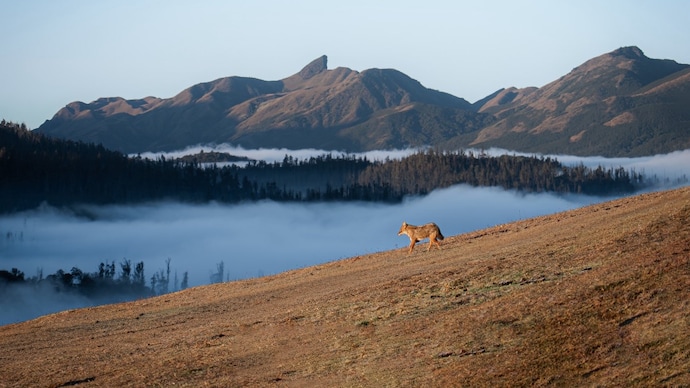

Before the plains of southern India give way to coastal heat, the geography rises steeply into a cool and mist-wrapped region of forests, grasslands and winding roads.
The dense canopy, the grasslands and the low-hanging cloud make the hills feel perpetually suspended between seasons.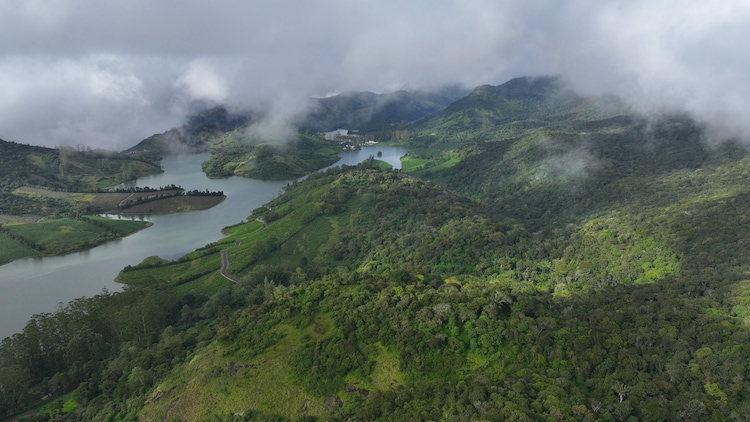
This is the Nilgiris.
The Nilgiri Hills get their name from the Kurinji flower, a purple-blue bloom that carpets the hillsides in a sea of blue. But that happens once every 12 years. When the hills are in full bloom, the blue haze they cast across the landscape is said to have inspired the name "Nilgiris," which translates from Tamil and Sanskrit as "Blue Mountains."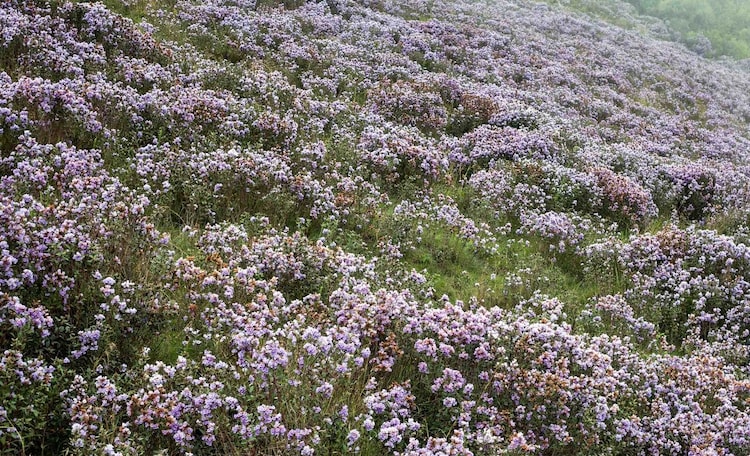
For the millions of people who make the journey to this world every year, often people from the heat-affected cities of Coimbatore, Mysuru and Kozhikode, it feels like crossing into another world entirely.
Spread across the point where Tamil Nadu, Kerala and Karnataka converge, these hills are far more than a beautiful escape from the heat below. They are a living, working ecological system, one that regulates the water supply, climate and biodiversity of much of peninsular India.
It's also India's first UNESCO Biosphere Reserve, spanning 5,520 sq km across three states, sitting at a meeting point of ecosystems so unusual that researchers are still working to fully understand what makes it function the way it does.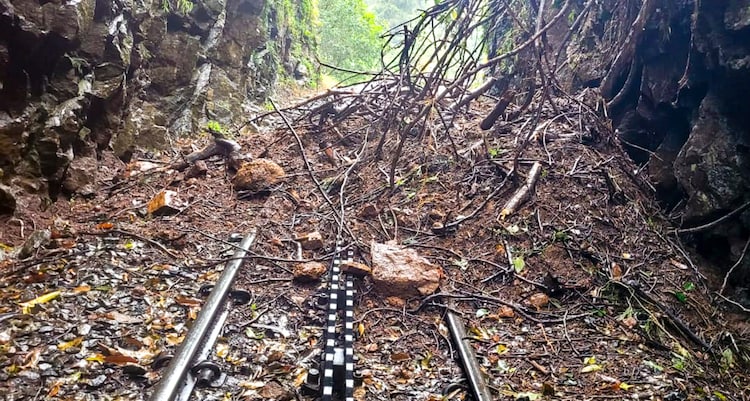
And it's now changing in a unideal manner, giving way to consequences that could ripple far beyond the hills themselves.
A HOME OF RARE SPECIES
“The Nilgiris Biosphere Reserve is an important biosphere of the Western Ghat," said Supriya Sahu, Additional Chief Secretary Environment Climate Change & Forests, Tamil Nadu.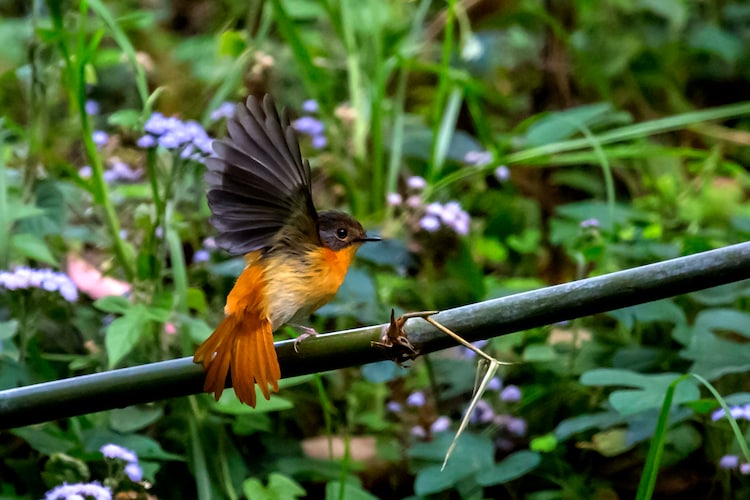
Sahu added that the region houses 3,500 species of flowering plants, 100 species of mammals, 550 species of birds, 30 species of reptiles and amphibians, and 300 species of butterflies.
The result is a landscape teeming with life, home to species and habitats that trace their origins to Africa and Southeast Asia, making it one of the most important centres of tropical biodiversity in the Indian peninsula, added IPCC author Anjal Prakash.
The Nilgiri Tahr, a stocky wild goat that clings to the grassland slopes, and the Nilgiri langur, whose distinctive call echoes through the forests, are among the most recognisable of the many endemic species of the region, meaning they exist nowhere else on the planet.
But for these species, survival depends entirely on the health of the forests and grasslands they inhabit.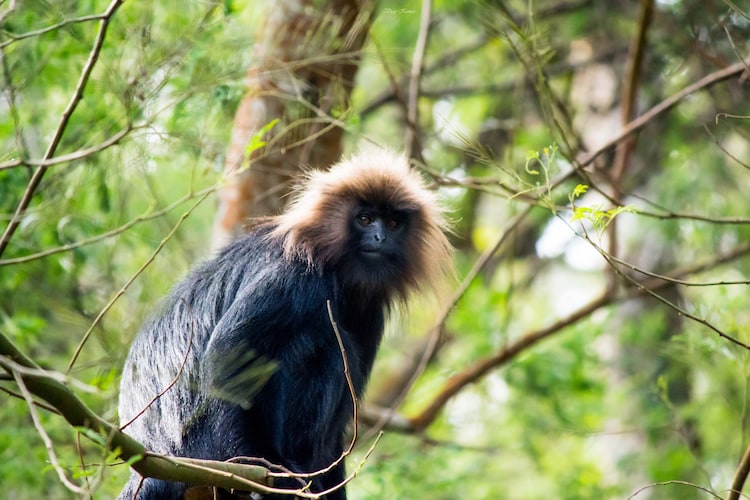
WHY ARE NILGIRIS IMPORTANT?
The Nilgiris is not just a wildlife story.
The hills are the source of major river systems, including the Bhavani, Moyar, Pykara and Sigur, all feeding into the Cauvery basin, eventually bringing water to homes and farms across states.
The Shola grassland ecosystem, which is a combination of dense evergreen forest and open rolling grassland found only in these highlands, works like a giant sponge. It soaks up monsoon rain and regulates groundwater recharge across the plains.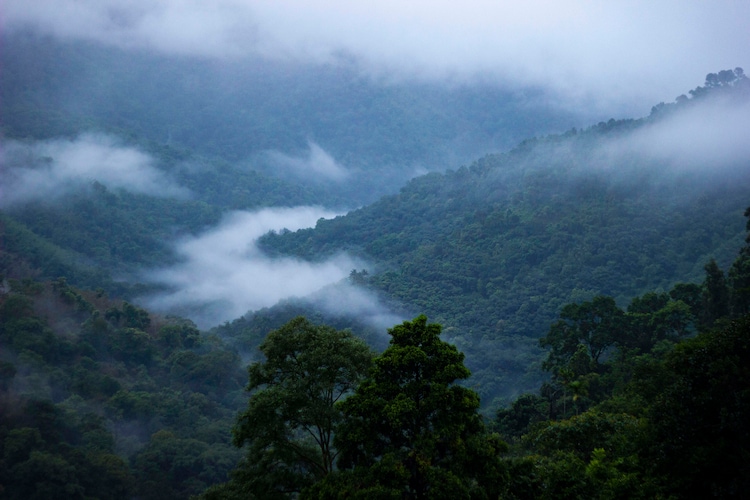
Environmentalist, and a member of Rotary Club of Wai, Swati Herkal, called the hills the region's "backstage crew," doing the invisible but essential work of keeping water flowing and temperatures stable for millions of people who may not even know it.
The Shola forests are capable of holding moisture and moderating the regional climate. When the Nilgiris remain healthy, Herkal said, "millions of people thrive."
Not only that, the Nilgiris are also a major carbon sink, with forests and grasslands removing significant volumes of carbon from the atmosphere.
This essential system, however, is now under serious stress.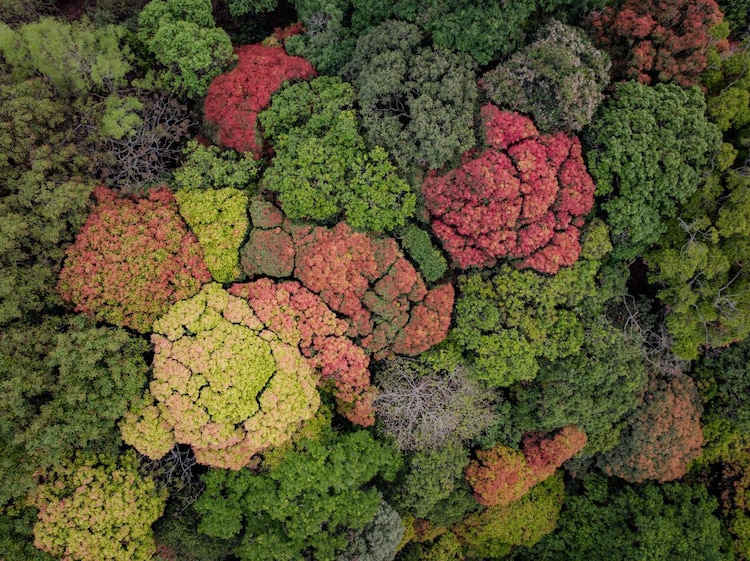
A 2024 study tracked changes in the forests of the Nilgiri Biosphere Reserve over twenty years using satellite data, and found that temperatures in the reserve had risen by about 1°C and that the timing of the growing season had shifted noticeably across different types of forests.
Certain forests were also producing less living biomass than before, which is a sign that their ability to store carbon and regulate water is weakening.
Furthermore, the region is dealing with a range of natural and human-driven pressures that are upsetting the ecological balance and fuelling more frequent conflicts between people and wildlife.
COEXISTING WITH NATURE
This pressure, however, is not new to the region.
"Nearly 90% of the Nilgiris landscape has already been transformed for human use," said Sandesh Kadur, a wildlife film producer who spent three years filming the region for Nilgiris: A Shared Wilderness, a documentary coming to National Geographic.
Tea estates, farms, towns and resorts now cover much of what was once forest. And yet, Kadur sees something remarkable in this.
"Wildlife has learnt to live with humans,” he said. “That's why India is an extraordinary example of coexistence."
That coexistence is not threatened by many culprits, one being the erratic weather patterns driven by climate change.
Kadur spoke of old British-era rainfall records, which were revisited during the making of the documentary. He admitted that after studying the records, the trend was hard to ignore.
The monsoon now arrives later in the Nilgiris than it used to, often only in July. It also brings rain in heavier, more erratic bursts rather than steady spells, disrupting tea farming and other agriculture in the hills.
Longer-term research confirms the change in weather patterns, showing that monsoon rainfall in the region declined significantly between 1951 and 2007, with fewer rainy days recorded even as temperatures continued to climb.
Then there are invasive plants like wattle, lantana and eucalyptus that are also adding to the problem by crowding out the native landscapes, the ones Nilgiri Tahrs depends on for survival.
Furthermore, as forests thin out and natural food sources on the upper plateau dry up, animals are venturing closer to human settlements regularly.
Towns at higher elevations in the Nilgiris are seeing more elephant incursions, with wildlife experts pointing to degraded forests that can no longer provide enough food for the animals.
In a poor monsoon year, given the influence of El Nino weather patterns, these tensions only get worse, as water becomes scarce and both people and animals are forced to compete for the same shrinking resources. 2026 could make the list as one such year.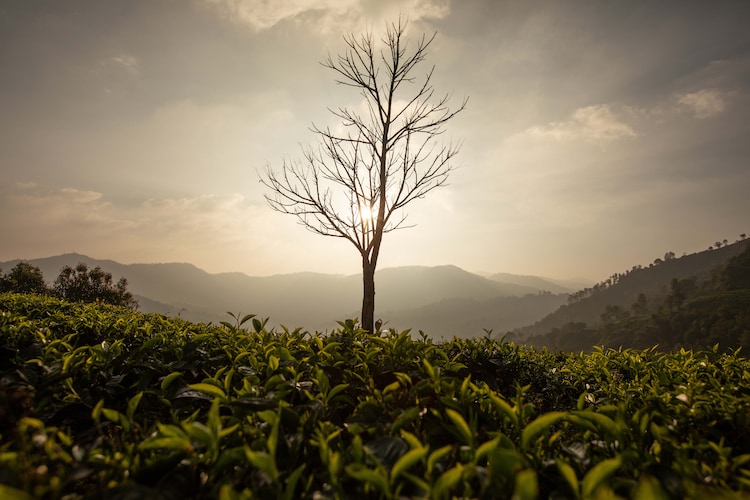
Kadur filmed through all of this, but with a lens of wonder and optimism, and it shows in his documentary. He called the film both a "love letter to the landscape" and a teaching tool for students in the Nilgiris, rooted in the belief that people need to understand a place before they can protect it.
AN ECOLOGY WORTH FIGHTING FOR
And to protect it, there exists no quick fixes. But across the hills, a range of concrete efforts are underway, and some of them are beginning to show results.
To ease the pressure of mass tourism on fragile hill ecosystems, authorities have introduced a cap on vehicular entry. Only 6,000 vehicles are allowed on weekdays and 8,000 on weekends, enforced through a mandatory e-pass system.
The region has also adopted a long-term Nilgiris Climate and Decarbonisation Action Plan with year-on-year targets stretching to 2050, covering emissions reduction, climate resilience and ecosystem restoration at a district scale.
On the ground, more than 38,000 hectares have already been cleared of invasive plant species.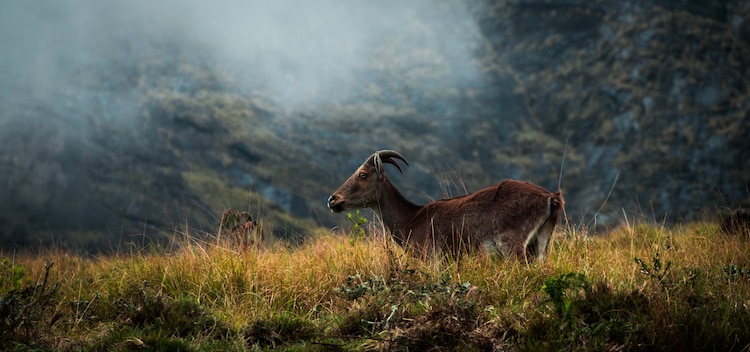
Perhaps the most telling sign of this shift is Project Nilgiri Tahr, which is India's first dedicated recovery programme for a single endangered species.
Focused on the stocky wild goat endemic to these hills, the project is as much about restoring high-altitude grasslands and reconnecting fragmented habitats as it is about saving one animal.
And signs show that it's working. A 2024 survey counted 1,031 individuals, rising to 1,303 in 2025, with the Tahr reappearing in habitats where it had not been seen for over a decade.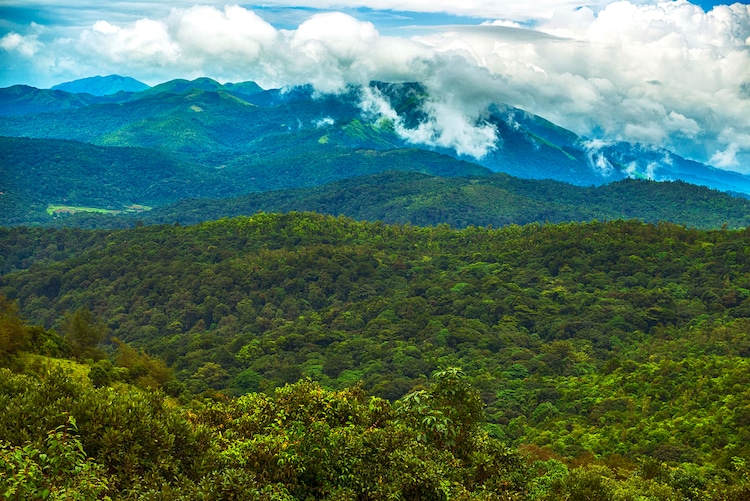
The problems of the Nilgiris have existed for ages, and the solutions are bound to take time, but a step at a time is the plan for the many species and humans who now reside in the Blue Mountains.
The Nilgiris, as it turns out, is not a wilderness kept behind fences, separate from human life, but a living, working landscape where people and nature have always shared space, and where the future of one is inseparable from the other.