
The real crisis for India's tigers isn't tourism. It's the forests they live in
A cluster of sightings and viral videos from Ranthambore has renewed questions about what is stressing India's tigers. Conservation biologist Dr Dharmendra Khandal says habitat pressure, territorial conflict and unchecked VIP entries matter more than routine tourism.
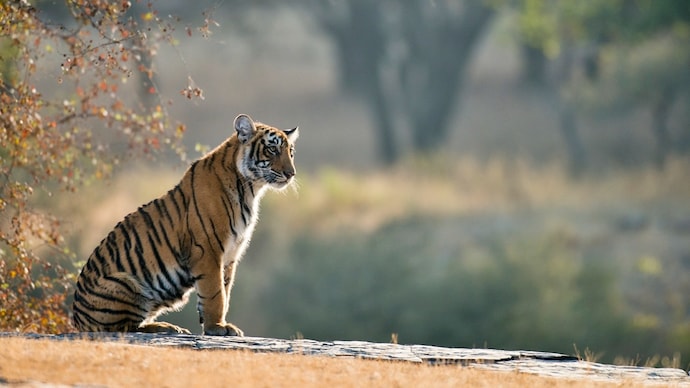
It is the tourism infrastructure that is breaking down under pressure, not necessarily the tiger. (Photo: Getty)

New Delhi,UPDATED: Jun 7, 2026 14:22 IST
In April 2026, a rare and startling moment occurred in Ranthambore: a tiger, a leopard, and a cheetah were all sighted within the same landscape and time frame.
Seeing three of the wild’s most elusive apex predators this close together may look like a remarkable triumph for wildlife enthusiasts, but it begs a deeper question: Is it actually a sign of a shrinking habitat and a landscape under immense pressure?
Very recently, another telling incident went viral on social media: a tiger and a tigress were captured fighting fiercely over prey in Ranthambore Tiger Reserve. The tiger was feeding when the tigress appeared from nowhere, leading to an intense tug-of-war that forced the dominant male to retreat.
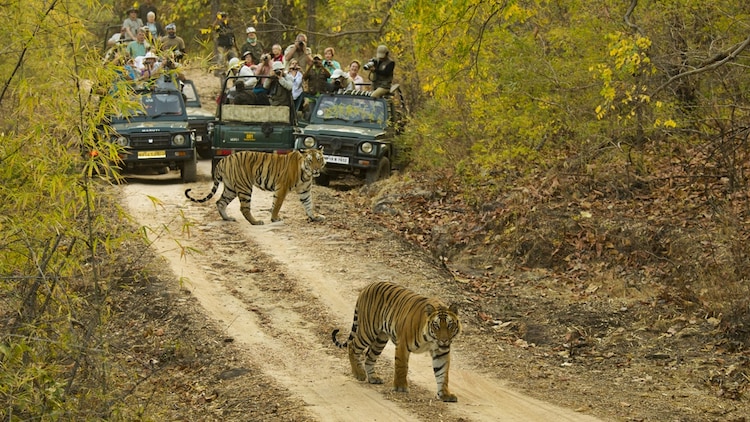
While a flurry of recent mainstream reports claim that India's tigers are snapping due to tourist pressure, the ground reality tells a completely different story. A viral video from Ranthambore recently sparked intense public outrage, showing a magnificent tiger walking down a narrow dirt track, completely encircled by a swarm of green tourist gypsies.
To the untrained eye, it looked like a clear-cut case of animal cruelty, a chronically stressed apex predator being hounded by camera-happy tourists. It is easy to watch such footage and assume that this psychological pressure is turning our tigers into ticking time bombs.
But according to conservation biologist Dr Dharmendra Khandal, that narrative is largely an optical illusion. The true, hidden stress drivers aren't the six hours of predictable safari vehicles, but the 24/7 internal warfare for territory, overcrowding within the parks, and poorly regulated VIP gatecrashing.
THE GEOGRAPHY OF A 'SQUEEZE'
Dr Khandal explains that when a tiger appears surrounded by vehicles, it is a mistake to assume it is an act of intentional malice by drivers. Ranthambore’s unique terrain is defined by narrow valley passes and rocky bottlenecks.
When a tiger steps out onto these pathways, vehicles often find themselves trapped, unable to move forward because the tiger blocks the path, and unable to reverse due to the steep, unforgiving terrain behind them.
Furthermore, tigers are highly habituated animals. They frequently emerge from dense, undisturbed sections of the core forest to voluntarily walk alongside tourist tracks. They know the vehicles are predictable, non-threatening, and loud enough to be avoided if they choose.
The real stressor in these bottlenecks isn't the regular tourist; it is the breakdown of the administrative system. The sudden overcrowding is often caused by unauthorised government vehicles carrying VIP visitors, gatecrashing routes where vehicle numbers are already strictly capped.
According to Dr Khandal, it is the tourism infrastructure that is breaking down under pressure, not necessarily the tiger.
THE CONFLICT PARADOX: RANTHAMBORE VS DUDHWA
This perspective raises an important follow-up question: could this physiological stress be a hidden driver behind increasing human-tiger conflicts on the fringes of our national parks?
Dr Khandal pushes back firmly against this theory. "If tourist pressure were the primary driver of physiological stress, and stress caused tigers to snap, then India’s most heavily visited parks should be hotbeds for human-wildlife conflict," he notes.
To test this, protected areas can broadly be divided into two categories: those with high tourism pressure, like Ranthambore, and those with low or negligible tourism, like the Dudhwa Tiger landscape.
Despite having the highest tourism pressure in the country, only 22 human deaths caused by tigers have been recorded in the Ranthambore landscape over the last 50 years. In contrast, the low-tourism Dudhwa landscape has experienced approximately 20-22 such deaths every single year.
This striking difference suggests that tourism-induced physiological stress is not a major driver of human–tiger conflict, and that other ecological and social factors are far more influential.
DECODING 'STRESS BREEDING'
The biological argument often turns to "stress breeding," the effect of chronic physiological stress on reproduction. In mammals, prolonged elevation of stress hormones such as cortisol can suppress reproductive hormones, potentially reducing fertility, lowering conception rates, and affecting cub survival.
However, Dr Khandal points out that the relationship is rarely straightforward in the wild:
"Many wild animals, including tigers, can become habituated to regular human activity if it is predictable and non-threatening. In Ranthambhore Tiger Reserve, adult tigers continue to breed successfully despite substantial human presence. During the last breeding season, three females living in the tourism-intensive core area each raised litters of three cubs. This occurred in a landscape that is visited not only by tourist vehicles but also by approximately 1.5 to 2 million pilgrims each year."
If chronic stress from visitors were severely impairing breeding, one would expect lower reproductive success and smaller or less viable litters. While it doesn't mean stress has zero effect, it indicates that the impact is highly complex and heavily dependent on individual tiger profiles, habitat quality, and prey availability.
WHAT TRULY STRESSES A TIGER?
If tourism isn't the primary culprit behind elevated glucocorticoid (stress hormone) levels in tigers, then what is?
Dr Khandal emphasises that it is vital not to attribute these levels to tourism alone. Safari vehicles operate for just a few hours a day under strict, predictable routes. In contrast, ecological and social pressures operate continuously, 24 hours a day, seven days a week:
Intraspecific Competition: In high-density tiger populations, conflict between resident and dispersing tigers, territorial pressure, and the constant pressure on resident tigers to defend their turf from young adults keep stress hormones high.
The Footfall of Faith: Beyond tourism, landscapes like Ranthambore feature high levels of non-tourist human presence. In some divisions alone, there are reported to be over 400 religious sites, adding a continuous, unpredictable stream of local human footfall deep inside the forest lines.
THE LOGISTICS OF WATERHOLES
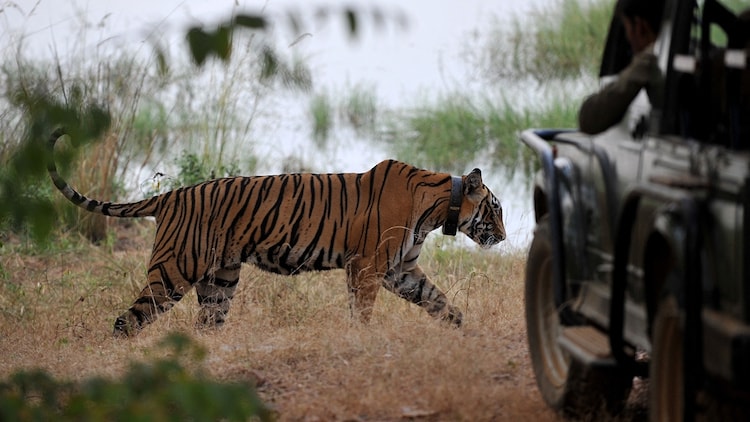
A recent report suggested that moving artificial waterholes away from safari roads would give tigers peace. However, Dr Khandal clarifies that the placement of waterholes near roads is generally driven by management logistics rather than concerns about poaching or tourist visibility.
Waterholes are built near roads because they can be refilled easily using water tankers, and forest staff can quickly monitor and maintain them when they run dry.
In reality, poachers typically operate in remote parts of the forest where wildlife is less visible and human presence is limited. Since more than 80% of most tiger reserves remain completely closed to tourism, there are already vast areas where tourists are entirely absent.
Moving these waterholes would not create significant new “blind spots” for poaching. Effective anti-poaching depends primarily on dedicated forest staff, intelligence networks, camera traps, and local community support—not on the presence or absence of tourist vehicles.
THE CORE SOLUTION: FIX THE GATES
Ultimately, if we want to address the very real moments of overcrowding that degrade the landscape, the solution is administrative, not ecological.
According to Dr Khandal, the first and most effective step to reduce stress on the ecosystem is the strict enforcement of existing tourism vehicle regulations without exceptions. The number of vehicles permitted inside the park must be adhered to as a hard limit, with absolutely no additional entry allowed for VIPs, government officials, or special arrangements influenced by authority.
It is these unregulated entries that create sudden spikes in disturbance, crowding, and route blockages. To save the tiger from pressure, we do not need to push waterholes into the deep jungle; we simply need to hold the line at the park gates.
- Ends