
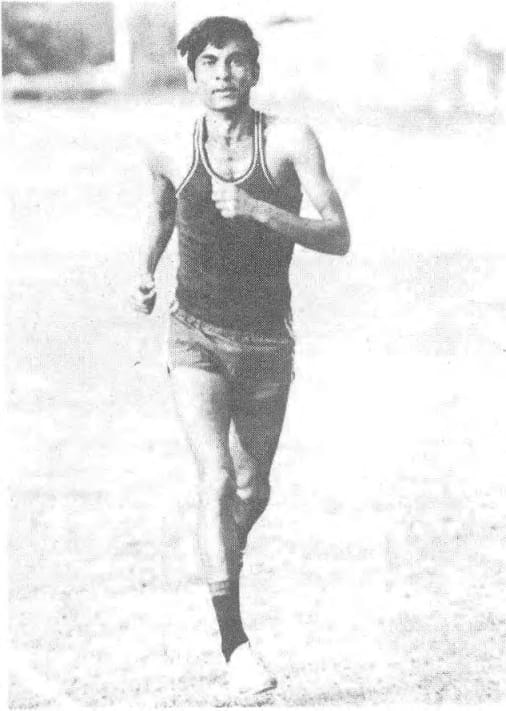
48 years later…Sawan Barwal outruns the legend of Shivnath Singh
Sawan Barwal's dramatic finish at the Rotterdam Marathon did more than break a 48-year-old national record. It lifted a psychological weight that had long hung over Indian distance running. In surpassing Shivnath Singh's mark, Barwal has opened the door for a new generation to push the limits further.
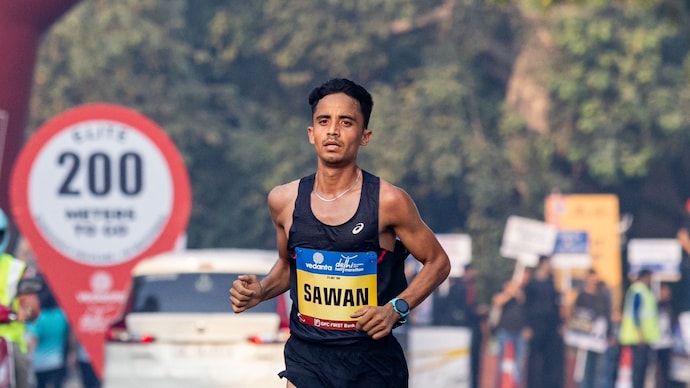
Sawan Barwal broke the longstanding marathon national record. (Photo: KhelIndia/X)

New Delhi,UPDATED: Apr 13, 2026 14:51 IST
You don’t have to fit into a genetic glove to be a marathoner, or even a long-distance runner grinding out lap after lap on a stadium’s synthetic track. Running is for everyone. And early enough, if your lungs love it and your body is willing to take punishment kilometre after kilometre, across 42.195 km, it becomes your calling - an obsession. Marathons are for the unstoppable. You suck in air until your lungs flame up, a fire raging inside, knees rising and falling in choreographed rhythm, heels zipping past your glutes. Cocooned in your own world, in a state bordering on the selfish, you slice off seconds - just to get close enough to touch greatness or wear it.
Just yesterday, at a kabaddi tournament in the village of Nikki Kalan, off the highway to Gurdaspur, a scene unfolded that captured the spirit of the sport perfectly. There, amongst acres of wheat fields just a few days before harvesting, a young boy - less than 15 years of age - kept running around the kabaddi stadium. He ran with such singular focus that someone eventually had to drag him away, lest he forget that in any athletic pursuit, one must eventually stop.
For 48 years, every Indian marathoner lived in the looming shadow of Shivnath Singh. Decade after decade, they wilted in the final kilometres, unable to last out or summon those last few bursts of energy; the ‘end kicks’ that make the marathon so punishing and competitive. Shivnath seemed to slip into training sessions, running beside modern marathoners, urging them to break his mark.
A virtual legend in long-distance running, Shivnath left a mark that seemed permanent. Two years after his fantastic run in the 1976 Montreal Olympics, where he finished 11th with a time of 2:16:22, he clocked 2:11:59 at the 1978 National Championship in Jalandhar (later amended to 2:12:00).
That record stood for 48 years - just two years short of a half-century.
Until April 12th, 2026. At the Rotterdam Marathon things took a dramatic turn for India. 28-year-old marathoner Sawan Barwal, already on pace, blacked out and collapsed just metres from the line. He got back up, only to fall again as the seconds slipped away. A race volunteer stepped in to help him, and from there, Barwal staggered forward, pushing through the final stretch to cross the finish line in 2:11:58. It was enough to break the oldest record in Indian athletics, even if only by two seconds.
Nitendra Singh Rawat, 2016 Rio Olympics marathoner, laughs at the suggestion of Shivnath Singh’s spectral image. “Yes, he was a generational talent. We had heard of him - running barefoot, his feet taped - we knew about him. But it was never exactly a pressure. We all ran our own races.”
Yet, the record stood. Through heat, dust, and varying conditions across India and abroad, the mark remained untouched until many believed it simply wouldn't break. As predicted, it would require a perfect storm: a flat track like the one in Rotterdam, perfect weather with humidity in the 70s-80s, and perhaps - as weird as it might sound - someone who had never run the marathon before to hit the course fresh. That is, after all, what Shivnath did in Montreal; it was his debut as well, not counting a prior trial run.
Catch India Today's Athletics Coverage: Here
Surendra Singh, multiple Asian medallist, represented India at the 2008 Beijing Olympics, now coach, believes it helps when a runner’s mind isn't weighed down by previous timings. At the halfway mark, a runner might realize he is feeling good and decide to give it his best shot.
“For Sawan, it was the perfect day,” Surendra says. “If he hadn’t faltered in the last stages, he would have done close to 2:09.”
Surendra agrees that athletes are often measured against the ghosts of men who performed better in the past. It weighs on the mind that those legends did it in an era when there was nothing - no infrastructure, no high-performance gear, no advanced coaching, and no foreign exposure against world-class competition. Since 1978, every runner who started a marathon stood in the shadow of a titan like Shivnath Singh.
Legacies loom large. It’s like a bell ringing at the halfway mark, telling you that you are falling off the grid. “The clock is racing away; you need to be faster,” the voice in your head reminds you. Shivnath became synonymous with marathon excellence in India, even as the rest of the world moved 8-10 minutes faster. For context, the world record is held by the late Kenyan runner Kelvin Kiptum, who ran an extraordinary 2:00:35 at the 2023 Chicago Marathon. Tragically, Kiptum passed away in a car accident just four months later.
On the morning of April 13th, 2026, a new era began. The Indian marathon has once again been injected with fresh serum. Shivnath gave the sport a heartbeat 48 years ago and hoped until his last days that someone would bring him the news that his record had been surpassed. He is no longer here to see it, but if he were, he would likely have been the first to embrace Sawan Barwal. No true champion wants a record hanging around for decades; it never reads well for the sport's progress.
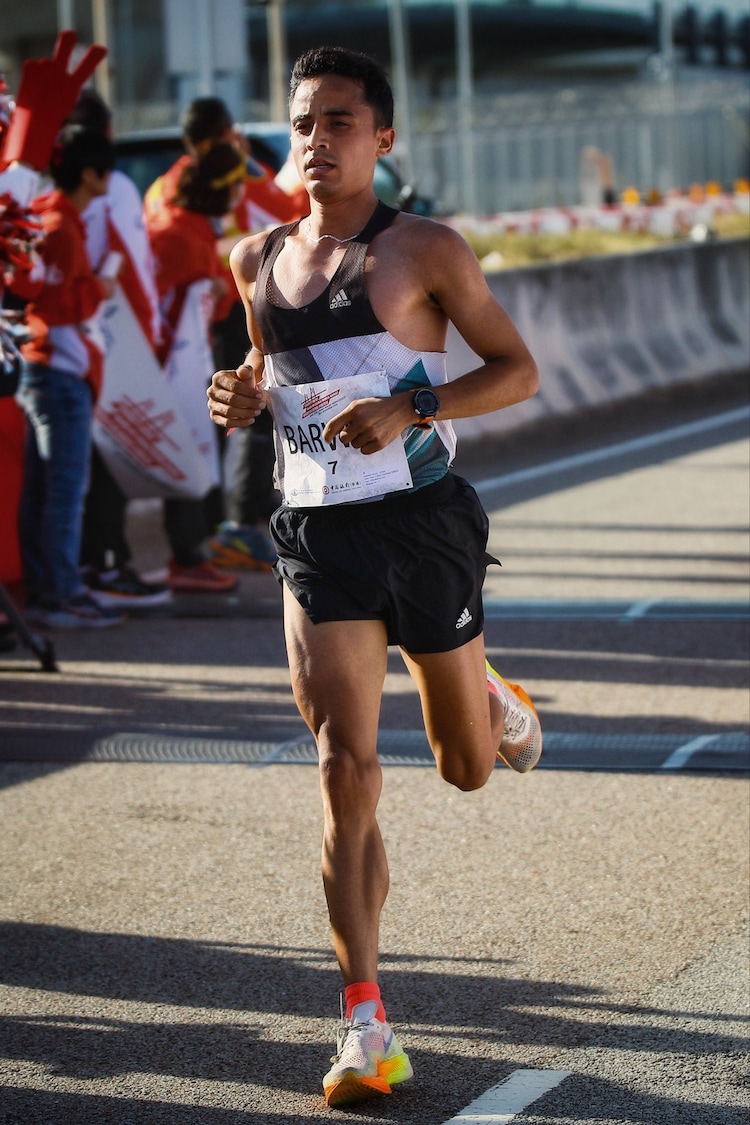
Sawan Barwal, though hiccupping through the final stages of the course and almost passing out, finally broke the record by the slender margin of two seconds. For India’s marathoners, it was the psychological barrier being shattered. The ceiling was gone.
Rawat is confident that the record will now fall further. “It’s always in the mind. Check any record that is broken, and slowly other athletes start attacking it. We are good for 2:09, but beyond that needs constant running against world-class competition across the globe.”
Rawat, who has clocked back-to-back 2:16 runs, believes perfect weather on flat courses is the key. “Rotterdam was perfect, so is Vienna and a few other cities. This group of Sawan, Gopi, and Man Singh should attack 2:09 now.”
'CAME HERE TO BREAK THE RECORD'
Sawan, hailing from Mandi in Himachal Pradesh, says he was geared up for this moment. “I came here fully determined to break the national record. I was targeting a time of around 2:08 to 2:10. I maintained that pace for most of the race, especially until the last 2 km. However, the final stretch was quite windy and the weather was cold, so I froze a bit towards the end. Otherwise, I would have achieved the time I had planned.”
A blackout towards the end nearly derailed his dreams. “Overall, I was running well and was on track for around 2:10,” Barwal says. “It was just those last 2 km where I struggled. I even poured water on my head, which caused a slight blackout. We can call those final 2 km bad luck. Otherwise, I would have comfortably finished even faster.”
In Shivnath’s home, the news brought a wave of excitement. “An army coach called and gave us the news,” says Arjun, Shivnath’s son. But like an heirloom being passed on, there is a touch of sadness. It isn't because Barwal broke the record - 48 years is simply a long time to let go. A family forms a relationship with a record; their love for Shivnath was physically tied to that 2:12:00 mark.
“I was happy that finally someone broke it,” Arjun says. “But for my mother, Sita Devi, it was tinged with sadness. Don’t take it wrongly. She has seen my father’s hard work. His Asian and Asian Games medals are reminders of his greatness, but this record was special.”
More than the lost record, Sita Devi is heartbroken by a lack of recognition. She feels Shivnath deserved at least the Padmashri. “In 48 years, not even the federation bothered,” says Arjun. “Once again, I will say it: it’s great to see the record fall. But look at my father Shivnath Singh’s achievements - didn’t he deserve a bigger honour?”
Handling the intersection of sadness and euphoria is a complex task. Shivnath Singh was a titan of the track. Sawan Barwal now has the talent to take the marathon in India further and cement his own place in history.
The celebrations will continue for a few days, but soon Barwal will be on the starting line for the Asian Games. Bigger things are predicted. As long as there are roads to run, someone will be out there, chasing the horizon. Records will keep falling, but the legends who set the first marks will always run alongside them.
- Ends