

I am a victim of exam paper leak. And I saw it crush a train-full of dreams
The NEET-UG 2026 paper leak has pushed lakhs of aspirants back into uncertainty, anxiety and another cycle of mental marathon, which they thought had ended on May 3. This story is about the human cost that question paper leaks, NEET and beyond, extracts from aspirants and their families.
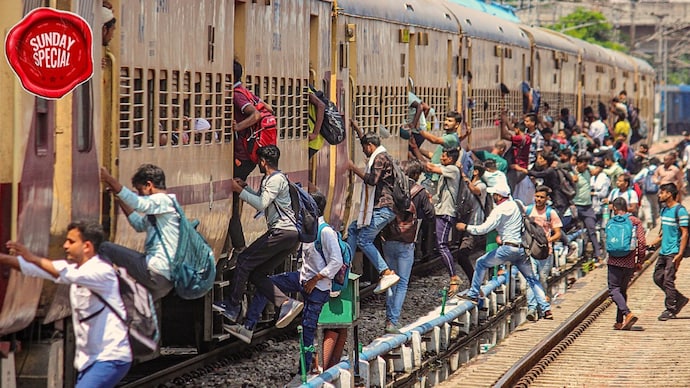
Aspirants of the UP Police recruitment exam rush to board a train at a railway station in Meerut. (Image for representation: PTI)

New Delhi,UPDATED: May 17, 2026 11:31 IST
It was a hot summer's afternoon in 2022. The sleeper coach of the Koshi Super Express, which had virtually become a general compartment, left Patna Junction, full of noise, laughter and post-exam excitement. Packed with BPSC aspirants returning to districts of eastern Bihar after the Prelims, the Super had barely left Patna Sahib station when phones began buzzing. One after another. The 67th BPSC Preliminary Examination had been cancelled. The question paper, which the students in the coach had attempted, had leaked on WhatsApp and Telegram before the exam began.
An abrupt silence descended into the coach. Moments later, some reacted with anger. Most absorbed the news and fell into an anxious silence. I was among the latter. After years of repeated disappointments in the UPSC Civil Service exams, the 67th BPSC had become my fallback. "Another year wasted," screamed my government job-obsessed mind. Then came thoughts too dark to even say aloud. Fortunately, life turned for the better for me. But not everyone escapes the spiral. Dreams have collapsed. Lives have unravelled and families have broken. In the words I heard and the faces I saw in that train coach that summer afternoon, there was only shattered hope and hopelessness.
Cut to the chaos of May 2026.
Days after the NTA cancelled the 2026 NEET-UG exam, following reports of a question paper leak, the human cost of such irregularities have already begun to emerge. At least three suicides have been reported, with families linking the deaths of aspirants to the cancellation of the all-India entrance test that aspirants take to get into government medical colleges.
A 21-year-old NEET aspirant was found dead under suspicious circumstances in Delhi's Adarsh Nagar. A 17-year-old student in Goa allegedly died by suicide hours after the cancellation announcement. A note was recovered. A NEET aspirant in Uttar Pradesh's Lakhimpur Kheri allegedly died by suicide after being distressed over the exam cancellation, according to family members.
These aspirants took the extreme step of ending their lives because the NTA couldn't do the job it is mandated to do. After allegations of leaks in 2024 and 2025, the agency should have been intensely vigilant this time. Why didn't the Centre implement the recommendations of the K Radhakrishnan Committee? Under these circumstances, millions of aspirants continue to live under constant stress, uncertainty and anxiety for years.
More than 22.05 lakh students appeared for the now-cancelled NEET-UG 2026 examination on May 3. Careers, family finances and plans have been put on hold in the hope that one exam might finally change their lives.
Paper leaks are not limited just to NEET, but allegations and reports of exam-related irregularities in NTA-conducted exams are now common. The UGC-NET, which recruits Assistant Professors and select junior research fellows, has also been marred by paper leaks. But the menace stretches far beyond the NTA. In several state PSC and state SSC exams, paper leak allegations and cancellations have become disturbingly common. Allegations of irregularities have also been levelled at India's top recruiting constitutional body, the UPSC, which it rubbished.
A 2024 India Today analysis found 65 exam paper-leak cases between 2019 and June 2024 across India. Uttar Pradesh topped the list with eight cases, followed by Rajasthan and Maharashtra with seven each. Another India Today report said 70 confirmed paper-leak cases in seven years (2017 to 2024) across 15 states affected nearly 1.7 crore aspirants. Even as candidates face extreme frisking and even cut jacket pockets, question papers still leak from within the NTA itself, which employs AI and 5G jamming at exam centres.

"After the NEET-UG cancellation, my father said, at least I'll now get another chance to better my score. But what if the re-test is even tougher and goes worse than the cancelled NEET itself?" said 21-year-old NEET aspirant Bappa Mondal from West Bengal's Tarapith. This was Bappa's third attempt, which went fairly well. He was confident, after having spent three years after he passed Standard 12 in 2022. "If I couldn't crack it this year too, my family's and my hopes would be crushed. A year still gets wasted, no? Who will return that? The trust in the NTA is now lost," Bappa told India Today Digital.
Bappa's fear about the re-test is not unfounded, if Patna-based competitive exam mentor Khan Sir is to be believed. Following the NEET paper leak controversy, Khan Sir said, "After paper leaks, agencies often make the re-test unnecessarily tougher, almost as if they are venting out their frustration on students". Khan Sir, calling the NTA, "Never Trustable Agency", said, "Even a Rs 10 diaper is more leak-proof than the NTA exams."
"Uncertainty, which already existed in these competitive exams, now has unfairness added to it. How will you explain that to the students? This is an extreme loss. The one who has access, network and money would never let go of that advantage. And when such incidents are repeated, the perception of the system being unfair becomes concrete," Chandigarh-based UPSC mentor Shekhar Dutt, told India Today Digital.
Srujani Mishra, a resident of Odisha's Brahmapur, who was affected by the UGC-NET paper leak, recalled one of her friends saying, "By now, the NTA practically owns my property with the amount of money I've spent just filling out forms". The question paper of UGC-NET, conducted by the NTA, was leaked in June 2024.
NTA TO CONDUCT NEET-UG ON JUNE 21. ASPIRANTS SAY DAMAGE DONE
After the cancellation of the NEET-UG 2026, the NTA announced a re-test, promised a "100% refund" of exam fees, said there would be "no re-registration" and "no fresh fee" for the re-exam. NTA Director General Abhishek Singh said, "All accused will be nabbed and jailed," adding that the agency had a "zero-tolerance policy" towards such irregularities and that the re-test would be conducted "in a fair manner".
Union Education Minister Dharmendra Pradhan, meanwhile, announced that from next year, NEET would move to a computer-based format and said the government had "zero tolerance towards malpractices".
But as the competitive exam aspirants India Today Digital spoke to, pointed out, does refunding fees or waiving re-test charges really fix the deeper damage? "It doesn't give back the years you had invested. It doesn't compensate for the mental pressure," said Ranjan Kumar, a civil service exam aspirant, adding, "In the six years I have been preparing, at least four state civil services exams have been cancelled."
The NTA announced that the NEET-UG 2026 re-test would be held on June 21, which as of Sunday is just 35 days away.
THE COST OF ONE MORE YEAR AFTER QUESTION PAPER LEAKS
The idea of a "fee refund" might sound neat in a government press conference. It sounds corrective and a swift and efficient move. Like me, anyone who has spent some years inside India's competitive exam ecosystem knows that when an exam is cancelled after a paper leak, the fee is often the cheapest thing lost. What disappears instead are years and the trust in the system that promises free and fair recruitment.
Aspirants lose attempts. Families lose savings. Parents postpone medical treatments, marriages of siblings, land purchases and even house repairs. Young people lose relationships, hobbies, sleep cycles and, often, their confidence in merit itself.
Therefore, in India's hyper-competitive exam economy, where lakhs compete for a few thousand or even dozens of seats, with their exam preparations peaking close to the day of the paper, a cancelled paper is a psychological catastrophe.
For 18-year-old Kushal Gowda from Bengaluru, who appeared for the 2026 NEET-UG on May 3, the news of the cancellation of the exam turned relief into panic. He had expected nearly 650 marks out of 720, and dreamt of securing a government medical college seat.
"When I heard the news of the paper leaks, I came under immense stress. The amount of hard work and sacrifices I went through to study for two years to take the NEET paper, flashed before my eyes. Everything, all at once. Anxiety hit me hard, and now I'm worried about how the re-examination will be," Kushal told India Today Digital.
Kushal said his father runs a small printing press and would send him nearly Rs 25,000 every month for coaching and living expenses in Mangaluru.
"My family is currently going through a financial crisis, and this paper leak and re-exam has just added more fuel to the inferno," Kushal said.
What gets erased in these conversations is how expensive competitive exams have become in India. For lakhs of aspirants preparing for NEET, UPSC, SSC, NET or state PSC exams, it is surviving a web of rents, hostels, coaching centres, test series, train tickets, PG deposits, class subscriptions and endless application fees.
In cities like Kota, Sikar, Prayagraj, Patna or in New Delhi's Old Rajinder Nagar and Mukherjee Nagar, entire local economies depend on aspirants whose families often survive on loans. And unlike a college degree with a fixed duration, competitive exams sometimes have no guarantee of closure. For many aspirants, there is no closure unless they crack the exam. Sometimes, even taking a competitive exam is not a closure.
Odisha's Srujani Mishra, who cleared the UGC-NET Assistant Professor category in 2024, said she "did not even feel the happiness" after qualifying. "It felt like just another regular day," she said, adding that despite clearing NET, "most universities do not even have vacancies" and "people with preferences, contacts and networks get in before you do".
MY PARENTS TOOK LOANS: NEET-UG ASPIRANT FROM FARMING FAMILY
Basanagouda, an 18-year-old from Karnataka's Yadgiri district, says the 2026 UGC-UG paper leak has left him shattered.
"I belong to a family that earns its bread from farming. My parents have borrowed loans for farming and my studies. When I heard about the NEET paper leak and re-exam, I couldn't hold back my tears. I was shattered. The news felt like a jolt to my dream of becoming a doctor," Basanagouda told India Today Digital.
He described how students in coaching institutes voluntarily give up phones, entertainment and social lives for years.
"In our coaching centre for NEET, we are not allowed to use mobile phones, and social media is out of our reach. Still, we don't take it as a punishment and as a sacrifice for a better tomorrow. But look at the tomorrow that NTA is gifting us," Basanagouda said.
The phrase "sacrifice" repeatedly appears in conversations with aspirants. Ambitions, does, but somewhat.
Parents of aspirants borrow from moneylenders. Mothers take up additional work. Fathers continue supporting them despite debt. Siblings compromise on their own education so that one of them can continue preparing. When question papers are leaked repeatedly, aspirants begin doubting whether the sacrifice itself has any meaning.
Shekhar Dutt, the Chandigarh-based UPSC mentor, believes that repeated irregularities are slowly damaging faith in meritocracy and the system.
"I don't know how far the limits of disadvantage are getting to. The one who has access, networks and money would never give up that advantage. So, the loss of merit, you have to see that. It is unfair. Uncertainty has become unfair," Dutt told India Today Digital.
"People leave their villages and towns, sell their fields, borrow money. The family completely reorganises itself just so that the child can change his life. But imagine that there is no possibility that, no matter how hard they try, they can never change their fate," Dutt, the founder of Sleepy Classes, added.
The feeling that the system might already be rigged beyond repair, explains why exam leaks trigger such disproportionate emotional reactions. Because competitive exams in India are no longer recruitment tests. They are seen as escape routes and a source of social mobility.
THE ECONOMY OF EXAMS AND HOPES IN INDIA
Government jobs and colleges continue to carry enormous aspirational value in India. They promise something that is perceived to be lacking in the private sector. It's stability.
"Even as vacancies have increased, the competition has shot up too. The desirability has increased, so has the demand," Dutt told India Today Digital. He added that people are "crazily attracted" to the government colleges and jobs because it offers permanence and social mobility. And, desperation is visible across exam categories in India.
In this situation, the NEET aspirant fears losing years that they would have spent in a medical school. A UPSC aspirant fears ageing out of attempts. An NET candidate fears stagnation and an SSC aspirant fears that the state of unemployment they are in gets stretched indefinitely.
"Unlike routine school or college examinations, competitive exam preparation often isolates students from normal life. Friendships shrink into rank comparisons. Relationships become difficult to sustain. Birthdays, festivals and weddings become interruptions to study schedules. We aspirants routinely feel guilty even while watching films or having a nap longer than usual," Ranjan Kumar, the civil service exam aspirant, who has exhausted all his UPSC attempts and is now banking on state services, told India Today Digital.
The 32-year-old Jharkhand native, who threw himself into competitive exam preparations after graduating with a major in geography and never pursued any professional course, now fears what might happen to his life if he fails to make it into the state civil services. But the state civil services are notorious for paper leaks.
Kumar has taken at least 20 competitive exams since graduating, and around one-fourth of them were hit by paper leak controversies, he said. In several of those exams, he said he had performed well and felt confident, only for it to emerge that the question paper had been leaked, and the exam cancelled.
This explains how a single postponement or cancellation of an examination feels catastrophic for aspirants.
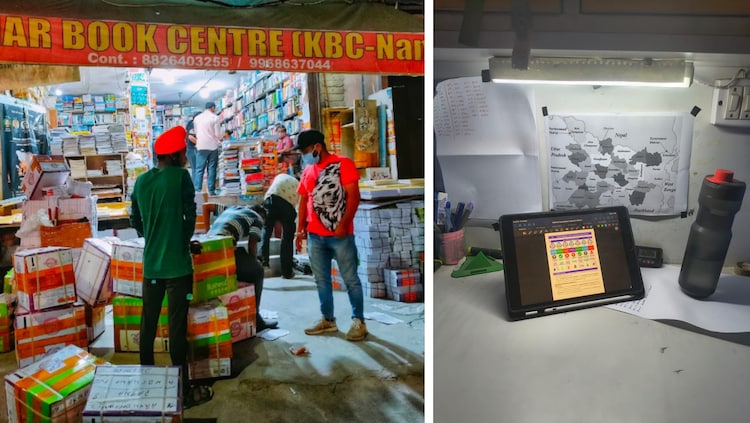
'NTA OWNS MY PROPERTY NOW'. INVISIBLE HEALTH COST OF PAPER LEAKS
For 25-year-old Srujani Mishra from Odisha's Brahmapur, the UGC-NET leak of June 2024 came as a reminder of how aspirants like her are trapped in endless exam cycles. "I completed my Masters in English Literature in 2023 and took my first NET attempt in December that year. I missed NET by four marks, just two questions," she said. Then came the June 2024 NET controversy.
"Firstly, the paper felt bizarre. Questions like when Shakespeare was born, when he died. This made no sense," Mishra recalled. "After three hours of horrifying torture in that examination hall, I came back home... By evening around 8 or 9 pm, I got the news that the paper had been leaked beforehand," she said.
What stayed with Mishra was the casualness with which the NTA talked about application fee refunds.
"NTA saying 'we won’t take fees again' does not fix anything. It doesn't give back the six months you prepared for. It doesn't compensate for the mental pressure you go through. It fixes nothing," Mishra told India Today Digital.
She recalled one of her friends joking bitterly, "I have spent all my money on NTA. It has all my jayadaat (wealth and assets). I have only been filling forms continuously."
The friend's remark captured a reality that most aspirants across India can relate to. Application fees pile up across years. Aspirants preparing full-time for competitive exams often remain financially dependent well into their late twenties. Add to that, the travel costs, accommodation rents and coaching fees.
The dependence doesn't just add pressure, it adds a layer of guilt too. This is what I can attest to as well. The psychological toll of uncertainty rarely becomes visible unless tragedy strikes. Mentors and aspirants India Today Digital spoke to, described a lurking threat of panic attacks, insomnia, depressive episodes and chronic anxiety.
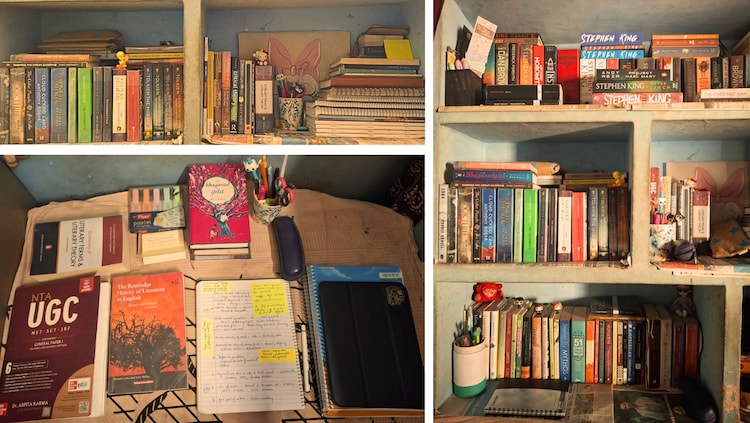
'WHERE DO I FIND MOTIVATION, MOMENTUM FOR NEET RE-TEST?'
For lakhs of aspirants, the cancellation of NEET-UG 2026 is now about restarting a mental marathon they believed had ended on May 3. Aspirants India Today Digital spoke to called the retest scheduled for June 21 a big challenge.
Mishra said after paper leaks, students were expected to rebuild months of preparation and emotional energy almost overnight. "Where do we even find the motivation or momentum to study again?" she asked, describing the exhaustion and numbness aspirants like her felt after having to restart preparing from scratch.
For Mondal from West Bengal, the uncertainty has become exhausting. This was his third NEET attempt after years of preparation and dropping college plans. "Even when there's a break from studies for four-five days, everything gets disrupted. Now, starting preparation for the re-test feels difficult because the classes have resumed and we barely get any breaks now," he said. "Now with the re-test, I don't know how the paper will be set."
"I don't trust NTA any more," Mondal said. "Such an important exam for 22 lakh students should have happened fairly. But every year now — 2024, 2025, 2026 — there are reports of paper leaks, which makes things really difficult," he added.
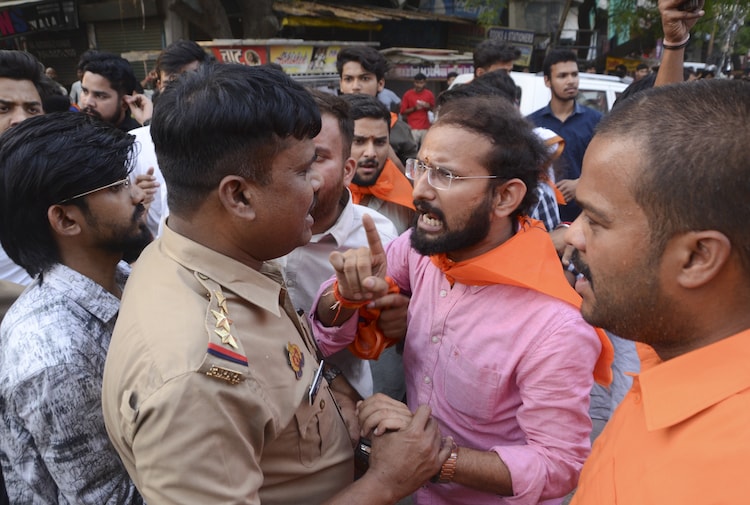
Mondal said that he was now back at compulsively refreshing Telegram channels for updates, scrolling through "guess papers", calculating possible cut-offs and discussing rumours with friends, late into the night.
UPSC mentor Dutt argued that making high-stakes exams more "leak-proof" would require multiple papers and decentralised testing. He noted that the UPSC now has nine papers, which make leaks harder to execute at scale. He said outsourcing of exam-related processes by the NTA and the SSC makes them vulnerable to weak links.
Reports of paper leaks, cancellations, re-tests have also triggered a collapse of trust in merit and the system.
Patna-based educator Khan Sir, speaking to news agency ANI, said repeated paper leaks are breaking students' belief that merit alone can secure their future.
Satirist and columnist Kamlesh Singh has written a hard-hitting opinion piece on why the system continues to leak. You can read his Paper Leak is Not a Bug, it's The Feature here.
Dutt said that when young people begin feeling that systems are unfair and stacked against them, frustration eventually turns into anger and street protests. "There is no cure for unfairness. But, to what extent? The aspirants now might feel that they would not get a fair hearing. Check out Reddit forums and see. There are innumerable aspirants venting out their anger," he said.
Following the 2024 NEET-UG paper leak, the Union government, acting on the Supreme Court's direction, had set up a high-level seven-member committee headed by former ISRO chief K Radhakrishnan to recommend exam reforms. The recent paper leak raises questions about their implementation.
For lakhs and crores of aspirants for government and college entrance exams and their families, question paper leaks hit their morale and their ability to bounce back. It's about years lost, broken trust, and apprehensions about the system's fairness. Families take loans, siblings compromise on their education for a sibling, aspirants sacrifice everything to crack an entrance exam. But the paper leaks set them back financially, crush their dreams and faith in the system.
The cancelled 67th BPSC Preliminary Examination of 2022, which I took and was cancelled, was eventually reconducted months later in September. I didn't appear. The uncertainty and emotional toll of restarting preparations and the same cycle all over again had already taken their effect.
And perhaps this is why, years after that hot summer afternoon of 2022, I still remember the moment the Sleeper coach of the Koshi Super Express fell silent after the BPSC cancellation news arrived. And the faces and words of crushed dreams.
- Ends
(With inputs from Avinash Kateel)