5.9-magnitude earthquake hits Japan's Kagoshima, no tsunami warning for now
A 5.9-magnitude earthquake struck Japan’s Kagoshima region on Wednesday, though no immediate reports of casualties or major damage emerged.

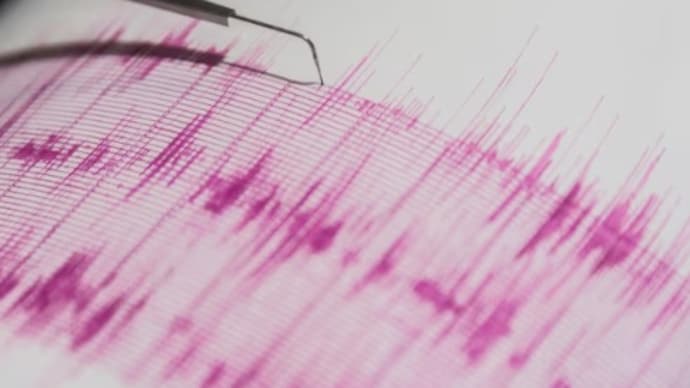
The shaking of the earth surface resulting from a sudden release of energy in the Earth's lithosphere that creates seismic waves is known as earthquakes. Inside the earth surface, the tectonic plates are always in motion and sometimes when they are stuck at their edges due to friction, it leads to earthquakes. The earthquake releases energy in the form of waves that travel through the earth's crust and cause shaking motion. While sometimes we hardly feel the earthquake tremors, sometimes they are so intense that it leads to destruction.
An earthquake shakes, displaces and sometimes disrupts the ground. It can also trigger tsunami, landslides and volcanic activities. While the earthquake's point of initial rupture is called its hypocenter, the point at ground level directly above the hypocenter is known as the epicentre.
Usually, the epicentre is the point where the greatest damage takes place during an earthquake. However, the length of the subsurface fault rupture might be a long one and damage can be spread on the surface across the entire rupture zone.
An earthquake can either occur naturally or might be caused by humans. In 1935, Charles F. Richter invented the first scale for measuring earthquake magnitudes. The magnitude of the earthquake is measured on the basis of the Richter scale. Usually, during an earthquake, we first experience the mainshock and then sometimes, we also experience an aftershock.
This conversation dives into Bengal’s political earthquake, the disconnect between elite political commentary and ground reality, BJP’s rise in the East, Himanta and Suvendu’s hardline politics, the Vijay phenomenon in Tamil Nadu.
The Tamil Nadu assembly election results caused a significant shift in the state's political landscape as a newly formed party, led by an actor-turned-politician Vijay, emerged as the single largest party.
The West Bengal assembly election results have triggered a potential constitutional crisis as the outgoing Chief Minister Mamata Banerjee has refused to resign despite a decisive defeat.
In a massive jolt to the Aam Aadmi Party on Friday, seven of its Rajya Sabha MPs, including Raghav Chadha, Sandeep Pathak and Ashok Mittal, quit the party and joined the BJP on Friday.
The big focus of this episode of News Today is on the escalating conflict between the United States and Iran as a forty-eight-hour ceasefire deadline approaches.
The political landscape in Tamil Nadu is witnessing a contest for the minority vote bank ahead of the assembly elections.
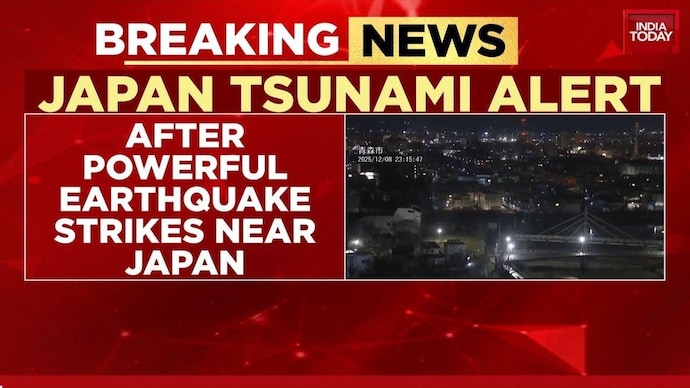
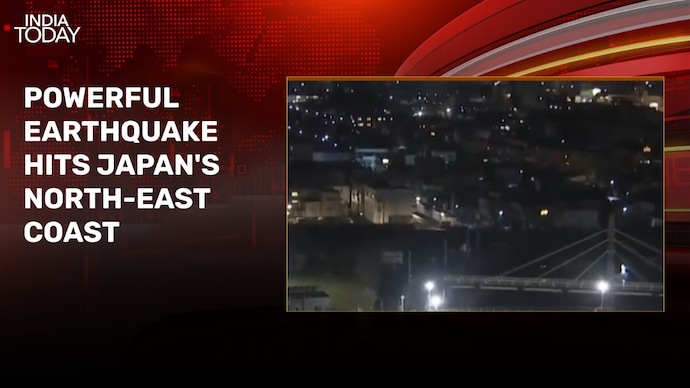
A powerful 7.5 magnitude earthquake has struck off the northern coast of Japan near Sanriku, prompting the Japan Meteorological Agency to issue a tsunami alert.
Strong earthquake tremors were felt across Delhi NCR, Punjab, and Jammu and Kashmir after a 5.9 magnitude earthquake struck near Afghanistan.
In a watershed moment for Japan’s energy policy, the Niigata region is expected to endorse the restart of the Kashiwazaki-Kariwa nuclear power plant. This marks a significant shift 15 years after the Fukushima disaster led to a nationwide nuclear shutdown. The facility, located 220 kilometers northwest of Tokyo, has been offline since 2011. Facing rising energy demands and global fuel uncertainty, Tokyo is moving back toward nuclear power. The decision reignites debates on safety and energy security as Japan edges closer to its most significant nuclear restart in over a decade.
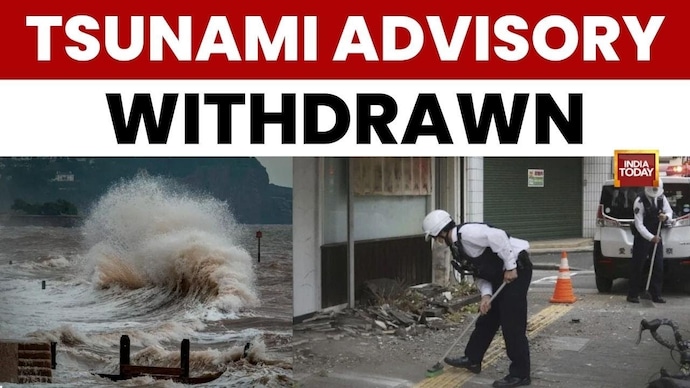
In this Special Report, India Today Global Editor Pranay Upadhyay tracks the aftermath of the 7.6 magnitude earthquake that struck off Aomori, Japan. Upadhyay reports that the 'tsunami warning downgraded to tsunami advisory' and was later withdrawn after a 50 cm wave was observed at Kuji Port. He highlights that 'around 90,000 people... have been evacuated' and notes that while 30 injuries were reported, Japan's infrastructure withstood the tremors. The segment discusses the seismic activity in the Ring of Fire.
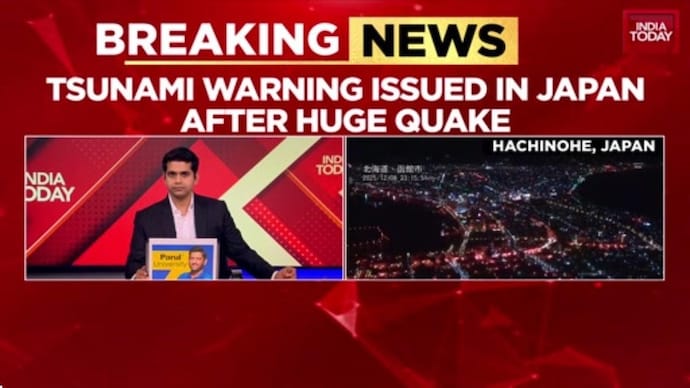
Breaking news reports indicate a massive 7.6 magnitude earthquake has struck the eastern coast of Japan's Amori Prefecture. A tsunami warning has been issued for the northeast coast, including Iwate and Hokkaido. The broadcast highlights that a 50-centimeter tsunami has already been recorded at Kuji Port. Evacuation orders are in place as authorities brace for potential aftershocks. An India Today correspondent notes that while Japan has disaster-resilient infrastructure due to its location on the Pacific 'Ring of Fire', the high magnitude has led to reported injuries. The exact casualty figures remain undeclared. The report emphasizes that standard operating procedures and drills are being followed by the public. The correspondent also references the 2011 Fukushima disaster, noting that widespread preparations have been made since then to withstand such natural calamities.
In this Special Report, India Today Foreign Affairs Editor Geeta Mohan and Editor, India Today Global Pranay Upadhyay track the massive 7.6 magnitude earthquake that struck off the coast of Aomori, Japan. The Japan Meteorological Agency issued immediate tsunami warnings for Aomori, Hokkaido, and Iwate prefectures. Upadhyay reports, 'The epicenter of this 7.6 Richter scale earthquake was actually 15 miles... east of the Omori prefecture.' The broadcast confirms that tsunami waves of 40 centimeters have already been observed. Authorities have issued evacuation orders, urging residents to move to higher ground as the region, situated on the Pacific 'Ring of Fire,' braces for potential aftershocks.
In this edition of India Today Global, Geeta Mohan reports on a massive 7.6 magnitude earthquake striking Japan's Aomori prefecture, triggering tsunami warnings.
This special report begins with breaking news of a massive earthquake striking Japan, triggering tsunami warnings and evacuation orders along the northeast coast. The broadcast highlights the seismic impact and the administration's response to the disaster. The coverage then shifts to global geopolitical developments, detailing a new national security strategy released by the United States that addresses relations with Europe and Russia. Further updates include diplomatic discussions regarding the Ukraine-Russia conflict and a ceasefire agreement between Thailand and Cambodia. The programme also touches on significant political shifts in Syria and Benin, alongside trade tensions involving major global powers. The report concludes with an analysis of economic challenges and strategic partnerships in the Indo-Pacific region.
This special report covers the earthquake tremors felt in Kolkata, which prompted anxious office workers to evacuate buildings. The report notes the tremors were also felt in surrounding areas including Salt Lake, New Town, Rajarhat, and neighboring Bangladesh. An office worker who felt the tremor stated, 'Yes, we are scared that that's when the sir come the manager come and told us and suddenly we feel the shock'. The on-ground report from Kolkata captures the immediate aftermath and fear among the people who experienced the seismic event during their morning hours. The correspondent highlights that the tremors were perceived as serious by those who witnessed them.
A 5.6 magnitude earthquake with its epicentre in Dhaka, Bangladesh, sent tremors across Kolkata and various districts of West Bengal. The bulletin covers the immediate aftermath as people in offices and other premises evacuated in panic. According to reporter Anirban, 'the people over here in the offices and all from the premises, they have come out and already they are panicked.' The earthquake, which lasted for 10 to 15 seconds, was also felt in Salt Lake, New Town, and Rajarhat. The tremors caused fear among residents, who were concerned about potential aftershocks following the event.
This special report covers the political earthquake in Bangladesh, where former Prime Minister Sheikh Hasina has been sentenced to death in absentia by the International Crimes Tribunal for her role in the 2024 crackdown. The bulletin details the sharp reactions from her son, Sajeeb Wazed, and the interim government led by Chief Adviser Muhammad Yunus, which has vowed to uphold the law. It also highlights the diplomatic friction with India, as Bangladesh's interim Law Adviser, Asif Nazrul, confirmed that Dhaka will seek Hasina's extradition. In an exclusive interview, Sajeeb Wazed said, 'It is, everyone knew this sentence was predetermined'.
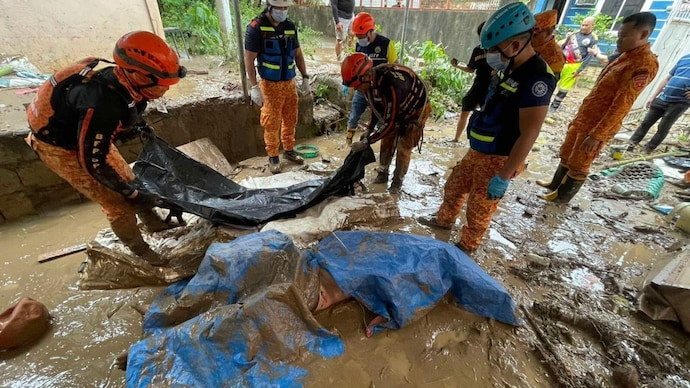
Typhoon Kalmaegi has claimed at least 66 lives and left 26 people missing in the central Philippines, with many casualties resulting from widespread flooding that stranded residents on rooftops and swept away numerous vehicles in a province still recovering from a deadly earthquake, news agency AP reported.
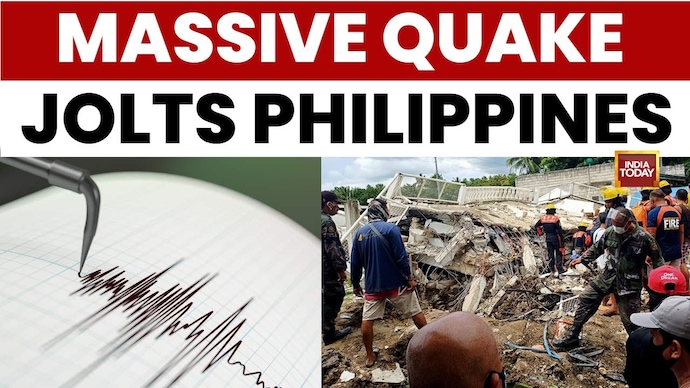
A powerful earthquake with a magnitude of over 7 has struck the Mindanao region in the southern Philippines. The quake's epicenter was located offshore near Davao Oriental, prompting immediate warnings from authorities. The Philippines cosmology agency has issued a tsunami warning and strongly advised residents in coastal areas to evacuate to higher ground. According to agencies, “hazardous tsunami waves are possible for coasts located within 300 kilometer of the earthquake at the center”. The Philippine Institute of Volcanology and Seismology specified the quake occurred at a depth of 10 kilometers off Manay town. As officials attempt to move people to safety, the governor of the Davao province noted that residents are panicked. Aftershocks are also a concern following the major seismic event.
Days after US President Donald Trump announced his 20-point Gaza peace plan, reports suggest that Hamas is likely to reject the peace plan that would end the war in Gaza.