Munawar Faruqui and wife Mehzabeen welcome first child, comedian feels blessed
Munawar Faruqui and Mehzabeen Faruqui have welcomed their first child together. The couple got married in May 2024.
The Marathas are a significant community in India, renowned for their historical role as warriors and champions of Hinduism. Originating from the western Deccan Plateau, specifically the present-day state of Maharashtra, the Marathas have a rich history that dates back to the 17th century.
The Marathas rose to prominence under the leadership of Shivaji, who united them against Muslim rulers in India. They established the Maratha Empire, which at its peak controlled most of the Indian subcontinent. By 1758, they had expanded up to Peshawar in present-day Pakistan.
The Marathas are known for their cultural contributions, particularly in the realm of folk music and dance. Today, the Marathas comprise around 32% of the state's population, demonstrating their enduring presence and influence in Indian society.
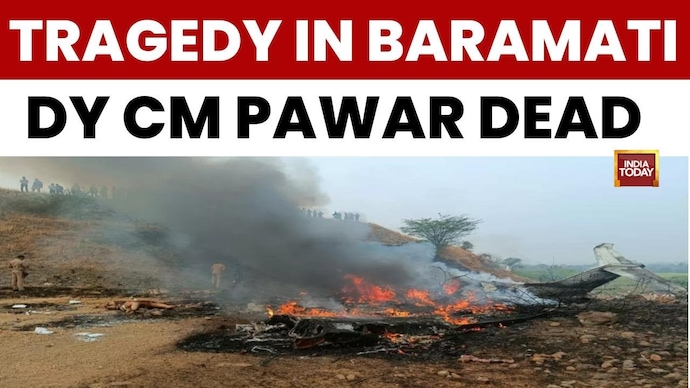
On this special report, Milind Khandekar, Managing Editor of TAXA, reflects on the sudden demise of NCP leader Ajit Pawar, describing it as a 'very, very sad day' for Maharashtra politics. Khandekar notes that 'he was the true inheritor of Sharad Pawar' and highlights how Ajit Pawar managed the party's grassroots operations for over 35 years. The discussion covers Ajit Pawar's political journey from becoming an MP in 1991 to his role as a perennial Deputy Chief Minister who never achieved his ambition of leading the state as Chief Minister. Khandekar also analyzes the recent shifts in Maharashtra's political landscape, including the 2024 assembly elections and the 2022 rebellion where Ajit Pawar joined the NDA. The segment explores the potential for a unified NCP following recent signs of the Pawar family factions coming together during local body and Pune elections, marking a significant turning point for the party's future.
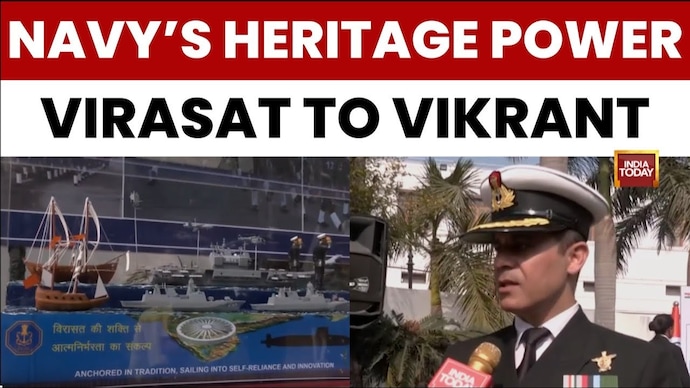
Commander Zubair Siddiqui and Lieutenant Lakshmi K. Ravi of the Indian Navy discuss the components and themes of this year's Republic Day tableau in an exclusive interview with India Today. Highlighting the theme 'Virasat ki shakti se aat nirbharta ka sankal', Commander Siddiqui explains how the display integrates Prime Minister Narendra Modi's vision of Vixit Bharat 2047 with India's rich maritime history. The tableau features ancient shipbuilding techniques like 'tankai' alongside modern indigenous platforms such as INS Vikrant. Lieutenant Lakshmi K. Ravi, currently serving in the Warship Design Bureau, details the inclusion of INS Udayagiri and INS Hindiri, marking the 101st indigenous redesigned warships. The presentation also emphasizes 'Nari Shakti' or women empowerment, featuring Lieutenant Commander Rupa and Lieutenant Commander Dilna, who represent the Navika Sagar Parikrama expedition. The interview underscores the Indian Navy's journey from ancient wood-and-rope vessels to advanced aircraft carriers and the growing role of women in maritime operations.
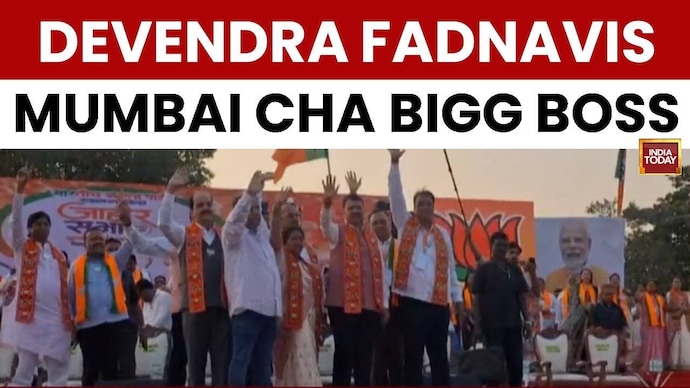
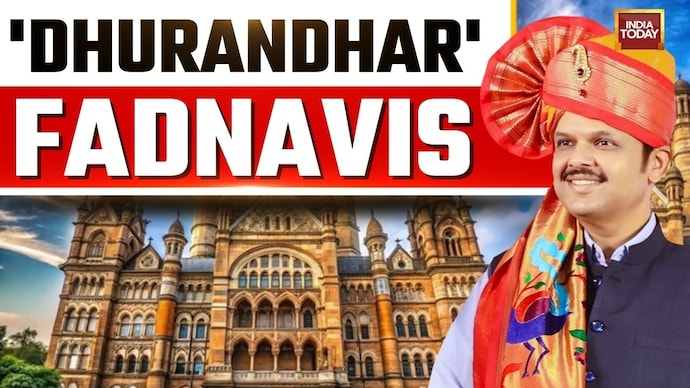
This special report highlights the political ascent of Devendra Fadnavis following the BJP-led Mahayuti alliance's historic victory in the Brihanmumbai Municipal Corporation (BMC) elections. The win marks a significant shift in Maharashtra politics as the alliance 'dethroned the Thakurs from the BMC, Asia's richest municipality'. The report traces Fadnavis' journey from being the youngest councillor at 22 and Nagpur’s youngest mayor to becoming the state's Chief Minister. It details his resilience through the political upheavals of 2019 and 2022, including his stint as Deputy Chief Minister under Eknath Shinde. After a setback in the 2024 Lok Sabha polls, Fadnavis led the BJP to its best-ever performance in the assembly elections, culminating in his restoration as Chief Minister and this latest municipal triumph.
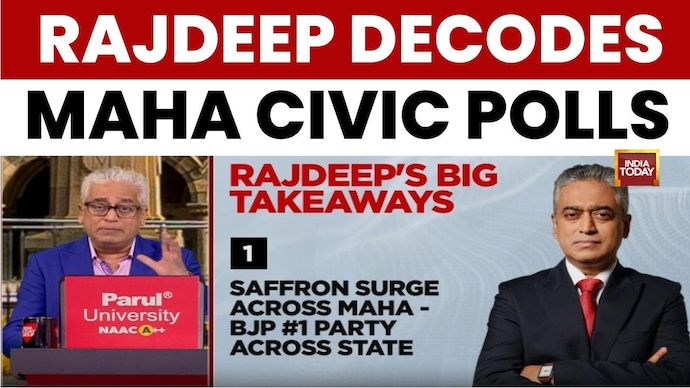
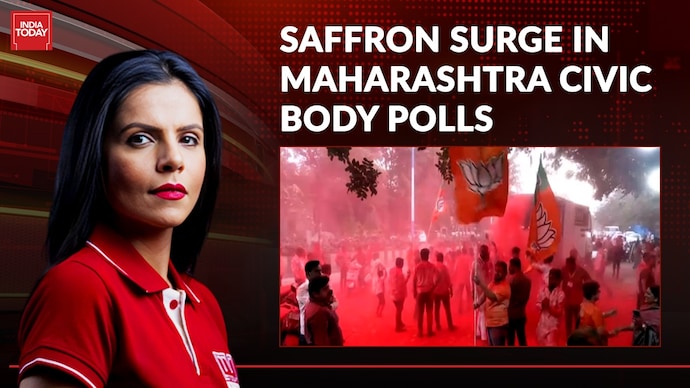
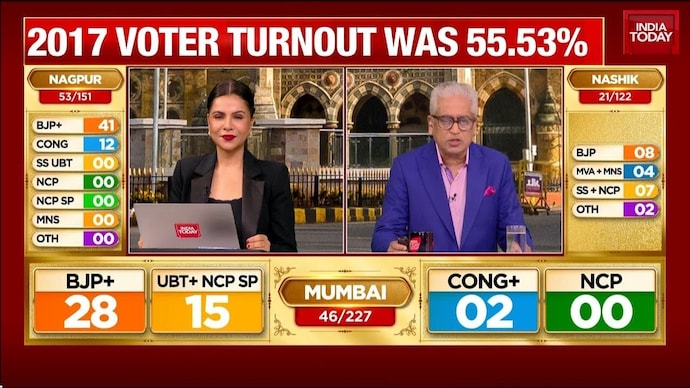
On this Special Report, Consulting Editor Rajdeep Sardesai analyses the 2026 Maharashtra civic election results, marking a 'tectonic shift' as the BJP dethrones the Thackeray family from the Brihanmumbai Municipal Corporation (BMC) after 30 years. Sardesai observes that 'The BJP has emerged as the party number one in India's second most populous state,' highlighting a 'saffron surge' across the region. The report identifies Chief Minister Devendra Fadnavis as a 'big winner' now positioned in the BJP's next-generation leadership. Key takeaways include the routing of the Pawar family in Western Maharashtra, the continued decline of the Congress party, and the significant rise of the AIMIM, which secured over 100 seats. Sardesai concludes that a fragmented opposition, combined with the 'Hindutva plus Vikas' formula, has granted the BJP a decisive advantage, establishing a 'triple engine' government with power at the Centre, the state Mantralaya, and local bodies.
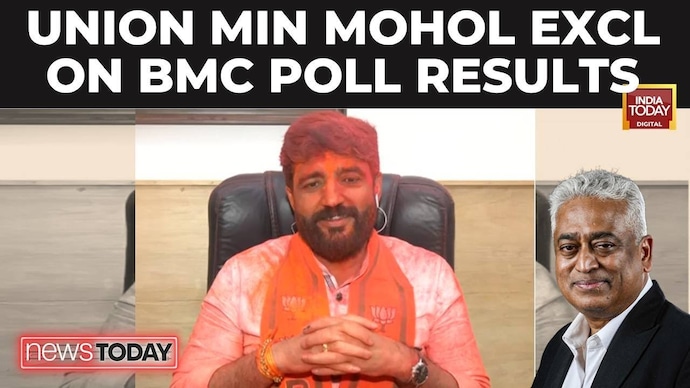
In this special report, the focus is on the shifting political landscape of Maharashtra as the Bharatiya Janata Party (BJP) makes significant inroads into traditional strongholds. Union Minister and Pune MP Muralidhar Mohal discusses the BJP's role in dismantling the long-standing dominance of the Pawar family in Pune and Pimpri. The speaker notes that 'family names are no longer guarantee of votes' and that political relevance now requires more than just family legacy. The programme highlights how the Nationalist Congress Party (NCP) alliance between Ajit Pawar and Sharad Pawar failed to hold their bastion in Western Maharashtra against the BJP's surge. Muralidhar Mohal provides insights into the strategic shift that led to this electoral outcome, marking a 'bad day in the office' for the established political dynasties of the region.
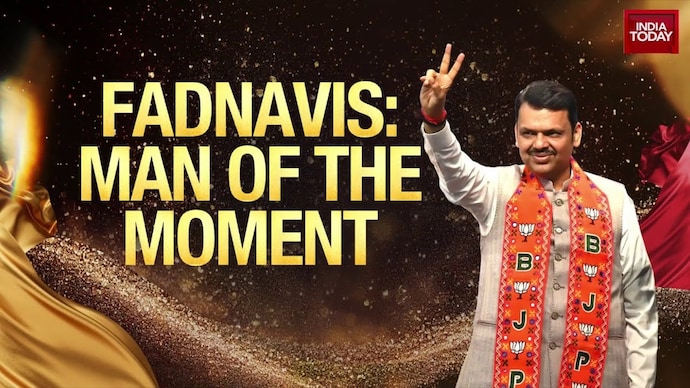
This special report highlights the political resurgence of Devendra Fadnavis following the Mahayuti alliance's decisive victory in the Maharashtra civic body polls. Described as the 'man of the match' and 'man of the series,' Fadnavis successfully led the campaign to end the Thackeray family's three-decade-long control over the Brihanmumbai Municipal Corporation (BMC). The report notes that Fadnavis 'perfected a winning formula, a mix of Hindutva and Vikas,' effectively consolidating various castes and overcoming regional identity politics. After a setback in the 2024 Lok Sabha elections, Fadnavis conducted 37 rallies across the state to secure this comeback. The programme traces his journey from a young councillor to his current standing as the Chief Minister and the dominant political force in India's second-largest state, having successfully navigated the challenges of coalition politics and internal leadership dynamics.
Preeti Choudhry anchors this Special Report from the Brihanmumbai Municipal Corporation building as Maharashtra civic poll results indicate a significant political shift. The Mahayuti alliance, led by the Bharatiya Janata Party and Eknath Shinde, secures a dominant position across 29 municipalities. Analysts Rajdeep Sardesai, Sahil Joshi, and Dhawal Kulkarni join the discussion to examine the BJP's emergence as the primary force in India's wealthiest civic body. The report details the impact on the Thackeray and Pawar families, noting a decline in traditional regional brand influence. Devendra Fadnavis is identified as the architect of this electoral strategy, with the panel evaluating his potential transition into national politics by 2029. Key topics include the fragmentation of the Muslim vote, the systematic dismantling of regional rivals like the Shiv Sena and NCP, and the evolving political landscape of Mumbai. The program concludes that the BJP's urban appeal and strategic alliances have fundamentally altered the Maharashtra political map, forcing the opposition to reinvent their strategies.
The top focus of this episode of To The Point is the Maharashtra civic body poll results. The Mahayuti alliance, led by the Bharatiya Janata Party, has secured a dominant position across 29 municipalities.
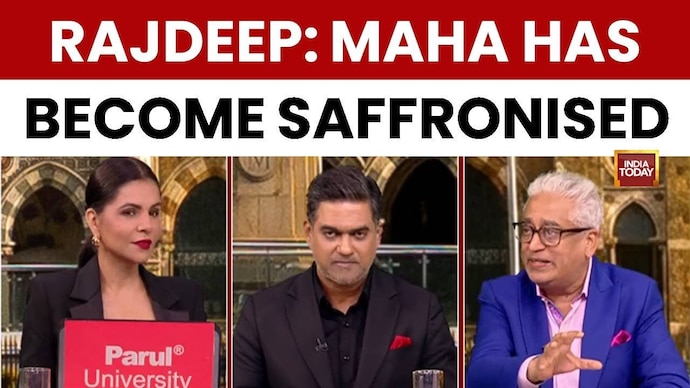
In this news bulletin, veteran journalist Rajdeep Sardesai analyses the shifting political landscape of Maharashtra following recent election trends. Sardesai observes that 'Maharashtra has, to a large extent, become saffronised', noting the Bharatiya Janata Party's (BJP) strategic dominance over traditional regional powers like the Shiv Sena and NCP. He highlights the rise of Devendra Fadnavis, noting how a leader from a minority community in the state's Maratha-dominated politics has become the 'Neta number one'. The discussion explores the potential for Fadnavis to emerge as a Prime Ministerial contender for 2029, while acknowledging the current undisputed leadership of Narendra Modi. Sardesai also reflects on the 'tectonic shift' in Mumbai's culture, moving from a grassroots middle-class focus to one dominated by redevelopers and contractors. The segment concludes with an analysis of the fragmented opposition and the possibility of future political realignments between the Pawar and Thackeray factions as the BJP continues its expansionist strategy across the state.
On this India Today special report, Consulting Editor Rajdeep Sardesai analyses the shifting political landscape in Maharashtra following recent election trends. Sardesai highlights the rise of Devendra Fadnavis, noting that 'if these numbers hold, clearly he will be Neta number one in Maharashtra, less dependent on Eknath Shinde or indeed Ajit Pawar.' The discussion focuses on how Fadnavis, a 55-year-old leader, has successfully navigated Maratha-dominated politics by blending a strong Hindutva identity with an image as an 'infrastructure man' for urban Maharashtra. The transcript also details the atmosphere at the BJP headquarters in Mumbai, where preparations for celebrations are underway but held in check until official results are declared. Sardesai points out the significance of Fadnavis leading the campaign without the direct presence of the BJP's 'Trimurti'—Narendra Modi, Amit Shah, and Yogi Adityanath—marking a potential transition in leadership dynamics within the state.
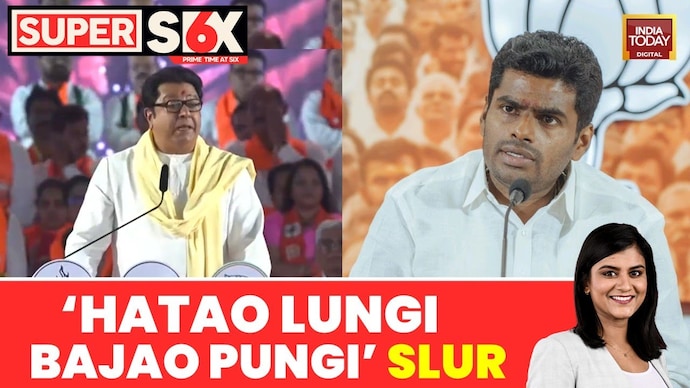
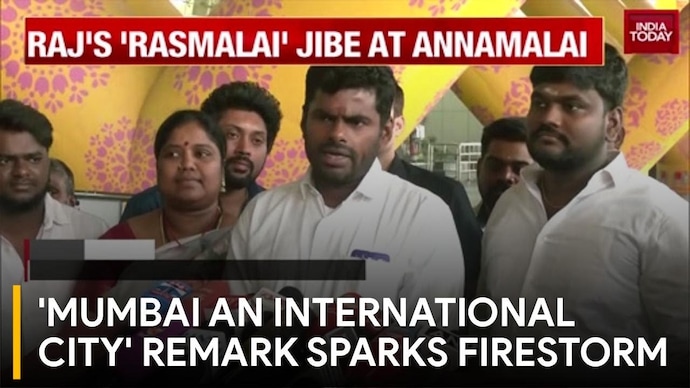
A political firestorm has erupted ahead of the 2026 BMC polls, with Maharashtra Navnirman Sena (MNS) Chief Raj Thackeray at the centre of a controversy for targeting Tamilians. In a Mumbai rally, Thackeray revived an old divisive slogan, stating, 'Hatao lungi, bajao pungi,' a call interpreted as inciting violence against South Indians. His remarks were aimed at BJP leader K. Annamalai, whom he mockingly called 'Rasmalai' after Annamalai described Mumbai as a 'global city' rather than just belonging to Maharashtra. The incident is being condemned as a dangerous attempt to stir regional chauvinism and identity politics for electoral gain. In response, Annamalai has stated he will not be intimidated and will continue to visit Mumbai, while the BJP claims his original comments were twisted for political purposes.
A political firestorm has erupted in Maharashtra ahead of the high-stakes BMC elections, following controversial remarks about Mumbai's identity. The conflict involves MNS chief Raj Thackeray and a BJP leader, identified in the report as K Annamalai. During a campaign, the speaker advocated for a 'triple engine government' and stated his vision for the city's development. He is quoted as saying, 'Because Bombay is not a Maharashtra city, it's an international city'. This comment triggered a sharp response from Raj Thackeray, who is reported to have used derogatory language. The speaker from the BJP also compared Mumbai's massive budget to that of other metros like Chennai and Bangalore, and outlined a vision where 'no slum should be in Mumbai' in the next seven years.
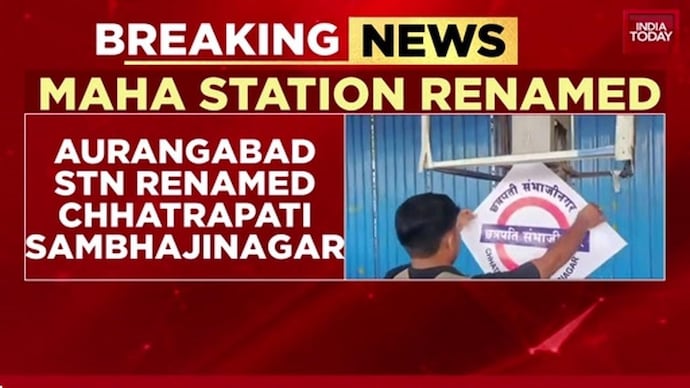
This special report covers the official renaming of the Aurangabad railway station to Chhatrapati Sambhaji Nagar railway station by the Central Railway. The report details the new station code, CPSN, and notes this development comes years after the city of Aurangabad was itself renamed by the Maharashtra government, then headed by Eknath Shinde. According to an official release, 'The competent authority has approved the change in the name of 'Aurangabad' Railway station of Nanded Division over South Central Railway as 'CHHATRAPATI SAMBHAJINAGAR' Railway station with the Railway Code for Station as CPSN.' The renaming honours the Maratha ruler Chhatrapati Sambhaji, son of Chhatrapati Shivaji Maharaj, and replaces the name of the Mughal emperor Aurangzeb. The original proposal for the city's name change was initiated by the earlier Uddhav Thackeray-led government.
A political firestorm has erupted in Pune over Namaz being offered inside the historic Shaniwar Wada fort, with key figures like BJP MP Medha Kulkarni leading the charge. Reacting to the incident, Maharashtra Minister Nitesh Rane asked, 'Will you be fine with Hindus going to Haji Ali and chanting Hanuman Chalisa?'. The controversy began after a video of women offering prayers at the heritage site went viral, prompting Kulkarni and other Hindu groups to conduct a 'purification' ritual using cow urine. The move drew sharp criticism from opposition parties and even from the BJP's political ally, the Ajit Pawar-led NCP, which accused the MP of trying to disturb social harmony. Samajwadi Party leader Abu Azmi also condemned the BJP's actions. The incident has led to increased police security at the fort, which is a protected monument under the Archaeological Survey of India.
MLA Rohit Pawar, during an interview at the India Today Conclave Mumbai, said he would not regret an angry outburst against an official, indicating a willingness to become "even angrier" if officers commit wrongdoing or deny justice to common people.
Maharashtra Chief Minister Devendra Fadnavis addressed the 2025 India Today Conclave Mumbai, a flagship event of the India Today Group, during which he touched upon key political issues and future strategies for Maharashtra. While announcing that the state's ruling Mahayuti alliance will contest the 2029 elections, he also expressed the belief that Prime Minister Narendra Modi should continue to lead the country as long as he is physically and mentally capable. He further announced that the state government is in the final stages of implementing sub-classification within the Scheduled Caste reservation quota, a measure intended to ensure benefits reach the most deprived sections of the community. He clarified the controversy surrounding a poster featuring him with Chhatrapati Shivaji Maharaj, explaining it was meant to reassure communities during the Maratha reservation agitation. Furthermore, Fadnavis dismissed Rahul Gandhi's calls for Gen Z protests.
A rift is growing within the Maharashtra cabinet over the Maratha reservation issue. OBC leader and Minister Chhagan Bhujbal skipped the state cabinet meeting, expressing discontent after the government reportedly struck a deal with activist Jarange Patil, who has been leading the protest for Maratha reservation.
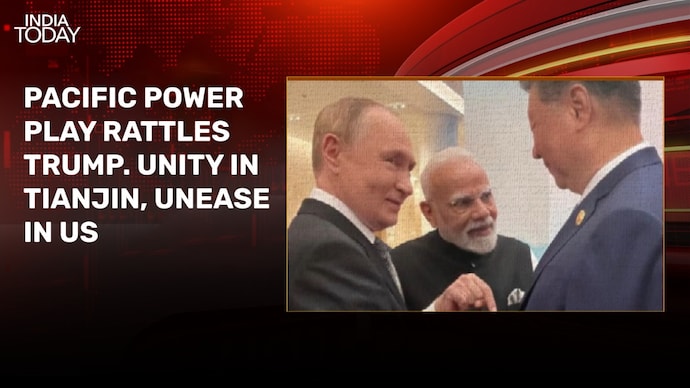
This edition of "India First" examines Washington's reaction to the meeting between Prime Minister Narendra Modi, Russian President Vladimir Putin and Chinese President Xi Jinping at the SCO summit in Tianjin.
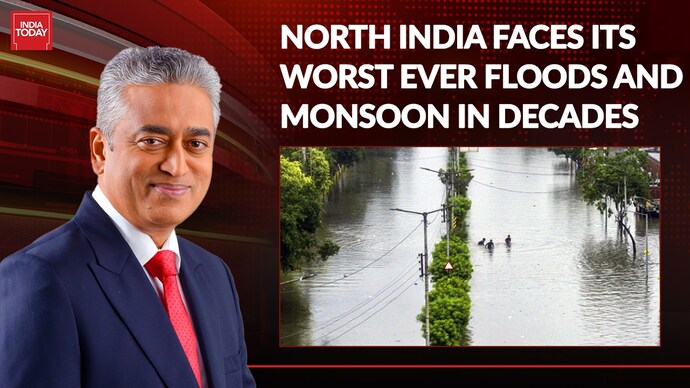
The top focus of this episode of News Today is monsoon fury in North India, which has severely hit states like Punjab, Himachal Pradesh, Jammu and Kashmir and the Delhi NCR.
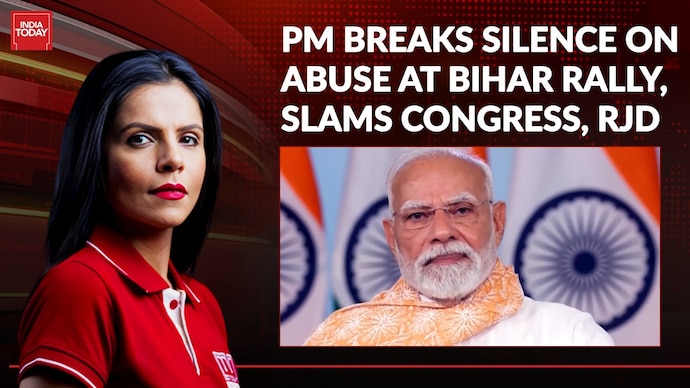
Congress leader Rahul Gandhi and RJD leader Tejashwi Yadav's Voter Adhikar Yatra might have ended, but one incident where a Congress worker abused Prime Minister Modi and his late mother continues to set the political agenda for the BJP.