Topic

Advertisement
TOPIC

Nirmala Sitharaman

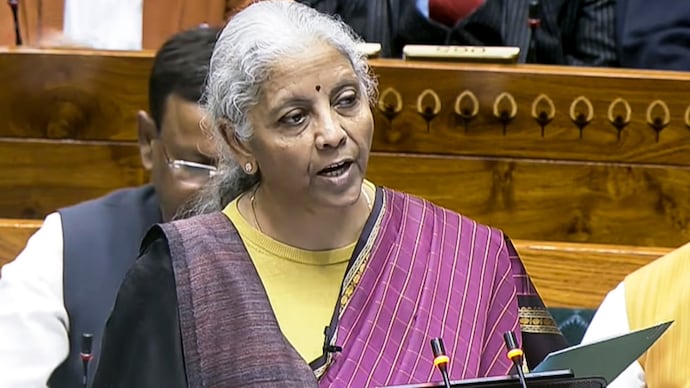
Nirmala Sitharaman is an Indian politician and the first full-time female finance minister of India.

She was born into a Tamil Brahmin family to Narayanan Sitharaman and Savitri Sitharaman on August 18, 1959, in Madurai, Tamil Nadu. She did her schooling in Madras and Tiruchirappalli and went on to Seethalakshmi Ramaswami College in 1980 to obtain a BA degree in Economics. Sitharaman is an alumnus of Jawaharlal Nehru University and the London School of Economics.  

Before entering into politics, Nirmala Sitharaman briefly worked for BBC World Service and was also designated as a senior manager at PricewaterhouseCoopers.  

Sitharaman joined the Bhartiya Janata Party (BJP) in 2006 and was appointed as the national spokesperson for the party in 2010. A prominent female figure in Indian politics, she was inducted in Narendra Modi’s cabinet as a junior minister and was further elected as a Rajya Sabha member from Andhra Pradesh in 2014.

Nirmala Sitharaman was sworn in as the corporate affairs minister and the 28th Finance Minister of India on May 31, 2019. She also served as the defence minister of the country to become India’s second female defence minister, after Indira Gandhi.

During her effective tenure as the Union Finance Minister of India, she became the second woman in the history of independent India to present the Union Budget after she presented her maiden budget in the Indian parliament in 2019.    

Interestingly, Nirmala Sitharaman has been ranked 39th in the Forbes 2020 list of 100 most powerful women.

 

...Read More
  • ALL
  • STORIES
  • VIDEOS

STORIES

India sounds alarm, demands fair access to Anthropic's Mythos AI

India has opened talks with the US and Anthropic after being excluded from early access to Mythos AI, a model seen as a major cybersecurity threat. The Centre is now pushing for fair access while strengthening protection of banks, telecom and power networks.

Decoding the AI threat to banks that Nirmala Sitharaman warned about

Finance Minister Nirmala Sitharaman met bank chiefs to discuss rising AI-linked risks in the financial system. To understand how serious the threat could become, we dug deeper into the risks banks face from AI and spoke to experts across the cybersecurity and technology sectors.

Divestment plan | Bring home the money

The second phase of the Centre's asset monetisation plan, NMP 2.0, more than doubles the target to Rs 16.72 lakh crore, much of it to be mopped up by 2030

Load More

VIDEOS

India tackles LPG crisis; US warns Iran of 'most intense strikes'

This India Today Super 6 report, anchored by Akshita Anandakopal, examines the resolution of India's LPG supply crisis and the government's strategy for domestic energy security. Union Petroleum Minister Hardeep Puri confirms that oil refineries are operating at full capacity and supply chains remain intact, prioritizing household consumption. Internationally, Brent crude prices experienced a marginal decline following U.S. President Donald Trump’s assertion that the West Asia conflict may end soon. However, the report also details the economic impact of the war, including fuel price hikes in Pakistan and rationing in Bangladesh. Trump addresses the humanitarian crisis following the bombing of an Iranian girls' school, attributing the strike to Iran despite evidence involving a Tomahawk missile. Additionally, the broadcast covers diplomatic resolution efforts led by Russia and parliamentary disputes in India. A dedicated fact-check segment addresses viral misinformation and social media rumors surrounding the conflict. The episode provides a comprehensive overview of global oil market volatility, regional energy stability, and ongoing geopolitical developments.

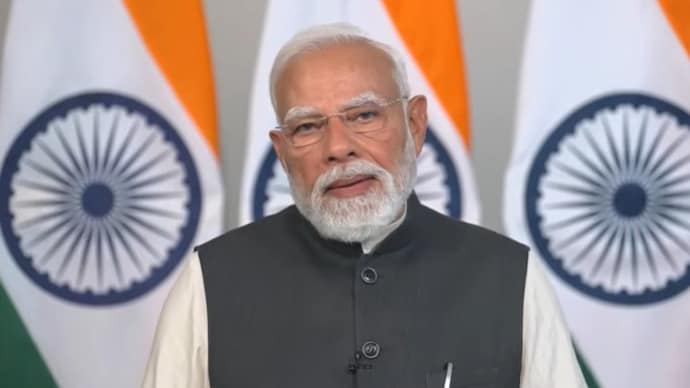
Har ghar Laxmiji padhaare: PM Modi outlines budget vision

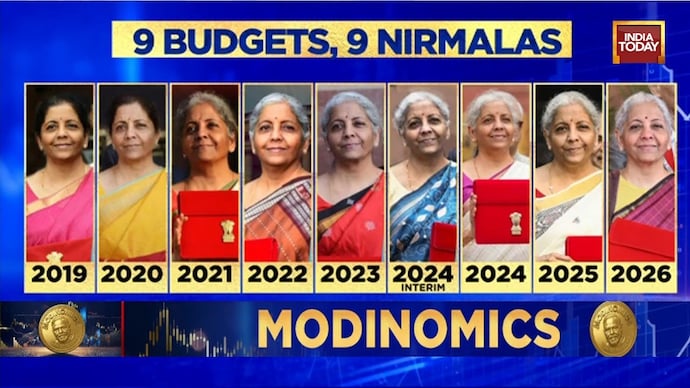
Prime Minister Narendra Modi said India’s 140 crore citizens are no longer content with being the world’s fastest-growing economy and want the country to become the world’s third-largest economy “as soon as possible.” He said the Union Budget gives equal importance to multiple sectors and lays the groundwork for achieving the vision of Viksit Bharat by 2047. Highlighting Nari Shakti, Modi praised Finance Minister Nirmala Sitharaman, calling the Budget historic for underscoring India’s commitment to women’s empowerment. “As a woman Finance Minister, Nirmala ji has set a new record by presenting the Union Budget for the ninth consecutive time,” the Prime Minister said, lauding her leadership and consistency.

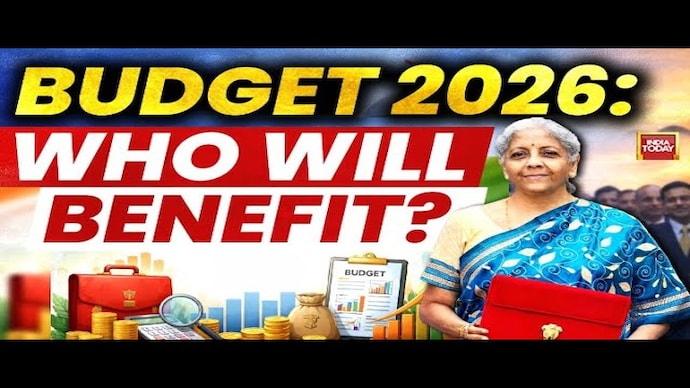
Nirmala Sitharaman Heads To Parliament To Table Union Budget 2026 After Meeting President

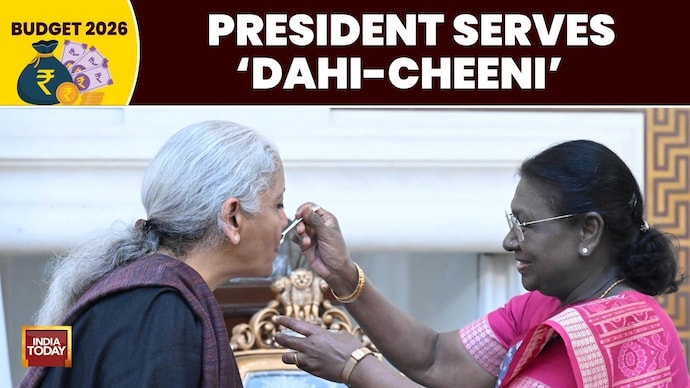
On this Special Report, the focus is on the presentation of the Union Budget 2026 as Finance Minister Nirmala Sitharaman heads to Parliament. The transcript captures the live movement of the Finance Minister's convoy from Rashtrapati Bhavan to the new Parliament building after seeking formal permission from the President of India. A key moment highlighted is when the reporter notes, 'This is the convoy of Finance Minister Nirmala Sitharaman which is now heading towards the Parliament' for the crucial Cabinet meeting. The programme discusses the evolution of budget presentations from 1985 to the current televised era, noting how finance ministers have become more conscious of a national audience. Analysts on the show deliberate on the shift from tax-heavy budgets to those focused on tariffs and infrastructure. The discussion further explores the government's significant investments in roads and power since 2020, questioning the remaining fiscal headroom for continued infrastructural spending as the nation awaits the official tabling of the budget at 11 am.

Shweta Singh on Union Budget 2026: 'Nirmala Sitharaman's Saree Sends Message To Tamil Nadu'

On this special broadcast of the Business Today show on India Today, Shweta Singh and Rajdeep Sardesai analyze the expectations and political symbolism surrounding the Union Budget 2026. Shweta Singh highlights the significance of Finance Minister Nirmala Sitharaman’s attire, noting, 'She's wearing a hand-woven Kanjiwaram saree, sending a message to Tamil Nadu.' The discussion delves into the shift from 'Dream Budgets' to a long-term vision for 'Vixit Bharat 2047'. Rajdeep Sardesai questions the translation of intent into ground-level action, particularly regarding deregulation and the fiscal health of states. Guest Shankar Iyer critiques the slow pace of labor reforms and the persistent 'Tax Inspector Raj' affecting MSMEs. The panel also examines the 16th Finance Commission's role in addressing the North-South divide and the impact of upcoming state elections on fiscal policy. The programme concludes with observations on how the government’s 'reform express' faces challenges in sectors like power and ease of doing business despite a decade of intent.

Rajdeep Sardesai Recalls 1994 Budget Coverage: 'Excitement Since 1991 Has Never Really Gone'

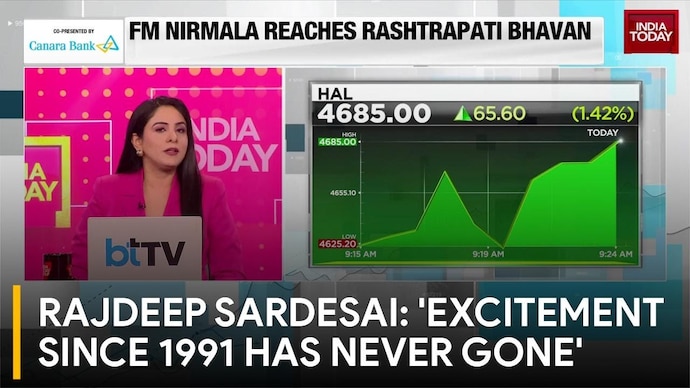
On this India Today special, veteran journalist Rajdeep Sardesai reflects on the evolution of the Union Budget in India, tracing his experience back to 1994. Recalling his early days at NDTV, Sardesai notes, 'In 1994, I was at NDTV when we were commissioned to do the post-budget reactions' outside the BSE. He highlights how the post-1991 era brought a unique excitement to budget announcements that persists today, despite the process becoming more 'mundane' following major tax reforms. The discussion covers the shift from high-stakes policy changes to the current market preference for stability and the absence of 'retrospective tax bombshells'. Sardesai also addresses the impact of global geopolitics on the Indian economy, questioning the influence of external leaders on India's sovereign energy decisions, specifically regarding oil imports from Venezuela and Iran. The panel further examines the feasibility of the government's disinvestment targets and the long-term roadmap for defense allocations in the upcoming budget by Nirmala Sitharaman.

Siddharth Zarabi Analyzes Market Trends And Tax Policy Expectations Ahead Of Union Budget 2026

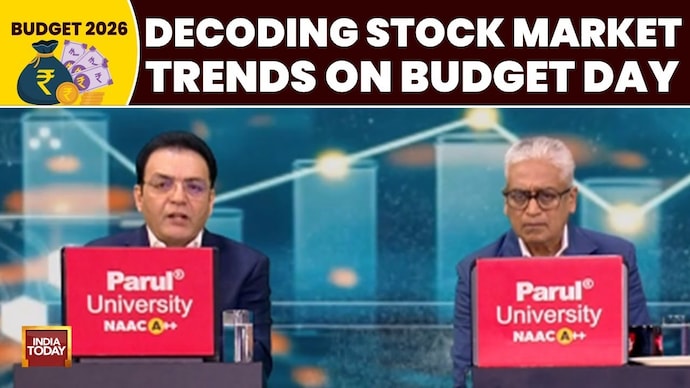
On this Special Report, Managing Editor Siddharth Zarabi leads a panel discussion on the expectations and market sentiments surrounding the Union Budget. Analyzing the current economic climate, Zarabi emphasizes the need for stability, stating, 'Don't surprise anyone negatively, continue down the path of fiscal consolidation and solid factual credible numbers.' The discussion covers the 'Goldilocks movement' of the Indian economy, the shift toward the new tax regime, and the limited scope for indirect tax tinkering. The panel, including Chetan Bhutani and Sakshi Batra, explores capital expenditure in infrastructure, the potential for a 10-25% hike in defense allocation following 'Operation Sindoor', and the necessity of triggering 'animal spirits' in private investment. Dr. Baru highlights that while fiscal stabilization is on track, domestic demand and private capital formation remain stagnant. The program provides a comprehensive look at how the finance ministry might balance non-tax revenues with high-priority spending in a shifting global world order.

Budget 2026: Focus On 'Reform Express' And Digital Transformation At Kartavya Bhawan

In this India Today special report, Maria Shakil leads coverage as Finance Minister Nirmala Sitharaman prepares to present her ninth Union Budget. For the first time in 75 years, the Finance Minister is expected to read 'Part B' of the budget speech in its entirety, focusing on custom reforms and deregulation. The government aims to balance CAPEX-led growth with consumption relief while emphasizing digital transformation through a tablet-based 'Bahi Khata' at the new Kartavya Bhawan. Key discussions include potential tweaks to the Security Transaction Tax (STT), recalibration of capital gains tax, and increased allocations for PM Awas Yojana and Ayushman Bharat. Union Minister Piyush Goyal provides insights into India's trade deal with the European Union. Analysts examine the 'K-shaped' economy, global headwinds, and the role of cooperative federalism in driving labor-intensive manufacturing. The program also highlights the participation of women in the budget drafting team to address household economic concerns ahead of crucial elections in five states.