Topic

Advertisement
TOPIC

Uniform Civil Code

Uniform Civil Code (UCC) refers to a proposed set of common laws that would govern personal matters, including marriage, divorce, inheritance, and adoption, for all citizens of a country.

The code comes under Article 44 of the Constitution, which lays down that the state shall endeavor to secure a Uniform Civil Code for the citizens of India.

The objective of a Uniform Civil Code is to ensure equality, justice, and non-discrimination in personal matters.  Additionally, it aims to replace the existing personal laws based on religious communities and establish a single unified code applicable to all individuals, regardless of their religious beliefs.

...Read More
  • ALL
  • STORIES
  • VIDEOS

STORIES

Chhattisgarh holds cabinet meeting, seeks to draft uniform civil code regulations

The cabinet has approved the formation of a high-level committee, which will be headed by the retired Justice Ranjana Prakash Desai and members authorised by the Chief Minister. This committee will engage with citizens, organisations, and legal experts to gather wide-ranging feedback, potentially through a dedicated web portal, to prepare a comprehensive draft regarding the UCC.

UCC gets its second lab in Gujarat

The original home of Hindutva—Gujarat—gets to experiment with India’s second draft of the Uniform Civil Code. Though nuancing Uttarakhand’s version, it preserves its blind spots on constitutional freedoms

Load More

VIDEOS

Unpolitics: Gujarat UCC pushes gender justice, says Deputy CM Harsh Sanghvi

In an interview, Gujarat's Deputy Chief Minister, Harsh Sanghvi, detailed the state's new Uniform Civil Code (UCC), positioning it as a law for gender justice. Following Uttarakhand, Gujarat has become the second state to pass a UCC bill, which aims to create a common legal framework for marriage, divorce, and succession for all communities. Sanghvi, who also manages the Home, Police, and Transport portfolios, noted that the legislation was drafted after the Justice Ranjana Desai Committee reviewed over 20 lakh public suggestions. Key provisions include the mandatory registration of marriages and live-in relationships, a measure intended to protect women from fraudulent relationships. The law also grants legitimate status to children born from live-in unions and allows deserted women to claim maintenance. Sanghvi clarified that while parental notification is required for marriage registration, their consent is not. He also defended the exemption of tribal communities from the UCC's provisions.

Pramod Sawant on 'Viksit Goa 2037', third district, nightclub safety and more

In an exclusive interaction on India Today UnPolitics, Pramod Sawant outlined Goa's administrative reforms and development roadmap. Sawant discussed the creation of Kushavati, Goa's third district carved out of South Goa, to improve governance and decentralisation. He highlighted the ‘Viksit Goa 2037’ vision, which aimed to achieve developed state status a decade ahead of the national target.

77th Republic Day Special : The Journey Of India's Constitution From Preamble To Fundamental Rights

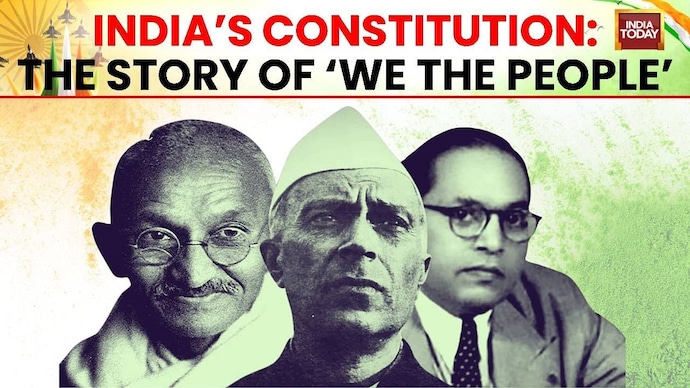
This special report examines the historical creation and evolution of the Constitution of India, featuring insights from Senior Advocate Abhishek Manu Singhvi and host Preeti Choudhury. The narrative traces the document's origins from the 1946 Cabinet Mission and Jawaharlal Nehru’s Objectives Resolution to the intense Constituent Assembly debates involving Dr. B.R. Ambedkar, Sardar Patel, and K.T. Shah. Key topics include the Preamble, the Westminster system of governance, fundamental rights, and the 42nd Amendment which added the terms socialist and secular. The report details the artistic contributions of Nandalal Bose and the calligraphy of Prem Bihari Narayan Raizada, illustrating how the document reflects India's civilizational values. It further explores the Pune Pact, Dalit reservations, and the removal of the right to property. Defined as a living document, the Constitution serves to limit government power while ensuring equality. The program concludes that the strength of the world's largest democracy relies on the constitutional morality of its citizens and the framework established by its founding leaders.

Key takeaways from PM Modi's Independence Day speech

In the longest ever Independence Day speech by an Indian Prime Minister, PM Narendra Modi spoke about various topics, including women's safety, the idea of 'One Nation One Election' and a 'secular' Uniform Civil Code, among others.

Mamata Banerjee reiterates opposition to CAA, NRC; BJP wins from Surat unopposed

West Bengal Chief Minister Mamata Banerjee has reiterated her opposition to the Citizenship Amendment Act (CAA), National Register of Citizens (NRC) and Uniform Civil Code (UCC). Speaking while campaigning for the Lok Sabha polls, she said, "No one should fear CAA or NRC in Bengal". In other news, The BJP won its first seat in the ongoing Lok Sabha polls, as its candidate Mukesh Dalal was on Monday declared elected from Surat, after the nomination of Congress candidate was rejected and other candidates withdrew from the fray. Dalal won uncontested - the election was scheduled on May 7 - after the other candidates withdrew on Monday, the last day of withdrawal of papers. They included four Independents, three from smaller parties and Pyarelal Bharti of Bahujan Samaj Party.