
Bihar's youth-led cleanup drive to save dying river inspires entire city to join in
Volunteers in Bihar's Sitamarhi turned a clean-up of the Laxmana River into a wider city campaign. After a video of the effort went viral, officials, leaders and residents joined the drive.
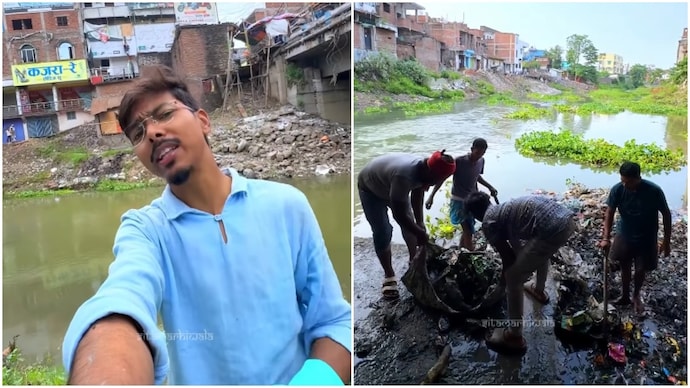

A river in Bihar’s Sitamarhi was slowly disappearing under layers of garbage and neglect until a group of determined young residents decided they could no longer look away.
For years, the Laxmana River, also known locally as the Lakhandei, had been reduced to little more than a polluted drain carrying the burden of the city’s waste. Plastic, sludge and garbage had piled up along its ghats, while official action remained limited. What was once a flowing river had gradually become a symbol of urban apathy.
That is when a youth-led group called “Swachhta Prahari,” started by Suman and local volunteers, stepped in.
What began as a small cleanliness drive soon evolved into a relentless month-long effort to revive the riverbanks. Day after day, the volunteers cleaned the ghats, removed garbage and urged residents not to dump waste into the water. Tractor-loads of trash were pulled out during the campaign, exposing the sheer scale of neglect the river had endured over the years.
The challenge, however, went beyond cleaning alone. The group also highlighted the lack of basic civic infrastructure in the city, including the absence of adequate dustbins, which made waste disposal difficult for residents.
Realising that awareness alone was not enough, the team turned to social media. They began posting videos documenting the condition of the river and tagged municipal authorities, administrators and local officials. The visuals quickly spread online and triggered widespread attention.
Within hours, officials reportedly contacted the team.
Watch the video here:
What followed transformed the initiative from a local volunteer effort into a city-wide movement. Municipal officials, public representatives, administrative officers and local residents began arriving at the riverbanks to participate in voluntary community labour aimed at cleaning and restoring the area.
The campaign has now become more than just a cleanliness drive. For many residents, it stands as proof that meaningful civic action often begins with ordinary people refusing to accept neglect as normal, and deciding instead to rebuild what their city had almost forgotten.