
Gurugram founder fires employee on WhatsApp, 'no-notice' policy sparks backlash
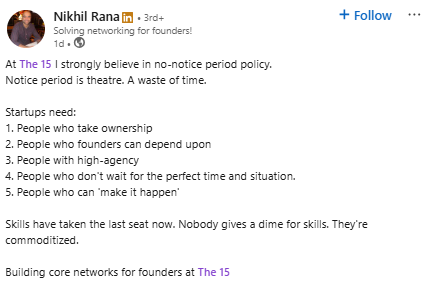
Nikhil Rana, who runs The 15, shared his opinion in a post on LinkedIn, where he criticised traditional notice periods as "theatre" and "a waste of time."
Gurugram founder fires employee on WhatsApp, 'no-notice' policy sparks backlash (Photo: Nikhil Rana/LinkedIn)

New Delhi,UPDATED: Apr 10, 2026 15:46 IST
The founder of a Gurugram-based company has invited severe backlash after he fired an employee on WhatsApp and refused to put him on notice, saying he “strongly believes” in a “no-notice period” policy.
Nikhil Rana, who runs The 15, shared his opinion in a post on LinkedIn, where he criticised traditional notice periods as “theatre” and “a waste of time.”
Speaking about his hiring philosophy, Rana said startups need “people who take ownership,” “high-agency” individuals, and those who can “make it happen.” He added that “skills have taken the last seat now” and are “commoditised.”
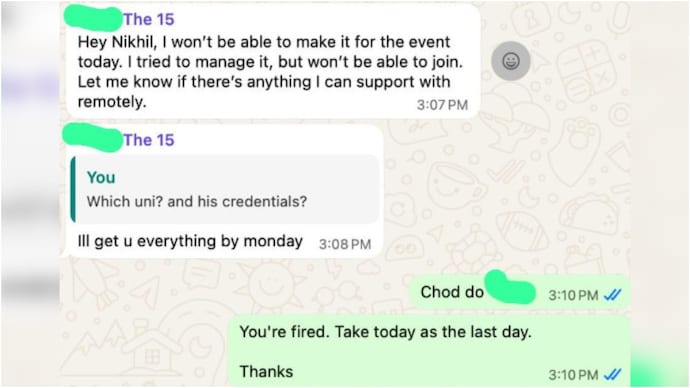
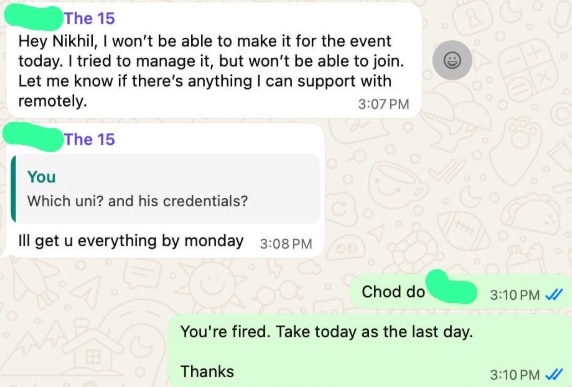
The post included a screenshot of a WhatsApp conversation in which an employee informed him that he would not be able to attend an event but offered to assist remotely.
“Hey Nikhil, I won’t be able to make it for the event today. I tried to manage it, but won’t be able to join. Let me know if there’s anything I can support with remotely,” the employee wrote, adding later, “I’ll get you everything by Monday.”
Rana’s response was brief: “Chhod do (Leave it). You’re fired. Take today as the last day. Thanks.”
Take a look at the post here:
The post triggered massive outrage in the comments section, with many users criticising the approach as harsh and reflective of a problematic work culture.
Constant availability should not be the benchmark for dedication, a user said, adding: “The only thing built for nonstop availability is AI, not people.”
Several others were more direct, describing the incident as “ruthlessly toxic” and “glorified toxicity.”
One comment said, “No-notice firing over a missed event isn’t ownership, it’s poor management and zero respect for people,” arguing that strong teams are built on trust and mutual accountability.
Startup work culture - particularly expectations of employee availability, the value placed on skills versus attitude, and the line between high-performance demands and workplace well-being - were widely discussed as the post went viral.
- Ends