
Have untapped leverage to counter: Iran warns Trump on naval blockade move
The Iranian official's warning came shortly after Trump announced that the US Navy would move to blockade ships entering or exiting the Strait of Hormuz, following the collapse of ceasefire talks between Washington and Tehran.
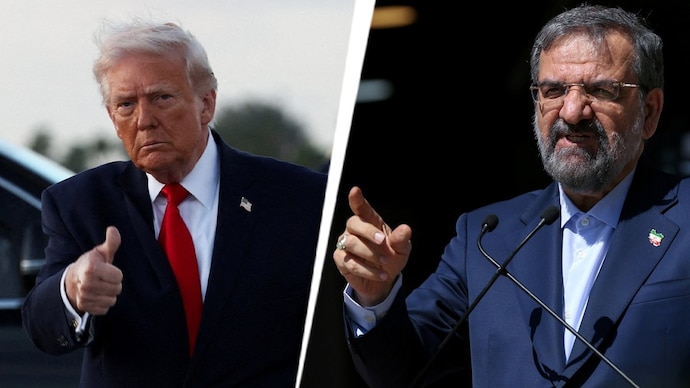

An Iranian official has warned that Tehran holds "untapped leverage" to counter a proposed US naval blockade, dismissing the move as bound to fail amid rising tensions in the Middle East. Citing what he described as a prior American setback in efforts linked to the Strait of Hormuz, Mohsen Rezaee, a member of Iran's Expediency Council, argued that Washington would face a similar outcome again.
"Just as America suffered a historic defeat against Iran in opening the Strait of Hormuz, it is also doomed to defeat in a naval blockade," he was quoted as saying by the IRIB state broadcaster.
Furthermore, Rezaee warned that any attempt by the United States to impose a blockade would meet firm resistance from Iran's armed forces.
"Iran's armed forces will not allow America to do so. We have great untapped leverage to counter it. Iran is not a place to be surrounded by tweets and imaginary plans," he added.
The remarks came shortly after US President Donald Trump announced that the US Navy would move to blockade ships entering or exiting the Strait of Hormuz, following the collapse of ceasefire talks between Washington and Tehran in Pakistan.
The US Central Command said the blockade would begin on Monday at 10 am EDT (7.30 pm India time) and would apply to all Iranian ports. It added that enforcement would be 'impartial' and extend to vessels of all nationalities, though ships transiting between non-Iranian ports would still be allowed passage through the strait.
The development followed a 21-hour of marathon talks between US and Iranian delegations in Islamabad that ended without an agreement, leaving the already fragile two-week ceasefire in doubt.
Meanwhile, three leading Hebrew television networks reported on Sunday that the Israel Defense Forces (IDF) is preparing for a possible escalation with Iran, following the collapse of ceasefire talks between the United States and Tehran. The reports appeared to stem from a coordinated leak by defence officials, according to a report by The Times of Israel.
The developments came days after a Pakistan-brokered, two-week ceasefire took effect, and within hours of talks in Islamabad ending without an agreement to permanently halt the conflict.
The Middle East conflict, now in its seventh week, has claimed thousands of lives and triggered sharp volatility in global markets.
Shipping data reflected the immediate impact of the announcement. According to Lloyd's List Intelligence, vessel movement through the Strait of Hormuz briefly halted after Trump's recent statement, with at least two ships reversing course. Traffic had only recently begun to recover after a temporary pause in hostilities.
Oil markets remain highly sensitive to the escalation. Brent crude, which was trading near USD 70 per barrel before the conflict intensified in late February, has surged to highs above USD 119. Prices later eased, with Brent for June delivery settling at USD 95.20 per barrel on Friday, down 0.8 per cent.
Experts have estimated that the proposed blockade could remove around 2 million barrels of oil per day from global supply, compounding disruptions already linked to the conflict, which has taken roughly 10 million barrels per day off the market.