
With a blockade over a blockade, is Trump dragging the world into Iran war?
After the peace talks with Iran failed, US President Donald Trump has imposed a blockade on the Strait of Hormuz. This measure isn't just to pressurise Iran. Trump might be trying to force countries into joining the Iran war after his appeals failed to get the desired results.
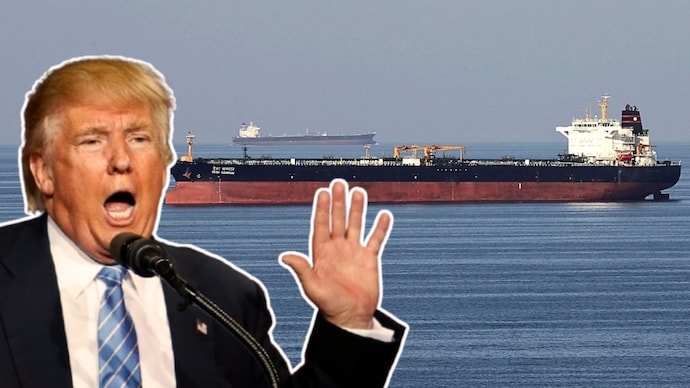

After a 21-hour marathon of talks in Islamabad ended without a peace deal, US President Donald Trump announced that the American Navy would impose a blockade on the Strait of Hormuz. The move aims to prevent vessels from entering or leaving Iranian ports — and to interdict neutral ships that paid Iran for safe passage through the Strait of Hormuz. While intended to pressure Tehran, Trump's blockade risks punishing other countries who had rejected his plans for a global naval task force and instead moved independently to secure their energy cargoes. With the blockade, Trump might be trying to drag several other countries into the Middle East crisis.
The narrow Strait of Hormuz, just 21 miles (34 km) at its narrowest, has long been a critical chokepoint, carrying roughly one-fifth of global oil trade before the 2026 Iran war. It links major Gulf producers (Saudi Arabia, Kuwait, Qatar, and Iran) with major energy importers, especially in Asia (China, India, Japan, and South Korea). India's 90% LPG imports also pass through the narrow waterway between Iran and Oman.
Since the start of the Iran war on February 28, Tehran has imposed a blockade of the Strait of Hormuz through targeted drone and missile strikes as well as laying mines. Iranian attacks led to the damage of 24 commercial ships (as of April 1).
But the apparent risk of sailing a fully-loaded oil or gas tanker through a strait where the sky could rain fire at any time was enough to convince most shippers to pause operations indefinitely. This, combined with the damage caused to the Gulf's energy infrastructure, led to the largest oil crisis in history, with prices of both Brent Crude and West Texas Intermediate (WTI) rocketing past $100 a barrel.
The ceasefire agreement between Washington and Tehran on April 7 eased the situation. The agreement saw Iran agreeing to allow vessels to transit Hormuz Strait for two weeks, with their passage coordinated by the Iranian military. The price of oil also started decreasing, with both Brent and WTI falling to below $100 a barrel by Friday.
That fragile reprieve ended in the days to come. On April 12, US Vice President JD Vance confirmed the Islamabad talks had failed to produce a broader peace agreement. Longstanding US-Iran animosity made a breakthrough in a single day unlikely, but Trump, eager to exit the conflict, opted for escalation.
On the same day, Trump announced on Truth Social that the US Navy would "begin the process of BLOCKADING any and all Ships trying to enter or leave the Strait of Hormuz". He added that the US Navy would interdict any neutral vessel that paid Iran for safe passage through the Strait. The aim is to increase pressure on Tehran by disrupting its ability to sell oil to the world, its biggest source of revenue.
The Iranian Consulate in Hyderabad retorted via a post on X, writing that "The Strait of Hormuz isn't social media. If someone blocks you, you can't just block them back." Iran's Revolutionary Guards responded to Trump by warning that military vessels approaching the Strait will be considered a ceasefire breach and dealt with harshly and decisively, underlining the risk of a dangerous escalation, reported the wire agency, Reuters.
Although the US Central Command (CENTCOM) was later reported by news agency Reuters as clarifying on Monday that the blockade would be "enforced impartially against vessels of all nations entering or departing Iranian ports" and ensure freedom of navigation for those vessels departing or entering non-Iranian ports. Reuters also noted that ahead of the blockade, tankers had once again started "steering clear of the Strait".
So, how is Trump forcing other nations to join in by choking the Strait of Hormuz?
TRUMP'S BLOCKADE PUNISHING ALLIES AND NEUTRALS ALIKE
This measure by Trump, effectively reversed the reprieve in energy prices the rest of the world was going through, with both Brent and WTI again crossing $100 a barrel on Monday.
He is, in effect, punishing the rest of the world for not heeding his previous requests to allies and major energy importers to form a joint naval task force to secure the Strait. Instead of participating, several nations which are dependent on oil and gas shipments through the Strait, pursued independent approaches.
For instance, China (the largest buyer of oil through Hormuz) coordinated directly with Iran for safe passage of its vessels, importing an estimated 1.5 to 1.6 million barrels per day through complex sanctions-evasion networks. China also benefited from Iran's de-facto Hormuz toll, which took payments in Chinese currency Yuan instead of the American Dollar.
India negotiated bilateral arrangements with Tehran to allow its tankers to transit and focused on securing its own energy needs through diplomacy and direct deals.
Even America's allies, like Japan and South Korea, declined to deploy naval assets to secure transit rights through Iran. They instead focussed on diversifying imports away from the Middle East as well as releasing stocks from their strategic reserves.
By enforcing the blockade unilaterally, Trump is effectively penalising these countries, and global energy consumers, for not aligning with Washington DC's preferred approach. Trump is also trying to drag these countries into the war.
Meanwhile, British PM Keir Starmer said on Monday that whatever the pressure, Britain would not be dragged into the Iran war nor be involved in a blockade of the Strait of Hormuz. "We're not supporting the blockade," he told BBC Radio 5 Live.
Japan and Britain have held that they were willing to participate in efforts to secure the Strait of Hormuz but only after the fighting ended.
France's President, Emmanuel Macron, also tweeted on Monday that France and the UK will create a conference of countries strictly separated from those involved in the Iran war for a multinational mission aimed at ensuring safe transit for commercial vessels through the Strait.
He wrote, "Together with the United Kingdom, we will organise a conference with those countries prepared to contribute alongside us to a peaceful multinational mission aimed at restoring freedom of navigation in the strait. This strictly defensive mission, separate from the warring parties to the conflict, is intended to be deployed as soon as circumstances permit."
This was later confirmed by British PM Keir Starmer, who wrote on X that "The UK has convened more than 40 nations who share our aim to restore freedom of navigation. This week the UK and France will co-host a summit to advance work on a coordinated, independent, multinational plan to safeguard international shipping when the conflict ends."
What began as leverage against Iran now risks a renewed oil shock that hits importers worldwide hardest.
The coming days would show whether the blockade forces Iran to concede or simply amplifies economic pain across the globe.