Advertisement

President Trump is not the most powerful leader: Ian Bremmer

In this exclusive interaction with India Today at Davos, Ian Bremmer, President of Eurasia Group, analyses the shifting global dynamics in the 'Trumpian era'. Bremmer asserts that the United States is the most powerful country in the world, but President Trump is not the most powerful leader. Xi Jinping is. He adds Donald Trump dominates headlines, leaders like Xi Jinping and Narendra Modi hold more consistent power due to their domestic stability. He highlights that 'Modi is in one of the stronger positions to push back against Trump' compared to European leaders, citing India's 7% growth and strategic importance as a hedge against China. Bremmer discusses the 'G0 world'—a state of geopolitical recession where no single power leads—and evaluates Trump's 'Board of Peace' and the ongoing conflicts in Ukraine and Iran. He also clarifies his stance on India's AI capabilities, noting that while the US and China lead, India is developing significant human capacity and talent. The discussion provides a comprehensive outlook on how middle powers like India must navigate a 'technopolar' and multipolar economic world while dealing with a unipolar security order dominated by the United States.

Read More

VIDEOS FROM OTHER SECTIONS

LATEST VIDEOS

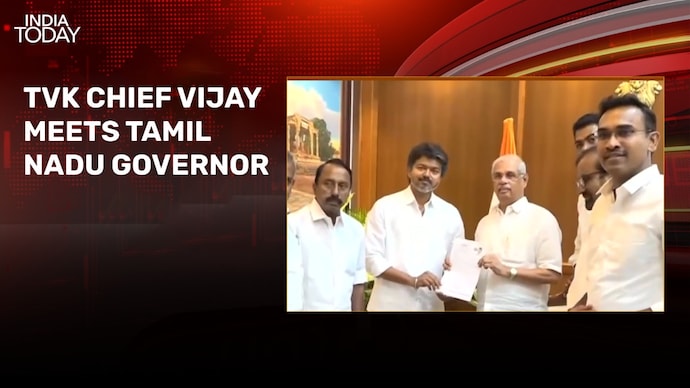
Why hasn't Governor invited Vijay to form government? Experts weigh in

A major political standoff has erupted in Tamil Nadu as the state governor allegedly delays inviting the single largest party to form the new government. Despite submitting a letter of support with one hundred and twelve elected representatives, the governor has reportedly demanded proof of a simple majority of one hundred and eighteen before administering the oath of office. Political analysts and legal experts argue that constitutional precedents mandate the governor to invite the single largest party and allow them to prove their majority on the floor of the legislative assembly, rather than turning the governor's residence into a testing ground. Amidst the delay, rumours of an unlikely alliance between rival Dravidian parties have surfaced, though these are widely dismissed as pressure tactics. Meanwhile, forty elected representatives from the leading party have reportedly been relocated to a resort to prevent potential poaching. Experts warn that any attempt by constitutional authorities to subvert the electoral mandate could lead to severe institutional clashes and undermine the democratic process in the state.

advertisement