Jet fuel prices rise; government staggers hike to shield domestic fares
ATF prices have been revised upwards, but government intervention has capped the impact on domestic airlines, even as uncertainty persists for international fares.
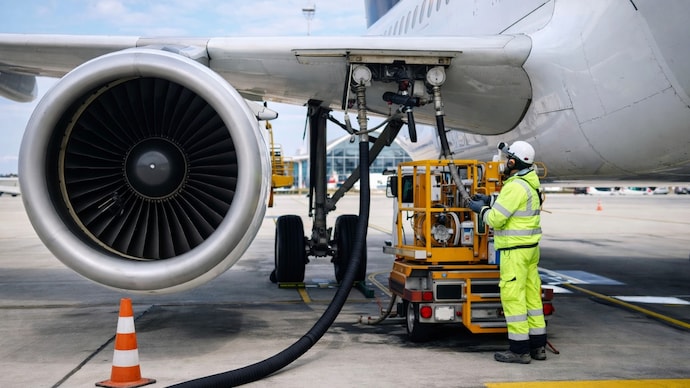
Aviation turbine fuel (ATF), or jet fuel, prices were raised by about 8.5% in India on Monday, tracking a sharp surge in global crude oil rates amid the ongoing West Asia conflict.
While such increases typically push up airfares, the government has moved to limit the immediate impact on domestic travellers.
Initial data released by Indian Oil Corporation had indicated a much sharper spike, with ATF prices crossing Rs 2.07 lakh per kilolitre, raising concerns of a steep rise in ticket prices. However, the government later clarified that this increase will not apply to domestic operations.
According to the Ministry of Petroleum and Natural Gas, ATF is a deregulated product and prices are revised in line with international benchmarks. With global crude oil prices rising sharply, a steep increase in jet fuel rates was expected from April 1.
However, oil marketing companies, in consultation with the Ministry of Civil Aviation, have implemented only a partial and staggered increase for domestic scheduled flights.
The effective hike for domestic airlines is around Rs 21 per litre, translating to roughly a 25% increase on the base price.
In contrast, international flights and domestic non-scheduled operations are facing a much steeper increase of about Rs 110 per litre, which reflects the full impact of global fuel prices and is expected to be the eventual cost level.
The move is aimed at preventing a sudden spike in domestic airfares even as global energy markets remain volatile.
The surge in ATF prices is being driven by elevated crude oil rates amid geopolitical tensions involving Iran, United States and Israel, along with concerns over disruptions in the Strait of Hormuz.
Brent crude is currently hovering around $105 per barrel, while WTI crude is above $102 per barrel.
Data from the International Air Transport Association shows global jet fuel prices have nearly doubled within a month, underlining the scale of the increase.
ATF is among the largest cost components for airlines, accounting for up to 40% of operating expenses.
Airlines are also dealing with longer flight paths due to airspace restrictions in parts of West Asia, which is increasing fuel consumption. A weaker rupee has further added to cost pressures, as fuel imports are priced in dollars.
Sources in oil marketing companies indicated that ATF prices could be revised further in phases depending on how the situation evolves.
For now, domestic passengers are expected to see limited immediate impact on fares due to the staggered increase, while international travellers are more likely to face higher ticket prices or additional fuel surcharges if crude prices remain elevated.
Aviation turbine fuel (ATF), or jet fuel, prices were raised by about 8.5% in India on Monday, tracking a sharp surge in global crude oil rates amid the ongoing West Asia conflict.
While such increases typically push up airfares, the government has moved to limit the immediate impact on domestic travellers.
Initial data released by Indian Oil Corporation had indicated a much sharper spike, with ATF prices crossing Rs 2.07 lakh per kilolitre, raising concerns of a steep rise in ticket prices. However, the government later clarified that this increase will not apply to domestic operations.
According to the Ministry of Petroleum and Natural Gas, ATF is a deregulated product and prices are revised in line with international benchmarks. With global crude oil prices rising sharply, a steep increase in jet fuel rates was expected from April 1.
However, oil marketing companies, in consultation with the Ministry of Civil Aviation, have implemented only a partial and staggered increase for domestic scheduled flights.
The effective hike for domestic airlines is around Rs 21 per litre, translating to roughly a 25% increase on the base price.
In contrast, international flights and domestic non-scheduled operations are facing a much steeper increase of about Rs 110 per litre, which reflects the full impact of global fuel prices and is expected to be the eventual cost level.
The move is aimed at preventing a sudden spike in domestic airfares even as global energy markets remain volatile.
The surge in ATF prices is being driven by elevated crude oil rates amid geopolitical tensions involving Iran, United States and Israel, along with concerns over disruptions in the Strait of Hormuz.
Brent crude is currently hovering around $105 per barrel, while WTI crude is above $102 per barrel.
Data from the International Air Transport Association shows global jet fuel prices have nearly doubled within a month, underlining the scale of the increase.
ATF is among the largest cost components for airlines, accounting for up to 40% of operating expenses.
Airlines are also dealing with longer flight paths due to airspace restrictions in parts of West Asia, which is increasing fuel consumption. A weaker rupee has further added to cost pressures, as fuel imports are priced in dollars.
Sources in oil marketing companies indicated that ATF prices could be revised further in phases depending on how the situation evolves.
For now, domestic passengers are expected to see limited immediate impact on fares due to the staggered increase, while international travellers are more likely to face higher ticket prices or additional fuel surcharges if crude prices remain elevated.

