NEET re-exam in 37 days: Can govt pull off India's biggest test reset in time?
The NEET UG 2026 re-exam has been scheduled for June 21, leaving just over a month to reset a nationwide exam for 22 lakh students. While the government has promised tighter security and smoother logistics, key questions remain around manpower, execution, and restoring trust after the paper leak controversy.
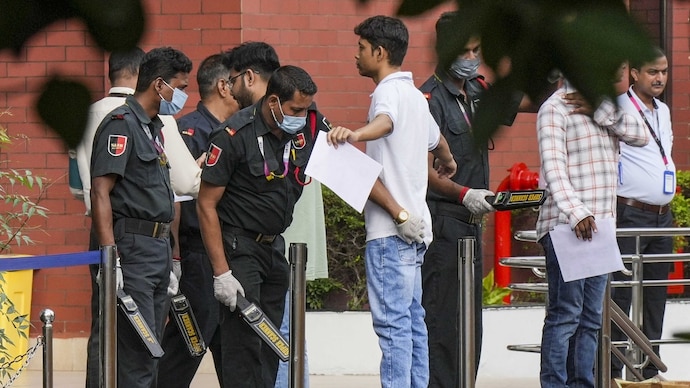
On May 15, Union Education Minister Dharmendra Pradhan confirmed what lakhs of students had been waiting for and fearing at the same time: NEET UG 2026 will be conducted again on June 21.
The gap between announcement and exam day is just over a month. For an exam that involves more than 22 lakh candidates, thousands of centres, and multiple layers of security, that is an extremely tight window.
The government has owned up to a “breach in the chain of command” after the paper leak. It has promised that everything will be fixed this time. But the big question is simple: how?
SCALE IS THE BIGGEST CHALLENGE
NEET is not just another exam. It is India’s largest entrance test.
Recreating that scale in a few weeks means rebooking centres, reallocating staff, printing fresh papers, securing transport, and coordinating across states. Every one of these steps usually takes months of planning.
This time, the system has to do it in weeks, while also ensuring that the same mistakes are not repeated.
Even a small gap in coordination can create chaos on exam day. And with this scale, even a 1 percent failure rate affects thousands of students.
NEET UG CANCELLED LIVE UPDATES
MANPOWER AND TRUST DEFICIT
After the leak controversy, trust in the system has taken a hit. That makes manpower a bigger issue than usual.
The exam depends heavily on invigilators, centre superintendents, and local administrators. Now, every person in that chain will be under scrutiny. Background checks, training, and monitoring need to be tighter.
At the same time, the government is dealing with another reality: if there were internal vulnerabilities earlier, how quickly can they be fixed?
The CBI probe is ongoing, and there are hints of insider involvement. That raises uncomfortable questions about whether the same system can be relied on again so soon.
SECURITY PROMISES VS GROUND REALITY
Officials have said that security will be stronger this time. That includes tighter handling of question papers, more surveillance, and stricter protocols.
But the format remains unchanged. NEET is still a pen-and-paper exam. That means physical papers still need to be printed, transported, stored, and opened across thousands of centres.
This is exactly the chain where the breach reportedly happened.
The long-term fix, shifting to computer-based testing, will only come from next year. For now, the system is trying to patch vulnerabilities without changing the core structure.
CITY CHOICE: RELIEF OR NEW COMPLEXITY?
Students will now be allowed to choose their exam city. On paper, this sounds like a relief. It can reduce travel stress and last-minute confusion.
But logistically, it adds another layer of complexity.
City preferences need to be collected, processed, and matched with available centres. Any mismatch can lead to overcrowding in some cities and underutilisation in others.
Balancing student convenience with system capacity is not easy, especially under time pressure.
WHAT ABOUT THE MISSED REFORMS?
After previous controversies, the Radhakrishnan committee had suggested 101 reforms to overhaul exam conduct and NTA’s functioning.
The Centre pledged to implement them, but not all of them were.
Now, with another leak confirmed, that gap becomes harder to ignore.
If structural fixes were pending earlier, can temporary measures really solve the problem this time?
The government has said several recommendations were followed, but clearly, they were not enough.
A CALENDAR THAT CANNOT MOVE
One reason the June 21 date looks fixed is the larger academic calendar.
Medical admissions, counselling, and the start of the academic session all depend on NEET. Any further delay will create a domino effect across the system.
That leaves very little flexibility. The exam has to happen on time, even if preparation time is short.
STUDENTS CAUGHT IN THE MIDDLE
For students, this is a second round of uncertainty.
Many had already gone through months, sometimes years, of preparation. Now they have to revise again in a high-stress environment, with doubts about the system still lingering.
The re-exam is meant to ensure fairness. But for many, it also feels like an added burden.
CAN THE SYSTEM DELIVER?
The government has taken responsibility. It has set a date. It has promised tighter security.
But there is still no detailed public roadmap explaining how each risk will be addressed in such a short time.
That gap between promise and process is where the biggest questions lie.
June 21 is not just another exam date now. It is a test of whether the system can rebuild trust, quickly and convincingly, in front of 22 lakh students watching closely.
On May 15, Union Education Minister Dharmendra Pradhan confirmed what lakhs of students had been waiting for and fearing at the same time: NEET UG 2026 will be conducted again on June 21.
The gap between announcement and exam day is just over a month. For an exam that involves more than 22 lakh candidates, thousands of centres, and multiple layers of security, that is an extremely tight window.
The government has owned up to a “breach in the chain of command” after the paper leak. It has promised that everything will be fixed this time. But the big question is simple: how?
SCALE IS THE BIGGEST CHALLENGE
NEET is not just another exam. It is India’s largest entrance test.
Recreating that scale in a few weeks means rebooking centres, reallocating staff, printing fresh papers, securing transport, and coordinating across states. Every one of these steps usually takes months of planning.
This time, the system has to do it in weeks, while also ensuring that the same mistakes are not repeated.
Even a small gap in coordination can create chaos on exam day. And with this scale, even a 1 percent failure rate affects thousands of students.
NEET UG CANCELLED LIVE UPDATES
MANPOWER AND TRUST DEFICIT
After the leak controversy, trust in the system has taken a hit. That makes manpower a bigger issue than usual.
The exam depends heavily on invigilators, centre superintendents, and local administrators. Now, every person in that chain will be under scrutiny. Background checks, training, and monitoring need to be tighter.
At the same time, the government is dealing with another reality: if there were internal vulnerabilities earlier, how quickly can they be fixed?
The CBI probe is ongoing, and there are hints of insider involvement. That raises uncomfortable questions about whether the same system can be relied on again so soon.
SECURITY PROMISES VS GROUND REALITY
Officials have said that security will be stronger this time. That includes tighter handling of question papers, more surveillance, and stricter protocols.
But the format remains unchanged. NEET is still a pen-and-paper exam. That means physical papers still need to be printed, transported, stored, and opened across thousands of centres.
This is exactly the chain where the breach reportedly happened.
The long-term fix, shifting to computer-based testing, will only come from next year. For now, the system is trying to patch vulnerabilities without changing the core structure.
CITY CHOICE: RELIEF OR NEW COMPLEXITY?
Students will now be allowed to choose their exam city. On paper, this sounds like a relief. It can reduce travel stress and last-minute confusion.
But logistically, it adds another layer of complexity.
City preferences need to be collected, processed, and matched with available centres. Any mismatch can lead to overcrowding in some cities and underutilisation in others.
Balancing student convenience with system capacity is not easy, especially under time pressure.
WHAT ABOUT THE MISSED REFORMS?
After previous controversies, the Radhakrishnan committee had suggested 101 reforms to overhaul exam conduct and NTA’s functioning.
The Centre pledged to implement them, but not all of them were.
Now, with another leak confirmed, that gap becomes harder to ignore.
If structural fixes were pending earlier, can temporary measures really solve the problem this time?
The government has said several recommendations were followed, but clearly, they were not enough.
A CALENDAR THAT CANNOT MOVE
One reason the June 21 date looks fixed is the larger academic calendar.
Medical admissions, counselling, and the start of the academic session all depend on NEET. Any further delay will create a domino effect across the system.
That leaves very little flexibility. The exam has to happen on time, even if preparation time is short.
STUDENTS CAUGHT IN THE MIDDLE
For students, this is a second round of uncertainty.
Many had already gone through months, sometimes years, of preparation. Now they have to revise again in a high-stress environment, with doubts about the system still lingering.
The re-exam is meant to ensure fairness. But for many, it also feels like an added burden.
CAN THE SYSTEM DELIVER?
The government has taken responsibility. It has set a date. It has promised tighter security.
But there is still no detailed public roadmap explaining how each risk will be addressed in such a short time.
That gap between promise and process is where the biggest questions lie.
June 21 is not just another exam date now. It is a test of whether the system can rebuild trust, quickly and convincingly, in front of 22 lakh students watching closely.

