A day in the lives of Vijay fans who carried him from theatres to CM's chair
A new mother with a 12-week-old baby. A doctor arrives after a 24-hour shift. A banker flies back from Ireland. Inside the everyday lives of the fans who turned their love for Vijay into political success in Tamil Nadu.
For Varsha, the final weeks of Tamil Nadu’s election campaign blurred into exhaustion. She was a new mother with a 12-week-old baby at home, but most of her days were spent on the field as part of Thalapathy Vijay's Tamilaga Vettri Kazhagam's (TVK) campaign management team. Sleep schedules had shut down, routines had disappeared but the energy around her never seemed to slow down.
"It was the last day of the campaign, and I was on the field as part of the campaign management team. By then, everyone was physically exhausted, mentally drained and running on very little sleep, but the energy on the ground was still intense," she recalled while speaking to India Today.
What stayed with her most were the people around her. Not seasoned politicians or professional campaigners, but ordinary people who had reorganised their everyday lives around Vijay's political ambition.
"I remember one doctor volunteer who had just completed a 24-hour shift but still came directly to help with campaign work. There was a tech professional who rushed in immediately after his Canada visa appointment because he didn't want to miss contributing to TVK's final campaign push. I met a banker who had flown all the way back from Ireland a month earlier because he wanted to give whatever time and effort he could to the movement," she said.
For Varsha herself, handling TVK's overseas IT wing never felt like political work alone. At first, it was simply an opportunity to understand the ideology and vision of the superstar she had grown up admiring.
What stood out for fans
Like many fans, she had sensed Vijay's political ambitions long before he officially announced them. But admiration alone, she insisted, was never enough.
"I didn't automatically accept him politically just because I was a fan. The real turning point for me was the TVK Vikravandi Conference. I wanted to be there in person because I genuinely wanted to listen, understand his politics, his ideology and what exactly he was trying to build," she explained.
That curiosity slowly turned into commitment. Her role soon involved managing online communication, amplifying speeches, tracking engagement and helping build the digital ecosystem around Vijay's campaign.
Varsha remembers being particularly struck by Vijay openly identifying the BJP as TVK's "ideological opponent."
"What impressed me most was the clarity with which he identified his political and ideological opponents. It wasn't vague positioning or politically safe messaging. I found myself relating to many of the concerns he raised about the political culture Tamil Nadu had normalised over the years," she said.
For many fans like her, that clarity became the point where admiration slowly moved into political participation.
And once that shift happened, the fans turned themselves into an informal but committed political workforce.
When it all started to feel real
During the campaign, Varsha saw how quickly TVK's online volunteers mobilised whenever misinformation or false narratives began circulating.
"One thing that stood out to me was how quickly TVK's virtual warriors operated online. Whenever misinformation or false narratives were pushed against the party, volunteers were rapidly collecting data, screenshots, video evidence, old statements and factual references to counter them almost in real time," she recalled.
The campaign also became personal in many small ways - families encouraging young professionals to enter politics, exhausted volunteers continuing despite collapsing routines, and ordinary people believing they were contributing to meaningful change.
"None of us were there because politics was our profession. None of us were expecting power, money or political posts. We were there because we genuinely believed we were working toward one goal: meaningful change," she said.
Stories like Varsha's became central to understanding how Vijay's political rise unfolded so quickly.
The army Vijay already had
On the evening the election results were declared earlier this month, filmmaker and Vijay's father, SA Chandrasekhar, spoke to the media with complete certainty. Vijay, he said, never doubted the win. The reason? He believed the people who spent decades turning his films into blockbusters, who arrived outside theatres before sunrise, celebrated releases like festivals and treated his stardom like a shared emotion, would also stand by him politically.
The result? A blockbuster win through and through.
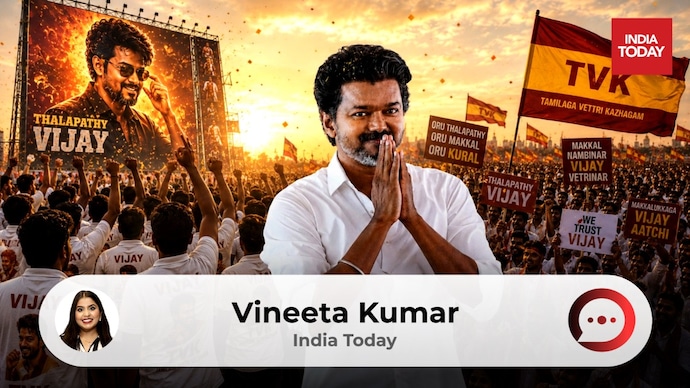
In less than two years, that faith transformed a film star into the Chief Minister of a state through a debutant independent party, Tamilaga Vettri Kazhagam (TVK). But behind the scale of the victory was something far more personal: thousands of ordinary lives reorganising themselves around Vijay’s political ambition.
For years, fan clubs had functioned like tightly-knit communities built on loyalty, celebration and emotional investment. During elections, the social media chatter around his films transformed into discussions around manifestos, voter turnout and constituency strategy. Theatre meet-ups turned into political meetings, and the language of fandom slowly became the language of campaigning.
TVK's election machinery appeared powerful because Vijay did not have to build a political workforce from scratch. He already had one. He simply asked his fans to redirect the same loyalty, discipline and emotional investment toward politics. And they did.
The fans who never logged off
For Gurumoorthy, founder of Facebook Vijay Fans Club (FVFC), one of Vijay's most active fan communities, election season completely changed the rhythm of his life.
The 34-year-old no longer woke up checking for film updates or promotional announcements. By 6 am, his attention had already shifted to campaign narratives, political messaging and election strategy.
For years, Gurumoorthy and his fan community had organised blood donation camps, distributed food and carried out welfare activities in Vijay’s name. FVFC even became the only fan team to install a statue for Vijay in Chennai. So when campaigning began, the transition felt surprisingly natural.
As TVK's social media head during the elections, Guru’s days became long and relentless.
"My day starts at 6 am, and the first thing I do is check the news. I am not looking for movie trailers anymore. My afternoons are busy creating posts and visuals to support Thalapathy Vijay's vision. We coordinate closely to make sure we’re all sharing the right information at the right time," he said.
He explained that the coordination among supporters felt less like formal political management and more like an extension of fan culture itself.
"The coordination was more organic than people might imagine. It wasn't like there was a central command issuing orders. But there was a shared understanding of what we were trying to say, and that understanding came from years of being in these communities together," he explained.
That sense of responsibility changed the meaning of victory for him too.
"In the past, if he won a film award, I would be happy as a fan. But this victory was about real people. It was about the women waiting for that Rs 2,500 monthly assistance and the young people looking for jobs," he said.
Everyday lives behind TVK's victory
Another supporter, Devanayagam, part of Vijay Makkal Iyakkam, spent the election period carrying out door-to-door campaigning across Tamil Nadu.
"We made it our mission to win the people’s mandate right from day one. We knew the challenges were hard because of the existing parties, so both our virtual warriors and ground-level TVK cadres ensured we reached every household out of love for Thalapathy," he said.
Boots on ground
For Asif, a 33-year-old professional who goes by the pen name George after his favourite writer George Orwell, the transition from fan to political worker became visible the moment he started interacting directly with voters.
"For many years, I celebrated Vijay’s film releases. But when that celebration turned into election campaigning, there was a huge change emotionally as well as practically," he said.
The excitement of first-day-first-show celebrations slowly transformed into booth-level planning, house visits and voter outreach.
"A day during the election campaign would begin early in the morning. As soon as we woke up, we would discuss the day’s plan with the team, which area to visit and whom to meet. Then we would go directly to the ground, meet people house to house, and explain about Tamilaga Vettri Kazhagam," he recalled.
What changed him most, however, was seeing how ordinary people spoke about Vijay.
"Especially when elderly people, women and first-time voters spoke Vijay's name with hope, it created a huge impact on me. That was when I understood this was not just fan support, but people's expectations," he explained.
George believes much of the criticism around fan culture misses the years of welfare work and community-building that already existed within these networks.
"Fans were not only watching films; they were also involved in blood donation drives, welfare activities and helping during disasters. The same discipline and bond naturally carried into political work as well," he said.
Carrying Vijay to power
For these supporters, the election victory did not act like the climax of a campaign. It very well seemed like the continuation of a relationship they had already spent decades building - first through cinema halls, fan clubs and welfare work, and now through rallies, booths and manifesto discussions.
For years, these fans whistled for Vijay when theatre lights dimmed and the screen came alive. This time, they stood under the scorching Tamil Nadu sun, carrying that same devotion into something far bigger than cinema.
Listening to them, one thing becomes clear: Vijay may have won elections now, but this victory did not begin at the ballot box. It began when fans turned into a political force powerful enough to carry Thalapathy from the big screen to the seat of power.
For Varsha, the final weeks of Tamil Nadu’s election campaign blurred into exhaustion. She was a new mother with a 12-week-old baby at home, but most of her days were spent on the field as part of Thalapathy Vijay's Tamilaga Vettri Kazhagam's (TVK) campaign management team. Sleep schedules had shut down, routines had disappeared but the energy around her never seemed to slow down.
"It was the last day of the campaign, and I was on the field as part of the campaign management team. By then, everyone was physically exhausted, mentally drained and running on very little sleep, but the energy on the ground was still intense," she recalled while speaking to India Today.
What stayed with her most were the people around her. Not seasoned politicians or professional campaigners, but ordinary people who had reorganised their everyday lives around Vijay's political ambition.
"I remember one doctor volunteer who had just completed a 24-hour shift but still came directly to help with campaign work. There was a tech professional who rushed in immediately after his Canada visa appointment because he didn't want to miss contributing to TVK's final campaign push. I met a banker who had flown all the way back from Ireland a month earlier because he wanted to give whatever time and effort he could to the movement," she said.
For Varsha herself, handling TVK's overseas IT wing never felt like political work alone. At first, it was simply an opportunity to understand the ideology and vision of the superstar she had grown up admiring.
What stood out for fans
Like many fans, she had sensed Vijay's political ambitions long before he officially announced them. But admiration alone, she insisted, was never enough.
"I didn't automatically accept him politically just because I was a fan. The real turning point for me was the TVK Vikravandi Conference. I wanted to be there in person because I genuinely wanted to listen, understand his politics, his ideology and what exactly he was trying to build," she explained.
That curiosity slowly turned into commitment. Her role soon involved managing online communication, amplifying speeches, tracking engagement and helping build the digital ecosystem around Vijay's campaign.
Varsha remembers being particularly struck by Vijay openly identifying the BJP as TVK's "ideological opponent."
"What impressed me most was the clarity with which he identified his political and ideological opponents. It wasn't vague positioning or politically safe messaging. I found myself relating to many of the concerns he raised about the political culture Tamil Nadu had normalised over the years," she said.
For many fans like her, that clarity became the point where admiration slowly moved into political participation.
And once that shift happened, the fans turned themselves into an informal but committed political workforce.
When it all started to feel real
During the campaign, Varsha saw how quickly TVK's online volunteers mobilised whenever misinformation or false narratives began circulating.
"One thing that stood out to me was how quickly TVK's virtual warriors operated online. Whenever misinformation or false narratives were pushed against the party, volunteers were rapidly collecting data, screenshots, video evidence, old statements and factual references to counter them almost in real time," she recalled.
The campaign also became personal in many small ways - families encouraging young professionals to enter politics, exhausted volunteers continuing despite collapsing routines, and ordinary people believing they were contributing to meaningful change.
"None of us were there because politics was our profession. None of us were expecting power, money or political posts. We were there because we genuinely believed we were working toward one goal: meaningful change," she said.
Stories like Varsha's became central to understanding how Vijay's political rise unfolded so quickly.
The army Vijay already had
On the evening the election results were declared earlier this month, filmmaker and Vijay's father, SA Chandrasekhar, spoke to the media with complete certainty. Vijay, he said, never doubted the win. The reason? He believed the people who spent decades turning his films into blockbusters, who arrived outside theatres before sunrise, celebrated releases like festivals and treated his stardom like a shared emotion, would also stand by him politically.
The result? A blockbuster win through and through.
In less than two years, that faith transformed a film star into the Chief Minister of a state through a debutant independent party, Tamilaga Vettri Kazhagam (TVK). But behind the scale of the victory was something far more personal: thousands of ordinary lives reorganising themselves around Vijay’s political ambition.
For years, fan clubs had functioned like tightly-knit communities built on loyalty, celebration and emotional investment. During elections, the social media chatter around his films transformed into discussions around manifestos, voter turnout and constituency strategy. Theatre meet-ups turned into political meetings, and the language of fandom slowly became the language of campaigning.
TVK's election machinery appeared powerful because Vijay did not have to build a political workforce from scratch. He already had one. He simply asked his fans to redirect the same loyalty, discipline and emotional investment toward politics. And they did.
The fans who never logged off
For Gurumoorthy, founder of Facebook Vijay Fans Club (FVFC), one of Vijay's most active fan communities, election season completely changed the rhythm of his life.
The 34-year-old no longer woke up checking for film updates or promotional announcements. By 6 am, his attention had already shifted to campaign narratives, political messaging and election strategy.
For years, Gurumoorthy and his fan community had organised blood donation camps, distributed food and carried out welfare activities in Vijay’s name. FVFC even became the only fan team to install a statue for Vijay in Chennai. So when campaigning began, the transition felt surprisingly natural.
As TVK's social media head during the elections, Guru’s days became long and relentless.
"My day starts at 6 am, and the first thing I do is check the news. I am not looking for movie trailers anymore. My afternoons are busy creating posts and visuals to support Thalapathy Vijay's vision. We coordinate closely to make sure we’re all sharing the right information at the right time," he said.
He explained that the coordination among supporters felt less like formal political management and more like an extension of fan culture itself.
"The coordination was more organic than people might imagine. It wasn't like there was a central command issuing orders. But there was a shared understanding of what we were trying to say, and that understanding came from years of being in these communities together," he explained.
That sense of responsibility changed the meaning of victory for him too.
"In the past, if he won a film award, I would be happy as a fan. But this victory was about real people. It was about the women waiting for that Rs 2,500 monthly assistance and the young people looking for jobs," he said.
Everyday lives behind TVK's victory
Another supporter, Devanayagam, part of Vijay Makkal Iyakkam, spent the election period carrying out door-to-door campaigning across Tamil Nadu.
"We made it our mission to win the people’s mandate right from day one. We knew the challenges were hard because of the existing parties, so both our virtual warriors and ground-level TVK cadres ensured we reached every household out of love for Thalapathy," he said.
Boots on ground
For Asif, a 33-year-old professional who goes by the pen name George after his favourite writer George Orwell, the transition from fan to political worker became visible the moment he started interacting directly with voters.
"For many years, I celebrated Vijay’s film releases. But when that celebration turned into election campaigning, there was a huge change emotionally as well as practically," he said.
The excitement of first-day-first-show celebrations slowly transformed into booth-level planning, house visits and voter outreach.
"A day during the election campaign would begin early in the morning. As soon as we woke up, we would discuss the day’s plan with the team, which area to visit and whom to meet. Then we would go directly to the ground, meet people house to house, and explain about Tamilaga Vettri Kazhagam," he recalled.
What changed him most, however, was seeing how ordinary people spoke about Vijay.
"Especially when elderly people, women and first-time voters spoke Vijay's name with hope, it created a huge impact on me. That was when I understood this was not just fan support, but people's expectations," he explained.
George believes much of the criticism around fan culture misses the years of welfare work and community-building that already existed within these networks.
"Fans were not only watching films; they were also involved in blood donation drives, welfare activities and helping during disasters. The same discipline and bond naturally carried into political work as well," he said.
Carrying Vijay to power
For these supporters, the election victory did not act like the climax of a campaign. It very well seemed like the continuation of a relationship they had already spent decades building - first through cinema halls, fan clubs and welfare work, and now through rallies, booths and manifesto discussions.
For years, these fans whistled for Vijay when theatre lights dimmed and the screen came alive. This time, they stood under the scorching Tamil Nadu sun, carrying that same devotion into something far bigger than cinema.
Listening to them, one thing becomes clear: Vijay may have won elections now, but this victory did not begin at the ballot box. It began when fans turned into a political force powerful enough to carry Thalapathy from the big screen to the seat of power.

