Kerala misses early date with monsoon: When will rain and cool winds arrive?
India's most awaited season was expected early this year, but shifting skies and weather conditions have changed the timeline. Here's when the rain has been rescheduled for.
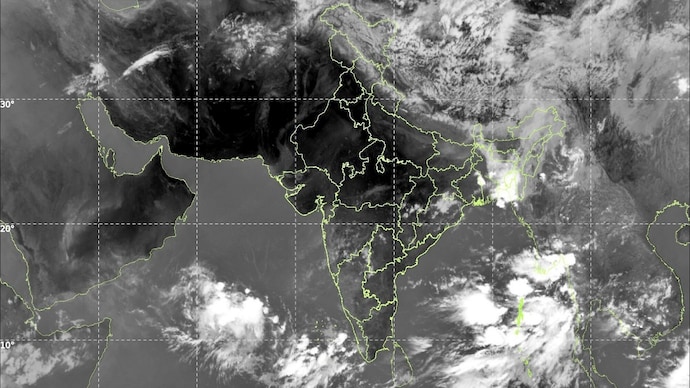
The monsoon this year was expected to arrive in Kerala on May 26, the Indian Meteorological Department (IMD) had said in its forecast. The date was optimistic as it was five days ahead of the normal June 1 date.
But that hasn't happened.
Every year, around June 1, India holds its breath, as it's the date IMD marks as the traditional onset of the southwest monsoon over Kerala.
The southwest monsoon, India's most consequential weather system, brings rain to Kerala and then begins its journey north towards the other states over the next four months, delivering nearly 70% of India's annual rainfall.
The southern coastal state is where monsoon first arrives, signalling the onset of the season of relief and cool winds and showers for the entire country.
This year, the monsoon was forecast to arrive earlier than the usual date, around May 26 but now real-time weather analysis points to a delayed onset window of June 2–4, one to three days past the usual date.
A FORECAST THAT DID NOT HAPPEN
IMD's initial prediction was quite optimistic and was happily accepted by millions across the country currently in the grip of extreme heat.
Even the atmospheric conditions added to the credibility of IMD's forecast, but turns out, the monsoon is not a train running on a fixed timetable. Instead, it responds to a complex web of ocean temperatures, wind patterns, and atmospheric pressure systems that can shift within days.
And that is what has happened.
As of Monday, May 25, the criteria required for the IMD to officially declare the onset of monsoon remained unfulfilled.
These 3 key parameters must align before the department makes any such declaration.
This means that at least 60% of 14 designated weather stations across Kerala must record 2.5 mm or more of rainfall for two consecutive days, alongside specific wind and cloud cover thresholds.
None of these had been met, meaning that monsoon is still on the way.
Such gaps between long-range statistical forecasts and short-term real-world conditions are not unusual, with numerous atmospheric conditions playing a part in the arrival of the season.
The updated analysis of the incoming monsoon has also added that even when the monsoon does arrive, its initial intensity may be rather blunt, with no intense increase in rains, and no quick journey towards the northern parts of India.
KERALA DRENCHED, NORTH BAKED
While the official onset declaration waits, Kerala is already wet.
The IMD has issued a yellow alert, advising caution for heavy rain and thundershowers in four districts, including Thiruvananthapuram, Kollam, Alappuzha, and Ernakulam.
Of these, the first three will remain under alert on Wednesday as well.
The IMD has also issued thunderstorm and heavy rainfall warnings for Kerala and Lakshadweep through Tuesday and Wednesday, May 26-27, with a heavy rainfall warning extended into the weekend.
Meanwhile, the rest of India continues to wait for rain.
Severe heatwave conditions have gripped north, central, and western India for roughly seven to eight days, with East Uttar Pradesh, Vidarbha, East Madhya Pradesh, and West Rajasthan among the worst-hit. New Delhi has been seeing temperatures break past 45°C on multiple days, with even nights recording temperatures around 30°C.
The good news is that a delayed onset of one to three days does not, by itself, spell disaster for the season.
The broader concern is the one flagged by the IMD months ago, which said that the total seasonal rainfall for 2026 is projected to be below normal due to the projected El Nino later this year.
This means that the country may have less rain to work with even after the monsoon fully sets in. For now, though, all eyes remain on Kerala's skies and whether the clouds gathering off its coast finally make their move in the first days of June.
The monsoon this year was expected to arrive in Kerala on May 26, the Indian Meteorological Department (IMD) had said in its forecast. The date was optimistic as it was five days ahead of the normal June 1 date.
But that hasn't happened.
Every year, around June 1, India holds its breath, as it's the date IMD marks as the traditional onset of the southwest monsoon over Kerala.
The southwest monsoon, India's most consequential weather system, brings rain to Kerala and then begins its journey north towards the other states over the next four months, delivering nearly 70% of India's annual rainfall.
The southern coastal state is where monsoon first arrives, signalling the onset of the season of relief and cool winds and showers for the entire country.
This year, the monsoon was forecast to arrive earlier than the usual date, around May 26 but now real-time weather analysis points to a delayed onset window of June 2–4, one to three days past the usual date.
A FORECAST THAT DID NOT HAPPEN
IMD's initial prediction was quite optimistic and was happily accepted by millions across the country currently in the grip of extreme heat.
Even the atmospheric conditions added to the credibility of IMD's forecast, but turns out, the monsoon is not a train running on a fixed timetable. Instead, it responds to a complex web of ocean temperatures, wind patterns, and atmospheric pressure systems that can shift within days.
And that is what has happened.
As of Monday, May 25, the criteria required for the IMD to officially declare the onset of monsoon remained unfulfilled.
These 3 key parameters must align before the department makes any such declaration.
This means that at least 60% of 14 designated weather stations across Kerala must record 2.5 mm or more of rainfall for two consecutive days, alongside specific wind and cloud cover thresholds.
None of these had been met, meaning that monsoon is still on the way.
Such gaps between long-range statistical forecasts and short-term real-world conditions are not unusual, with numerous atmospheric conditions playing a part in the arrival of the season.
The updated analysis of the incoming monsoon has also added that even when the monsoon does arrive, its initial intensity may be rather blunt, with no intense increase in rains, and no quick journey towards the northern parts of India.
KERALA DRENCHED, NORTH BAKED
While the official onset declaration waits, Kerala is already wet.
The IMD has issued a yellow alert, advising caution for heavy rain and thundershowers in four districts, including Thiruvananthapuram, Kollam, Alappuzha, and Ernakulam.
Of these, the first three will remain under alert on Wednesday as well.
The IMD has also issued thunderstorm and heavy rainfall warnings for Kerala and Lakshadweep through Tuesday and Wednesday, May 26-27, with a heavy rainfall warning extended into the weekend.
Meanwhile, the rest of India continues to wait for rain.
Severe heatwave conditions have gripped north, central, and western India for roughly seven to eight days, with East Uttar Pradesh, Vidarbha, East Madhya Pradesh, and West Rajasthan among the worst-hit. New Delhi has been seeing temperatures break past 45°C on multiple days, with even nights recording temperatures around 30°C.
The good news is that a delayed onset of one to three days does not, by itself, spell disaster for the season.
The broader concern is the one flagged by the IMD months ago, which said that the total seasonal rainfall for 2026 is projected to be below normal due to the projected El Nino later this year.
This means that the country may have less rain to work with even after the monsoon fully sets in. For now, though, all eyes remain on Kerala's skies and whether the clouds gathering off its coast finally make their move in the first days of June.

