
Sensex ends 700 points lower, Nifty below 23,900; auto stocks hit hard
Markets may have steadied after early losses, but rising oil prices and geopolitical risks continue to cloud sentiment, keeping investors cautious and leaving the near-term outlook uncertain and volatile.
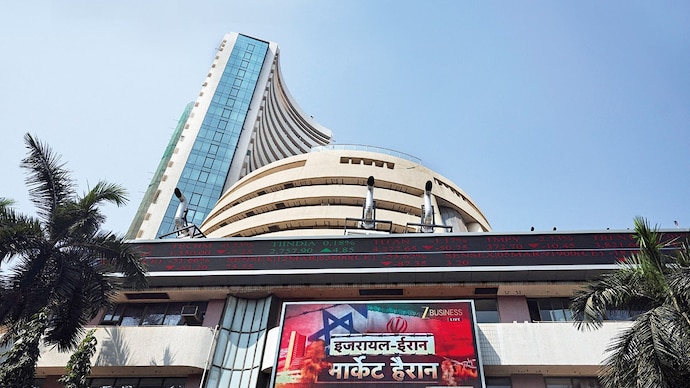

Domestic equity markets staged a partial recovery through Monday’s session but still ended firmly in the red, as early losses proved too deep to fully reverse.
The Sensex closed at 76,847.57, down 702.68 points, or 0.91%, while the Nifty settled at 23,842.65, lower by 207.95 points, or 0.86%, reflecting continued pressure despite a noticeable pullback from intraday lows.
It may be noted that the markets had opened sharply lower, with the Sensex plunging over 1,600 points in early trade, as global risk sentiment deteriorated amid rising geopolitical tensions and a spike in crude oil prices.
MARKETS RECOVER, BUT END IN RED
As the session progressed, indices recovered a significant portion of their losses, suggesting that selling pressure eased after the initial shock.
However, the recovery was not strong enough to push markets back into positive territory, highlighting the underlying fragility in sentiment.
Such moves typically indicate that while panic selling has subsided, investors remain cautious and unwilling to take aggressive positions in an uncertain environment.
The early selloff was triggered by a sharp rise in crude oil prices above $100 per barrel, driven by escalating tensions in West Asia and concerns over potential disruptions in the Strait of Hormuz.
For an import-dependent economy like India, higher oil prices raise concerns around inflation, currency pressure and the broader macro outlook, all of which tend to weigh on equity markets.
AUTO STOCKS TAKE THE BIGGEST HIT
Among sectors, auto stocks emerged as the worst hit, with heavyweights such as Maruti Suzuki and Eicher Motors seeing sharp declines.
The weakness in auto stocks reflects a combination of concerns. Rising oil prices can dampen consumer demand for vehicles by increasing fuel costs, while also pushing up input costs for manufacturers.
At the same time, recent labour unrest in key industrial regions has added another layer of uncertainty, raising the risk of potential disruptions in production and supply chains.
Auto stocks, being closely linked to consumption and economic cycles, tend to react more sharply during periods of uncertainty, which explains the outsized decline in the sector.
VOLATILITY LIKELY TO CONTINUE
Monday’s session highlights a market that is trying to stabilise after a sharp external shock, rather than one that has regained confidence.
The partial recovery suggests that there is some support at lower levels, but the inability to turn positive indicates that risks remain elevated.
Going ahead, market direction is likely to remain closely tied to global developments, particularly movements in crude oil prices and geopolitical cues.
If oil prices remain elevated or tensions escalate further, markets could continue to see bouts of volatility. On the other hand, any easing in global risks could help stabilise sentiment.
For now, the message from the market is clear. The worst of the panic may be over for the day, but uncertainty is far from gone.