
From busy lanes to empty streets, LPG crunch drains life out of Dharavi
As cooking gas runs dry, Dharavi's kitchens fall silent, and its large workforce quietly heads home, with uncertainty looming over when normalcy will return.
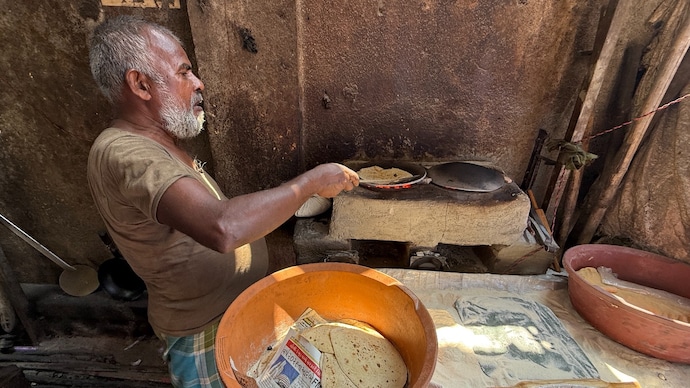
A man runs an eatery in Dharavi, preparing rotis using coal amid the LPG shortage. (Photo: India Today/Mustafa Shaikh)

A crippling shortage of LPG cylinders has brought large parts of Mumbai’s Dharavi to a standstill, shutting down kitchens, stalling small businesses, and triggering a quiet reverse migration of workers back to their native villages.
On Wednesday, the usually choked 90 Feet Road, a lifeline of Dharavi’s bustling economy, was uncharacteristically deserted. In a striking sign of the slowdown, a vehicle remained parked undisturbed on the main road for nearly two hours, reflecting the sudden dip in economic activity.
Dharavi, known for its dense population and vibrant informal economy, is now witnessing a sharp downturn as the fuel crisis disrupts both food services and small-scale industries.
In Gopinath Colony, small kitchens that cater to the working class with affordable South Indian breakfast items such as idlis, dosas, and medu vadas are among the worst hit. Many of these units, which operate in the unorganised sector, have been forced to shut down due to the unavailability of LPG cylinders.
According to local operators who spoke to India Today, nearly 70 per cent of such kitchens have ceased operations, affecting both livelihoods and access to low-cost food for daily-wage workers.
The impact is equally visible in nearby Saibaba Nagar, where India Today found that “beesis", the informal mess-like canteens offering weekly meal plans, have seen large-scale closures. These canteens, which typically charge between Rs 550 and Rs 700 per week for two meals a day, cater to workers employed in garment, bag-making, and other small industries. Of nearly 100 such establishments, around 80 per cent have shut down due to the LPG shortage.
Canteen operators say the crisis has made operations unsustainable. While some have attempted to switch to coal, rising fuel costs and practical challenges have limited this option.
For instance, Mohammed Mukhtar Shaikh, who runs one such eatery, told India Today that his outlet, which once served 200 people daily, has now shut down. Unable to switch to coal due to complaints from neighbours about smoke, he continues to pay his four staff a daily advance of Rs 500 as they remain idle.
In contrast, another eatery owner, Imran Ansari, has adapted to the crisis. His coal-powered canteen continues to serve around 200 customers a day. While coal prices have surged from Rs 10 to Rs 70 per unit, he has managed by building a cement stove to keep rotis hot.
The ripple effects are also being felt in Dharavi’s manufacturing units. Small-scale industries, including bag-making units, are witnessing reduced orders and rising input costs as production slows due to the fuel shortage. Business owners report that workers have begun leaving for their villages as incomes shrink and living costs rise.
Of the 15 workers at one bag manufacturing unit, four have already returned to their villages, and the rest are likely to follow soon. “The boss isn’t making money, and eating out here costs more now. If this drags on, we’ll head to our villages too,” said a worker, Zakir Ansari, voicing his distress.
The ongoing LPG crisis, linked to broader supply disruptions, has exposed the vulnerability of Dharavi’s informal economy. Much like during the Covid pandemic, the current situation is once again testing the resilience of small businesses and migrant workers.
- Ends