
SC asks CBSE to clarify 3-language rule for Class 9 in 4 weeks, next hearing in July
The Supreme Court has sought responses from CBSE and the Centre on petitions against the new three-language policy for Class 9 within four weeks. The next hearing dates are July 15–16. Petitioners say the shift, set to begin in 2026, may add pressure on students preparing for board exams.
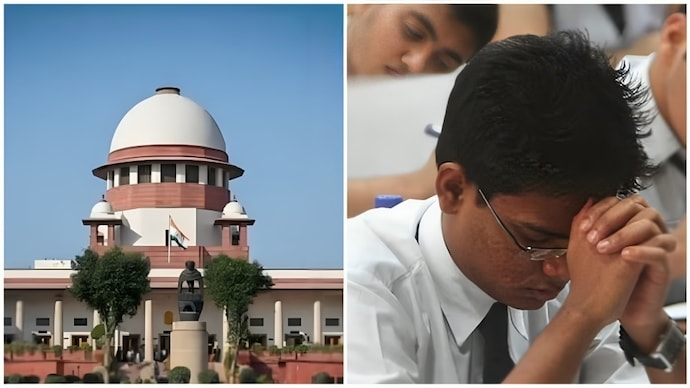

The Supreme Court has issued notices to the Central Board of Secondary Education (CBSE) and the Union government over petitions challenging the board’s new three-language policy for Classes 9 under the National Education Policy (NEP) 2020.
A bench comprising Chief Justice of India, Justice Surya Kant, Justice Joymalya Bagchi and Justice Vipul M Pancholi asked both CBSE and the Centre to file their responses within four weeks. The matter is now scheduled to be heard on July 15 and 16.
The petitions challenge CBSE’s recent decision to make the study of three languages compulsory for students of Class 9 from July 1, 2026.
WHAT IS THE NEW CBSE LANGUAGE RULE?
Under the revised policy introduced by CBSE, students must study three languages: R1, R2 and R3. Out of these, at least two languages must be Indian.
Students can choose a foreign language only if the remaining two languages are Indian in origin. The policy has been introduced as part of the implementation of NEP 2020.
The board had earlier said the move aims to promote multilingual learning and strengthen Indian languages in schools.
However, the policy has now triggered concern among parents, students and teachers, especially for those who will be appearing for the Class 10 board examinations next year.
However, there is no clarification from CBSE if the 3-language formula applies to current Class 10 as well.
PETITIONERS CALL THE RULE 'SUDDEN AND BURDENSOME'
The public interest litigation filed before the apex court described the policy as "arbitrary and cumbersome".
Petitioners have argued that introducing additional language requirements at the Class 9 level could create academic stress for students already preparing for board examinations.
They have also alleged that the rule was introduced suddenly without proper consultation with stakeholders, including schools, parents and teachers.
During the hearing, the Supreme Court observed that the issue requires consideration. However, the court has not stayed the implementation of the trilingual policy for now.
WHY THE CASE MATTERS
The case has reopened debate around the implementation of NEP 2020 and whether major academic reforms should be introduced gradually.
For many students, the concern is not about learning languages, but about adapting to a major curriculum change midway through secondary education.
With the next hearing now fixed for July, schools, parents and students across the country will be closely watching how the Supreme Court responds to one of the most debated education policies introduced by CBSE in recent years.