
We belong here: Deleted voters in Kolkata's Chinatown anxious as deadline looms
Kolkata's Chinatown, centred in Tangra and spread across adjoining localities, is among the oldest Chinese settlements in India. But after hundreds were deleted from the voter rolls during SIR, many now say they feel like outsiders in the only country they have ever known.
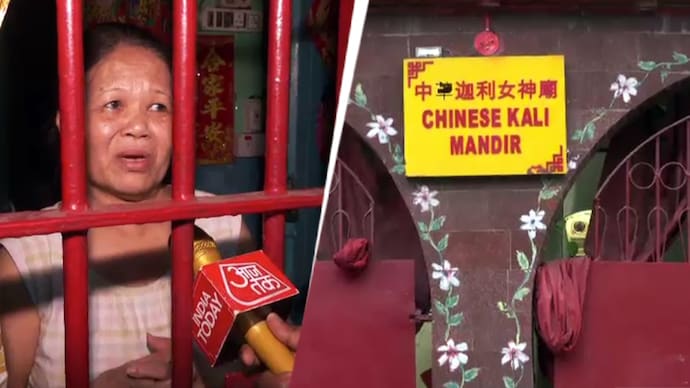

Panic has spread through Kolkata’s historic Chinatown as deadlines approach to add voters cleared by Special Intensive Revision (SIR) tribunals. The first phase closes April 21, with polling on April 23, while the second phase ends April 27, ahead of voting on April 29.
A report by the Sabar Institute, which analysed Election Commission of India (ECI) data, found that 484 members of the Indian Chinese community were struck off electoral rolls across Kolkata after the first phase of the SIR. In Tangra, where families have lived for four to five generations, the deletions have triggered deep anxiety over identity and citizenship. While some names have been restored in supplementary lists, many remain missing.
With just days left for cases to be disposed of, residents say they are running out of time -- and answers.
'WE ARE PROUD INDIANS'
A visit to Chinatown reveals a community under intense stress. Residents describe repeated visits to government offices and a growing sense of helplessness.
Standing near the Chinese Kali Temple, a woman in her late 50s, a fourth-generation resident, struggled to contain her anguish.
“I was born here. My parents were born here. My name hasn’t appeared on the list yet, though I’ve been told it eventually will. But I remain anxious about how that will happen, or what the ultimate outcome will be,” she said.
“I am an Indian citizen. Please do not simply label us as ‘Chinese’. We are proud Indians. We remain hopeful and fully intend to exercise our right to vote. Yet the anxiety persists,” she added. “Even my daughter’s name has not been included. My parents have passed away, and I have lost my husband as well. Let us wait and see what the future holds.”
SENSE OF BELONGING SHATTERED
Inside Chinatown, a beauty parlour owner described the process as “deeply distressing”.
“We have faced a great deal of harassment throughout this process. How are things supposed to proceed like this? We have submitted every required document and complied with every procedure. My family has lived here for five generations -- we are, after all, Indian citizens. Naturally, if we are unable to cast our votes, or if our names fail to appear on the voter list, it is bound to cause immense anxiety,” she said.
For many, the deletions feel like a denial of belonging.
A restaurant owner said the uncertainty has disrupted his family life. “Neither my mother nor any of my sisters have had their names included in the list. They are constantly running from office to office, trying to resolve this issue,” he said.
“There should be no need for us to ‘prove’ that we are Indian citizens. It is a self-evident fact. My sisters are making every possible effort to get this sorted. Let’s wait and see how things unfold,” he added.
A COMMUNITY ON EDGE
Kolkata’s Chinatown, centred in Tangra and spread across adjoining localities, is among the oldest Chinese settlements in India. Generations have run tanneries, restaurants and beauty parlours. Residents celebrate Durga Puja and Chinese New Year with equal fervour.
Yet many now say they feel like outsiders in the only country they have ever known.
The Election Commission’s SIR process was intended to clean up electoral rolls and ensure accuracy. On the ground, however, residents allege poor communication, opaque procedures and contradictory instructions. Voters say they were directed to booth-level officers, then party offices, and then tribunals—often only to be turned away or asked to file online forms without guidance.
With the Supreme Court mandating that voters whose cases are disposed of by April 21 can vote in the first phase, the window is closing fast. For those still missing from the rolls, every hour counts.
As the deadline looms, Chinatown waits -- for names to return to the rolls, for recognition of belonging, and for the anxiety hanging over its narrow lanes to finally lift.