

BTS are this generation's Michael Jackson and The Beatles. Mexico proved it
BTS' fan frenzy is being compared to that of The Beatles in the 60s and Michael Jackson in 80-90s. Their recent Mexico City takeover proved why the comparisons are not exaggerated.
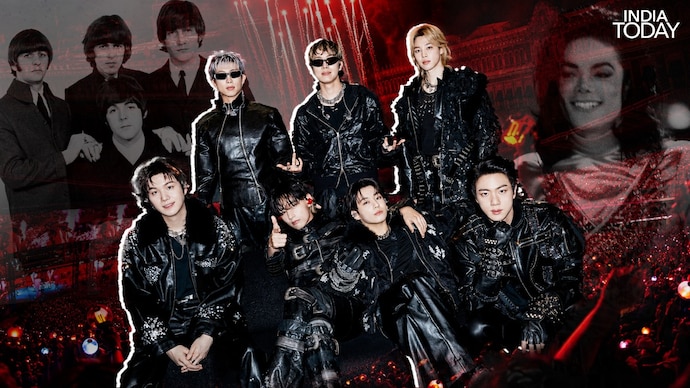
BTS is being compared to The Beatles and Michael Jackson. Credit: BIGHIT MUSIC

Mumbai,UPDATED: May 12, 2026 12:11 IST
BTS are no longer simply the world’s biggest K-pop group. With every new city they enter, the seven-member (RM, Jin, Suga, j-hope, Jimin, V and Jung Kook)act increasingly mirrors the kind of global cultural dominance once associated with The Beatles and Michael Jackson. Their recent stop in Mexico City may have been the clearest modern example yet of why those comparisons continue to hold weight.
As part of the Mexico City leg of the BTS World Tour Arirang, the group played three sold-out shows at Estadio GNP Seguros on May 7, 9 and 10, with all 135,000 tickets reportedly selling out within minutes. The demand became so overwhelming that Mexican President Claudia Sheinbaum had earlier publicly pushed for additional concert dates after more than a million fans attempted to secure tickets.
But what unfolded in Mexico City went far beyond a successful concert run. BTS transformed the city into a full-scale cultural event. Tens of thousands of fans gathered outside the venue without tickets simply to experience the atmosphere, while roads surrounding the stadium turned into seas of purple. Hotels, cafs and local businesses leaned into BTS-themed celebrations as fan events took over entire neighbourhoods. Reports estimated the concerts could generate nearly 1.8 billion pesos in economic impact for the city, surpassing Taylor Swift, Coldplay in modern-day comparisons.
The frenzy immediately evoked memories of Beatlemania in the 1960s, particularly in 1964 from New Zealand, when The Beatles routinely caused chaos across airports, hotels and city centres worldwide. Fans screamed so loudly during performances that the band members themselves often admitted they could barely hear their own music. Decades later, Michael Jackson inspired similar hysteria during his visits to Mexico, particularly during the Dangerous World Tour in 1993, when thousands flooded the streets, camped outside hotels and turned his arrival into a national event.
BTS’ Mexico City takeover carried that same emotional scale, something modern pop culture rarely produces anymore. The defining image came when BTS appeared alongside President Sheinbaum on the balcony of Mexico’s historic National Palace, greeting nearly 50,000 fans gathered below in the Zócalo square. The moment quickly became global headline material, with international media describing it as a state guest-level reception.
What makes the Mexico stop especially significant is how organically massive it became. This was not nostalgia-driven hype or a one-off reunion spectacle. BTS managed to create collective hysteria in an era where entertainment audiences are fragmented across platforms, algorithms and rapidly changing trends. Fans travelled across countries, camped overnight, flooded public squares within hours of announcements and treated the concerts less like performances and more like history unfolding in real time.
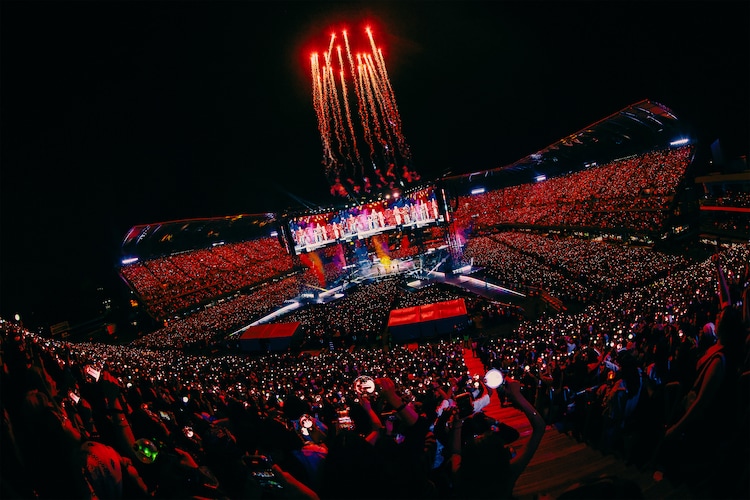
The concerts featured tracks from BTS’ fifth studio album ARIRANG, including SWIM, 2.0 and Hooligan, alongside fan favourites such as Dynamite, Butter and IDOL. The performances showcased the group’s expansive discography and high-scale stadium production, drawing loud fan reactions throughout the three-night run.
One of the biggest highlights from the Mexico City concerts was BTS’ embrace of Mexican culture. The members frequently interacted with fans in Spanish during the shows, while performances also incorporated local cultural references. During the song Aliens, dancers appeared wearing lucha libre masks, paying tribute to Mexico’s iconic wrestling culture.
Member V also went viral online after enjoying a traditional banderilla during the performance of IDOL, with clips from the concert widely circulating across social media platforms.
Outside the concerts, Jin, SUGA, Jimin and Jung Kook attended a lucha libre event at Arena Mxico, one of the country’s most historic wrestling venues. Videos from the event gained significant attention online, especially after Mexican wrestler Mstico entered the ring wearing a custom white jacket featuring the BTS logo and the group’s name.
The Beatles changed what global fandom looked like. Michael Jackson redefined the scale of superstardom. BTS, meanwhile, has fused both phenomena in the digital age, combining internet-era reach with real-world mass mobilisation on a scale very few contemporary artists can replicate.
That is why the comparisons no longer feel exaggerated. Few acts today can make an entire city pause simply because they arrived. BTS just did exactly that in Mexico City.
- Ends