
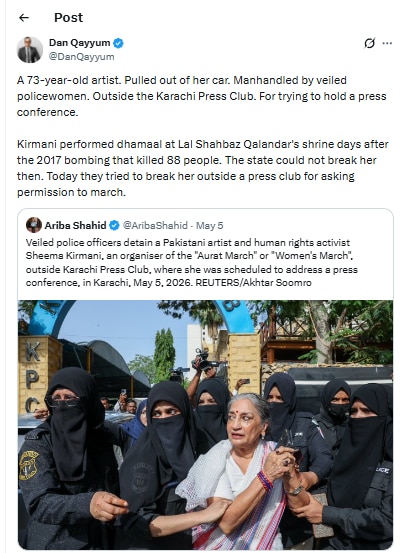
All about Sheema Kermani, Pasoori dancer and Pakistani feminist facing police action
Viral videos of Pasoori dancer Sheema Kirmani being escorted by police in Karachi have sparked fresh conversations around activism, women's rights and artistic freedom in Pakistan.
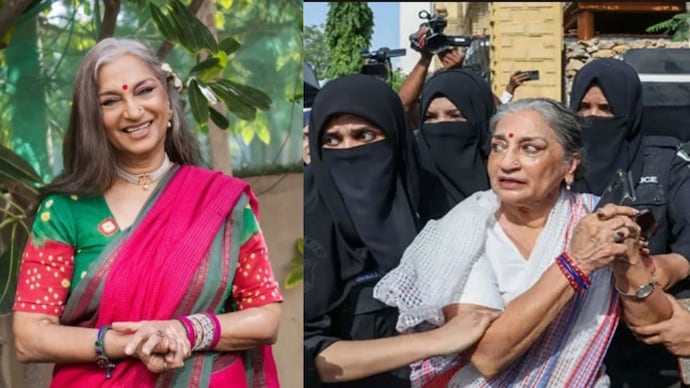
Sheema Kirmani in frame. (Photo: Instagram)

New Delhi,UPDATED: May 12, 2026 17:04 IST
Pakistani classical dancer and women’s rights activist Sheema Kirmani has returned to the spotlight after viral videos showed policewomen escorting her in Karachi. The clips spread rapidly across social media, with many younger users recognising Kirmani from her memorable Bharatanatyam performance in Pasoori by Ali Sethi and Shae Gill.
According to reports by Dawn, Kirmani was among seven activists briefly detained by Sindh Police near the Karachi Press Club on May 5. The group had reportedly gathered for a press conference connected to the upcoming Aurat March in Karachi and was demanding a no-objection certificate for the event. She was later released following intervention from Sindh Home Minister Ziaul Hasan Lanjar.
Why was Sheema Kirmani detained?
The brief detention reportedly took place during a gathering organised by Aurat March activists. Along with Kirmani, transgender rights activist Shahzadi Rai was also detained before being released shortly afterwards.
The videos quickly triggered debate online, with supporters criticising the detention and highlighting concerns around freedom of expression and women’s rights activism in Pakistan.
Who is Sheema Kirmani?
Sheema Kirmani is one of Pakistan’s best-known classical dancers, theatre performers and feminist voices. Born in Rawalpindi in 1951, she has spent decades promoting Bharatanatyam and theatre despite facing criticism from conservative groups.
She gained renewed recognition among younger audiences after appearing in the music video for Pasoori, where her Bharatanatyam performance drew widespread praise globally.
Kirmani also founded Tehrik-e-Niswan, a cultural and women’s rights organisation that has worked extensively in theatre, education and gender awareness since the late 1970s.
Why is her activism significant?
Kirmani’s activism became especially prominent during the rule of Muhammad Zia-ul-Haq, when cultural restrictions in Pakistan intensified and dance performances faced strong opposition.
Despite the challenges, she continued teaching and performing classical dance while speaking openly about gender inequality and artistic freedom. Following the latest incident, many social media users expressed support for Kirmani, saying the episode once again highlighted the pressures faced by progressive artists and activists in the country.
- Ends