
5 things The Boys finale got wrong and why it matters
The Boys finale divided fans with its softer tone. From Homelander's ending to Gen V's limited pay-off, here are five reasons the conclusion felt less diabolical than expected.
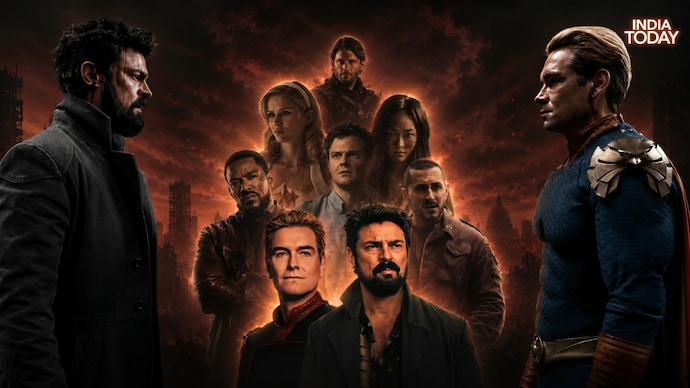

Fans of The Boys, Amazon Prime Video’s long-running superhero satire starring Karl Urban and Antony Starr among others, that recently concluded its run, are struggling to come to terms with the show's final chapter, and perhaps for good reason. A series celebrated for its relentless brutality, moral decay and willingness to leave audiences disturbed at every turn ended on a note few expected: light. For a show that spent years proving no character was safe, and no ending was too cruel, the finale’s surprisingly mellow, almost hopeful tone has left many viewers conflicted.
In a strange way, that may be the most diabolical move The Boys pulled off — delivering comfort when fans had braced for devastation. But did the ending stay true to the chaos and cynicism that defined the series, or did it soften the blow too much?
Warning: Major spoilers ahead, and perhaps more chaos than the finale delivered. Here are five reasons why The Boys finale could have landed harder.
1. Billy Butcher vs Homelander did not land
For years, The Boys built its central conflict around one inevitable collision: Billy Butcher versus Homelander. Every betrayal, every death and every morally questionable choice Butcher made seemed to push him closer towards a final reckoning with the man he hated most. This was not just another rivalry. It was deeply personal.
Homelander took Becca away from Butcher. He turned Ryan into a weapon. Most recently, he killed Frenchie — one of The Boys and one of the few people Butcher had left. Five seasons of grief, rage and obsession had been brewing towards this exact moment. Fans waited years to watch Butcher finally unleash everything he had been carrying.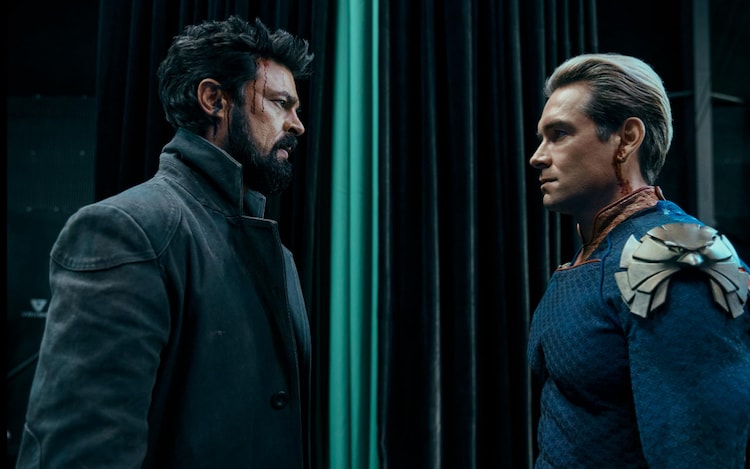
And what did that culmination amount to? A few punches, a couple of lines about the people they lost and a crowbar to the head that cracked Homelander’s skull open.
For almost any other television series, that would qualify as brutal. But this is The Boys — the same show that built its reputation on excess, cruelty and consequences so outrageous they stayed with viewers long after an episode ended. By those standards, the long-awaited Butcher-Homelander payoff feels strangely tame.
The comparison may sound harsh, but this lands dangerously close to the Game of Thrones Night King problem: years of build-up ending in a resolution that felt quicker, cleaner and less devastating than expected.
The finale does bring Butcher and Homelander face-to-face, but the emotional destruction never fully arrives. There is tension, yes, but not the overwhelming tragedy, fury or irreversible cost their rivalry had promised. After years of waiting, viewers expected something uglier — a choice that hurt more, a victory that felt hollow or a loss impossible to recover from.
Instead, one of television’s most compelling rivalries ends closer to closure than catastrophe. And for a show like The Boys, that almost feels wrong.
2. Why did we watch Gen V?
When Gen V was announced as a spin-off to The Boys, there was understandable scepticism. But over time, the series proved it was more than just an extension of the franchise. It introduced a new generation of Vought-created supes (artificially created humans who possess extraordinary abilities), expanded the mythology and, more importantly, repeatedly hinted that these characters would eventually play a crucial role in the main timeline.
By the end of Gen V Season 2, several of these supes had been established as genuinely formidable. Marie Moreau, for instance, had evolved enough to literally bring someone back to life using her powers. Characters were built with abilities that, on paper, could pose serious problems even for someone like Homelander.
Which makes their role in The Boys finale baffling.
After seasons of build-up and hours spent investing in these characters, their contribution largely boils down to detective work, assisting with logistics and helping move a few people across the Canadian border in a van. That is an exaggeration, but only slightly.
The frustration is not that Gen V characters appeared too little, it is that they arrived with enormous narrative weight and left with almost none. For a spin-off designed to feel essential to the larger universe, the finale raises an uncomfortable question: was watching Gen V necessary at all?
Because if characters with their own fully developed arcs, powers and emotional stakes barely influence the outcome of the biggest conflict in the franchise, their inclusion starts feeling less like pay-off and more like homework.
3. Where were all the superheroes during the finale?
For a universe built around Vought — a corporation overflowing with supes, corporate security and enhanced individuals willing to kill on command — the mission to reach Homelander feels surprisingly easy.
By this point, Vought knew Homelander was vulnerable. Billy Butcher and his team had replicated Soldier Boy’s ability to erase superpowers, arguably the biggest threat Homelander had ever faced. This was not a random attack; it was an extinction-level risk.
So where was the security?
The Boys infiltrate through tunnels, survive an ambush involving a few machine guns — which, in The Boys universe, hardly qualify as obstacles — run into The Deep almost by accident and take down Oh Father with Hughie and MM, two non-powered humans.
And then they reach Homelander.
That is the same Vought that spent years introducing dozens of supes and repeatedly portraying Homelander as paranoid, untouchable and impossible to kill. Soldier Boy was frozen, and several major heroes were already dead, fair enough. But was there really no meaningful line of defence left?
The bigger problem is not just the lack of superheroes. It is the lack of impossible choices, sacrifices or escalating hurdles. For a finale centred on killing the world’s most dangerous supe, the journey feels oddly straightforward.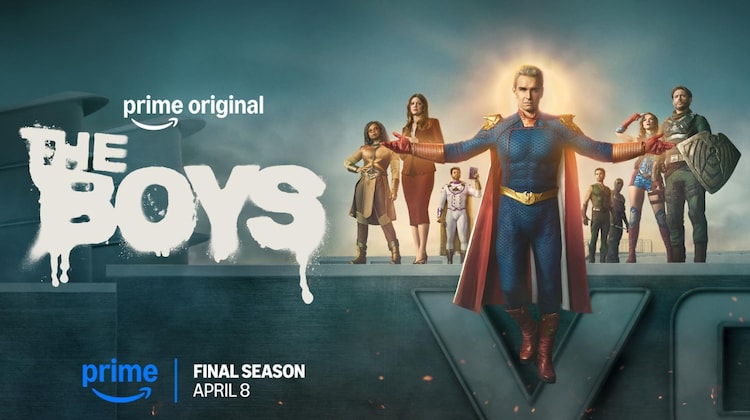
Years of build-up around Homelander as an unstoppable force end with The Boys practically sneaking through a basement to reach the final boss.
His breakdown, loss of power and brutal death should have felt monumental. Instead, getting there feels too easy — turning what should have been a war into something closer to an under-guarded raid.
4. They nerfed both Homelander and Billy Butcher
Homelander was introduced as the ultimate supe — untouchable, nearly impossible to kill and powerful enough that even Soldier Boy, his biological father, was never viewed as a guaranteed answer to stopping him. He wanted control, worship and eventually god-like authority over America. Beneath the emotional instability was a deeply calculating mind, one willing to justify mass murder if it meant getting what he wanted.
Then there is Billy Butcher.
A man so consumed by revenge that he slowly abandoned his humanity for it. He betrayed allies, manipulated friends and repeatedly crossed moral lines, all in pursuit of one goal: destroying Homelander and eradicating the supe problem. He willingly turned himself into the very thing he despised if it meant completing the mission.
These were not ordinary characters. They were extremes. Which is why the finale softening both of them feels strange.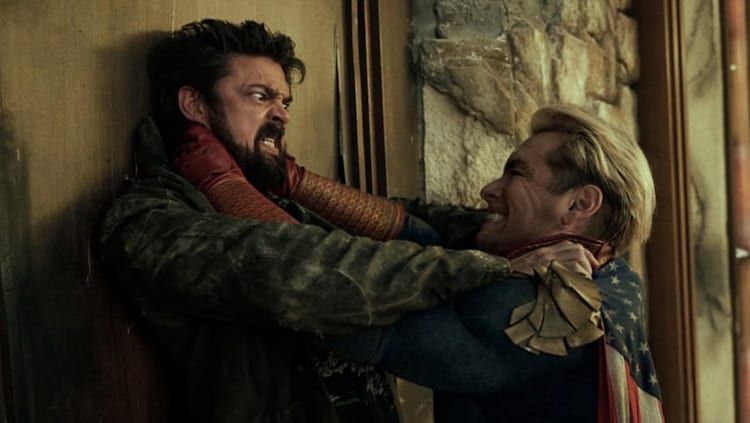
Homelander — who flies at terrifying speeds, overpowers almost everyone in the universe and had recently reduced Ryan to helplessness without breaking a sweat — suddenly struggles to escape Butcher. Yes, Ryan intervenes, but the shift in power feels abrupt. This is the same Homelander who had spent years being portrayed as an unstoppable force.
But the bigger surprise is Butcher.
A version of Butcher who spent five seasons proving the mission mattered more than relationships, morality or even survival suddenly hesitates. A man who repeatedly chose vengeance above everything else begins making choices that feel unusually restrained. The same character willing to sacrifice almost anyone for the cause appears softened by the finish line.
Growth is not the problem. Characters evolving is expected. The issue is whether that evolution felt earned.
For a finale built around two men destroyed by obsession, the ending offers something closer to compromise. And while that may have been intentional, it comes at the cost of making both characters feel less dangerous than they were for most of the series.
In trying to humanise Homelander and redeem Butcher, The Boys may have taken away the one thing that made them terrifying: conviction.
5. Not diabolical enough
The Boys built its identity on unpredictability. Characters died brutally, heroes crossed unforgivable lines and victories almost always came with devastating consequences. The show trained viewers to expect the worst — not because it enjoyed shock value alone, but because actions in this world usually had a price.
Which is why the finale feels strangely safe.
The problem is not that the episode lacked gore or violence. Homelander’s death is graphic, people are lost and the world changes. The issue is that the events surrounding those moments rarely spiral into the kind of chaos The Boys spent years promising.
Where were the impossible sacrifices? The betrayals? The choices that left viewers questioning whether anyone truly won?
Imagine a finale where Homelander survives but loses everything, Ryan takes his place at the top and Butcher now has to put him down. Or Butcher succeeds in eradicating all superheroes but becomes irredeemable in the process, forcing his own team to hunt him down. A world-ending conflict should have left deeper scars.
For a show whose favourite word was “diabolical”, perhaps the events of the ending should have been far more diabolical than the episode itself.
In conclusion
In isolation, The Boys finale is not a bad ending. Characters find closure, long-running arcs reach their destination and the world moves on. But The Boys was never meant to be just another show with a neat conclusion. It built its legacy on discomfort, unpredictability and the idea that power corrupts beyond repair. Perhaps that is why the ending feels so divisive, with fans remaining split over whether the finale stayed true to what The Boys represented.
Not because Homelander died or Butcher’s determination wavered, but because after years of chaos, viewers were left with something they never expected from this universe: simple relief. For a show that proudly wore “diabolical” as its identity, many fans may have simply wanted the final chapter to be even more diabolical.