
Why had Bengal quit Ayushman Bharat months after joining?
After the BJP's win in West Bengal, PM Narendra Modi said the launch of Ayushman Bharat in the state would be among the new government's first decisions. The move would end the state's long holdout over credit and control, even as Swasthya Sathi remains widely used.
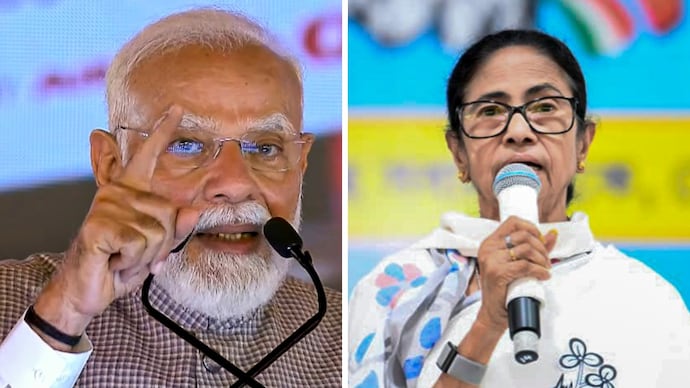

When West Bengal first joined the Pradhan Mantri Swasthya Suraksha Mission (PMSSY), the Narendra Modi government’s flagship health programme offering 5 lakh hospitalisation cover to tens of lakhs of families, it was seen as one of the states best placed to roll out the ambitious scheme.
That readiness stemmed from the Mamata Banerjee government’s earlier launch of Swasthya Sathi in 2016, a fully state-funded programme that also promised hospitalisation cover of up to Rs 5 lakh through empanelled hospitals, including private healthcare providers.
PMSSY, launched in 2018 as the world’s largest health insurance scheme, aimed to cover nearly 10 crore families-around 50 crore people-based on socio-economic criteria.
The funding model required cost-sharing between the Centre and states in a 60:40 ratio, except in the Himalayan and northeastern states, where it was 90:10.
Despite having Swasthya Sathi, West Bengal was among the 20 states and Union Territories that joined the scheme following its launch.
The friction began in 2019, when the scheme was rechristened as Ayushman Bharat Pradhan Mantri Jan Aarogya Yojana (AB-PMJAY), and beneficiary cards bearing the Prime Minister’s photograph were distributed.
CREDIT VS CONTROL
Banerjee strongly objected and decided to withdraw from the scheme. Her argument, repeated publicly, was that since the state shared the financial burden, the Centre should not claim sole credit.
The Centre attempted to persuade the state to reconsider, with the National Health Authority (NHA), which implements the scheme, sending multiple communications, a former official at the authority told India Today,
The Banerjee administration, however, stood firm, maintaining that its own programme offered a comparable, even better, scope.
As things stand, West Bengal remains the only state not implementing AB-PMJAY.
Odisha and Delhi, which had earlier stayed out under non-BJP governments, opted into the scheme after changes in power in 2024 and 2025.
Following the Bharatiya Janata Party’s sweeping victory in the state elections, Modi said in a speech at the party headquarters in Delhi on Monday that implementing AB-PMJAY would be among the first decisions of the new government.
AYUSHMAN BHARAT VS SWASTHYA SATHI
AB-PMJAY, now also extended to all individuals above 70 years of age, provides free secondary and tertiary care hospitalisation for up to Rs 5 lakh through a network of more than 14,000 hospitals, nearly half of them private.
Although flagged for irregularities – ranging from fraud and double billing to unnecessary procedures by some private hospitals, the Centre has consistently showcased it as one of its largest welfare programmes running successfully and taking the country towards Universal Health Coverage.
The scheme targets families based on socio-economic status in both rural and urban areas.
In contrast, Swasthya Sathi, initially designed for lower-income families, was later expanded to cover the entire population. According to official data, as of February 2026, this state scheme covered around 2.45 crore families, or 8.51 crore beneficiaries, across more than 2,900 empanelled hospitals, reaching over 74 percent of the state’s population.
But did West Bengal lose out by opting out of the Centre’s scheme? Some public health experts disagree.
“In my view, Swasthya Sathi has been a popular scheme widely used across the state and its scope is, in fact, bigger than the Centre-run programme as it targets all irrespective of their income status,” said Prabir Kumar Chatterjee, a Kolkata-based public health expert and senior member of the Jan Swasthya Abhiyan India.
“It has had its share of issues,” he added, citing unnecessary surgeries, double billing, and other malpractices by private hospitals. “But such problems are not unique-they occur across government health insurance schemes, including Ayushman Bharat.”