
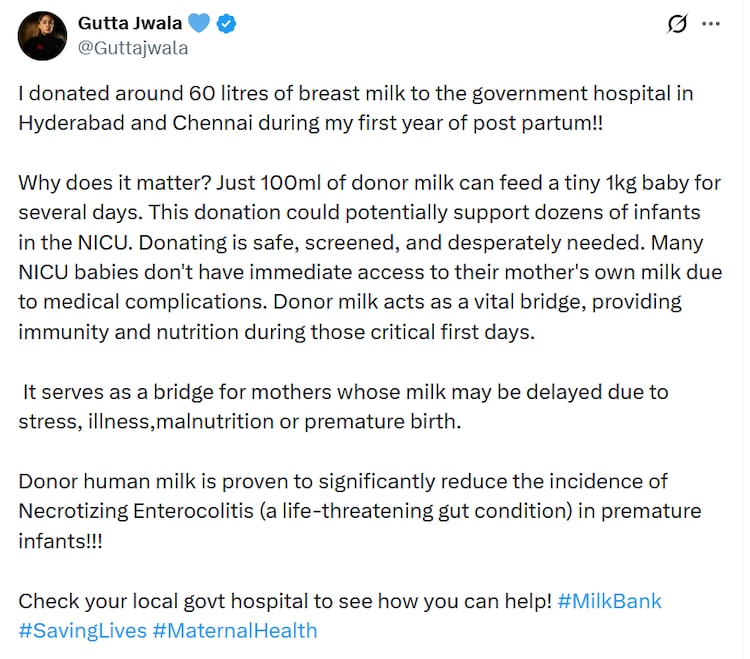
Jwala Gutta donates 60 litres of breastmilk to government hospitals: Why it matters
Jwala Gutta has donated nearly 60 litres of breastmilk to government hospitals in Hyderabad and Chennai after childbirth. The donation could save dozens of children in NICU, her post read.
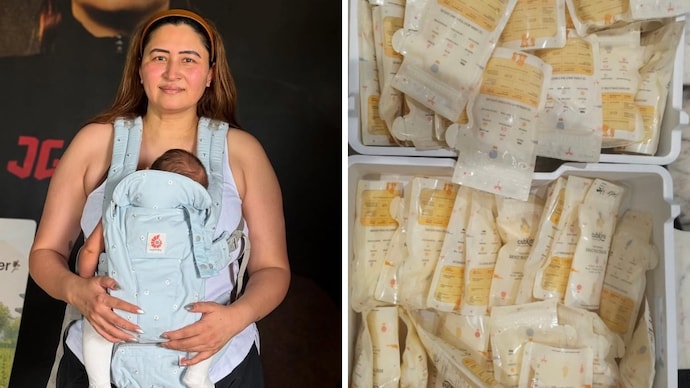
Jwala Gutta donated breastmilk to government hospitals, to be used for NICU babies. (Photo: Instagram/jwalagutta1)

Former badminton player Jwala Gutta has sparked an important conversation on maternal and newborn health after revealing in an X post that she donated nearly 60 litres of breastmilk to government hospitals in Hyderabad and Chennai during her first year postpartum.
In the post, Gutta highlighted how even 100 ml of donor milk can support a premature 1 kg baby in the neonatal intensive care unit (NICU) for several days.
She also pointed out that donor milk acts as a “vital bridge” for newborns whose mothers may not immediately be able to breastfeed because of illness, stress, premature delivery, malnutrition, or medical complications.
"Just 100ml of donor milk can feed a tiny 1kg baby for several days. This donation could potentially support dozens of infants in the NICU. Donating is safe, screened, and desperately needed. Many NICU babies don't have immediate access to their mother's own milk due to medical complications. Donor milk acts as a vital bridge, providing immunity and nutrition during those critical first days," she wrote in her post.
WHY DONOR BREASTMILK MATTERS
For premature and critically ill babies, breastmilk is more than nutrition. It is medicine.
Human milk contains antibodies, enzymes, hormones, and immune factors that help protect newborns from infections and support gut development.
This becomes especially important for babies born too early, who are vulnerable to life-threatening complications.
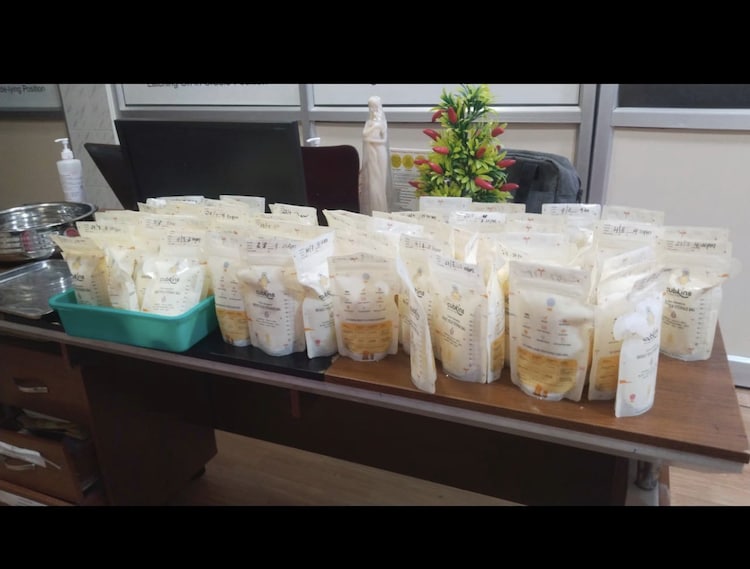
One of the biggest benefits of donor human milk is its role in reducing the risk of Necrotising Enterocolitis (NEC), a serious intestinal disease that mainly affects premature infants. The condition can damage the bowel, lead to severe infections, and even become fatal.
Research over the years has shown that premature babies fed human milk, either from their mothers or screened donor milk, have a lower risk of developing NEC compared to those fed formula.
HOW MILK BANK WORKS
Gutta's post draws attention to an overlooked healthcare system in India: human milk banks.
Human milk banks collect excess breastmilk from lactating mothers who voluntarily choose to donate.
Before donation, mothers undergo health screening to rule out infections or conditions that could make the milk unsafe.
The milk is then collected hygienically, pasteurised, tested for safety, stored under controlled conditions, and supplied mainly to NICUs and vulnerable newborns.
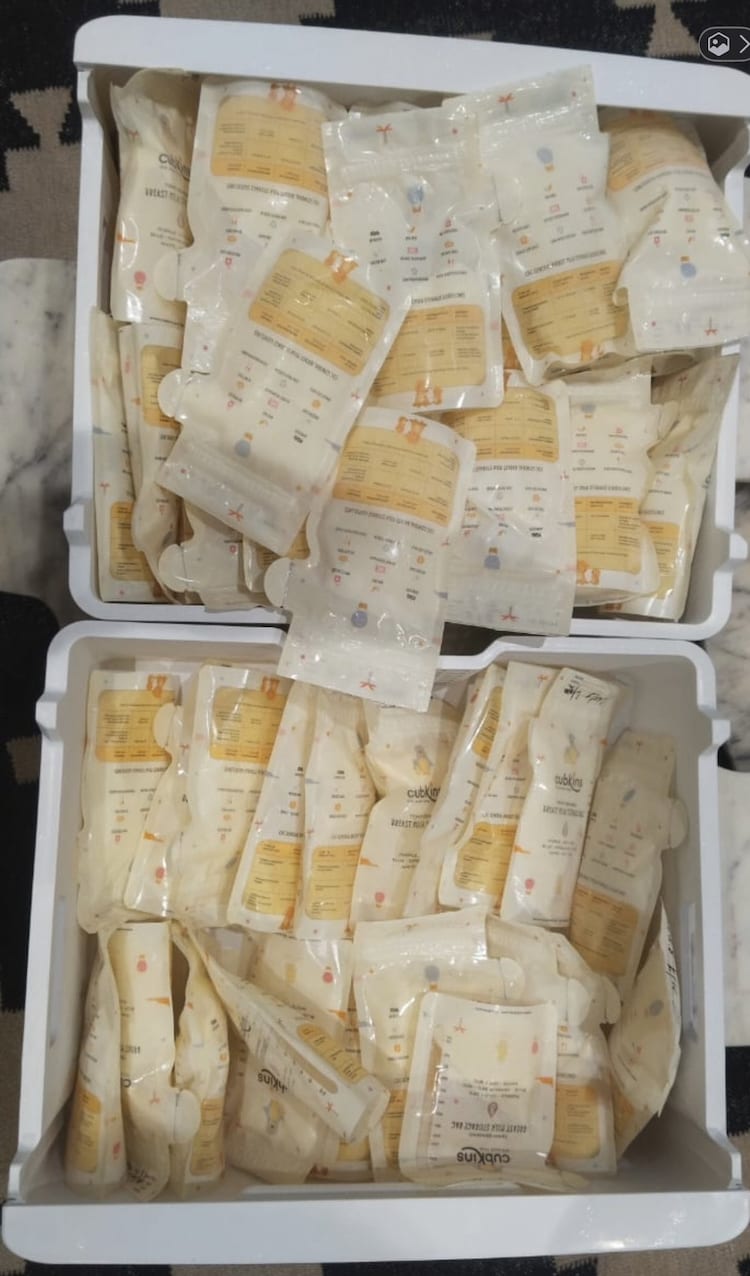
Donor milk is particularly critical in the first few days after birth when some mothers struggle with delayed milk production due to surgical delivery, postpartum stress, severe illness, or preterm labour.
THE GROWING NEED FOR DONOR MILK IN INDIA
India has one of the world’s largest numbers of preterm births, making access to safe donor milk especially important. Still, awareness about milk donation remains low.
Government hospitals in several Indian cities now run human milk banks, but many continue to face shortages because of limited donors and lack of awareness.
Donating breastmilk is similar to blood donation in spirit, a voluntary act that can directly save lives.
Gutta urged in her post: mothers interested in donating can check with nearby government hospitals or registered human milk banks to understand eligibility and the donation process.
Afterall, one mother’s donation can give another baby a better chance at survival.
- Ends