
Screen time and kids: Viral MRI claim sparks debate on brain development
A viral social media post has reignited debate over tablets and young children. Experts say the research points to possible links, but not proven harm.
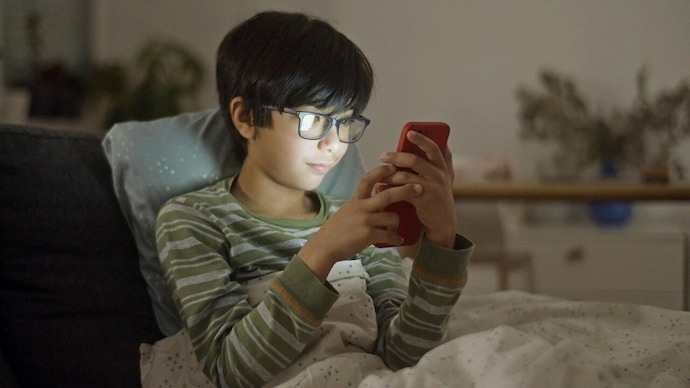

A viral post on social media has sparked a fresh debate on how screen time affects young children.
The claim suggests that giving tablets to kids as young as four could lead to “brain damage” due to changes in brain structure.
The discussion picked up after a tweet by conservative commentator Matt Walsh, who criticised parents for allowing young children to use tablets, calling it “total madness.”
The tweet quoted another post referring to an MRI-based study of children aged 3 to 5 years.
According to the claim, researchers scanned 60 children and found that interactive screen time was linked to a “loss of white matter” in the brain, a key component involved in communication between different brain regions.
The claim also suggested that even two hours of screen time daily could have a measurable impact.
The video accompanying the tweet explains white matter as myelin, a protective layer around nerve fibres that helps signals travel efficiently in the brain. A researcher in the video claims that reduced myelin could affect neural connectivity, especially in areas linked to language and literacy development.
WHAT WHITE MATTER, AND WHY DOES IT MATTER?
White matter plays a crucial role in early brain development. It helps different parts of the brain communicate with each other. In young children, this development is rapid, especially in the first five years of life.
The claim that screen time reduces white matter has been linked to earlier research, including studies from institutions like the National Institutes of Health, which have explored how excessive screen exposure may relate to changes in brain structure.
Some studies have found associations between higher screen use and lower measures of white matter integrity in preschool-aged children.
However, experts caution that association does not mean causation. These studies do not prove that screen time directly damages the brain. Instead, they show a possible link that needs deeper investigation.
WHAT DO EXPERTS SAY ABOUT THE VIRAL CLAIM?
Many child development experts say the viral interpretation may be exaggerated. While research does suggest that excessive screen time can affect attention, sleep, and language development, calling it “brain damage” is considered misleading.
Medical professionals emphasise that context matters; what the child is watching, how long they are watching, and whether parents are involved all play a role.
Interactive and educational content, when used in moderation, may not have the same effects as passive or excessive screen use.
How much screen time is too much?
Guidelines from the World Health Organisation recommend:
- No screen time for children under 2 years
- Limited, supervised screen time for children aged 2–5 years (around 1 hour per day)
Similarly, the American Academy of Paediatrics advises parents to prioritise real-world play, reading, and interaction over screens.
THE BIGGER PICTURE FOR PARENTS
While the viral post raises important concerns, experts say it should not lead to panic. Screens are now a part of modern life, and completely avoiding them may not always be practical.
Instead, parents are encouraged to:
- Limit screen time duration
- Choose high-quality, age-appropriate content
- Co-view and engage with children during screen use
- Balance screen time with outdoor play, social interaction, and sleep
The viral claim about screen time causing “brain damage” in young children simplifies a complex issue.
While research does suggest potential risks of excessive screen exposure, especially in early childhood, experts agree that moderation and mindful use are key.
For parents, the focus should not be on fear, but on balance.