
How BJP's Sikh outreach gains momentum with Phoolka entry and Sandhu elevation
From moral figures to institutional representation and global diplomacy, the party is recalibrating its image in Punjab, creating space to engage Sikh voters more credibly and opening doors for former Akali Dal leaders to reconsider their political alignments.
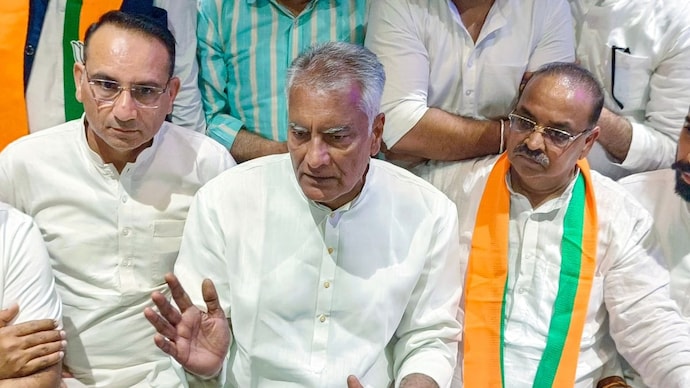

 The formal induction of H.S. Phoolka into the Bharatiya Janata Party on April 1 afternoon was carefully staged, not just as a political joining, but as a statement of intent. The optics mattered. The top leadership of BJP in Punjab, state chief Sunil Jakhar and working president Ashwini Sharma along with Delhi unit chief Virendra Sachdeva, minister Manjinder Sirsa and the central leadership comprising party general secretary Tarun Chugh and Union minister Hardeep Puri were present on the dais, signalling that this was not a routine lateral entry but a politically curated moment. The messaging was deliberate, the BJP was welcoming not just a former legislator from Punjab, but a figure synonymous with the long legal battle for justice in the 1984 anti-Sikh riots.
Lawyer Phoolka, who had earlier been associated with the Aam Aadmi Party, used the occasion to underline concerns around governance, law and order and the drug menace in Punjab. But the subtext of the event went far beyond immediate state politics. For the BJP, this was about reinforcing a narrative it has sought to build over the past decades of being a party committed to delivering justice to victims of the 1984 riots, in contrast to the legacy of the Indian National Congress.
Just before the 2014 Lok Sabha polls, Phoolka had joined AAP and unsuccessfully contested from the Ludhiana constituency against Ravneet Bittu (the then Congress leader). Later in 2017, he won from the Dakha assembly constituency and became leader of opposition with Captain Amarinder Singh as chief minister. He later quit both post and politics to pursue the legal case against Congress leader Sajjan Kumar in the 1984 riots case. All three, Amarinder, Bittu and Phoolka, are now in the BJP.
However, among the galaxy of leaders the BJP had gathered to welcome Phoolka, the conspicuous absentees were Bittu and Amarinder. The latter has almost retired from active politics and was in Chandigarh hosting corporate tycoon Gautam Adani. BJP strategists for Punjab don't pay much heed to Bittu's absence, however.
For years, the BJP has pointed to actions taken under its governments on the riot cases — reopening cases, appointing special investigation teams and securing convictions in long-pending cases — as evidence of its commitment to securing justice. However, these claims often struggled to gain traction in Punjab, where political narratives are filtered through deep historical memory and scepticism. With Phoolka now in the party, that narrative acquires trustworthiness through association. It is no longer just a political assertion; it is reinforced by a figure who has spent decades fighting those very cases in courtrooms and has impeccable credibility.
This shift also gives the BJP greater political space to sharpen its attack on the Congress. The party has consistently held the Congress responsible not only for the anti-Sikh riots of 1984 but also for the broader sequence of events that shaped Sikh political alienation, including Operation Blue Star. With the respected lawyer in its ranks, the BJP can now push this line with a stronger moral backing, arguing that its position is aligned with those who have directly fought for justice, rather than being merely opportunistic. In the past, the credit for pro-Sikh moves either were taken by erstwhile ally Akali Dal or the Badal family. Radicals, in Punjab and among the diaspora, used this vacuum to paint the 1984 riots as Hindu vs Sikh riots, whereas BJP and Phoolka consistently blamed the Congress. With forces aligned, the BJP will now push this narrative hard.
At a political level, this is significant. Punjab’s electoral discourse is deeply influenced by how parties position themselves on questions of history, justice and identity. By aligning itself with a figure like Phoolka, the BJP is attempting to anchor its narrative in lived experience rather than political rhetoric, thereby strengthening its ability to engage Sikh voters on sensitive issues.
At the same time, this move must be seen in conjunction with another significant development: the appointment of Taranjit Singh Sandhu as lieutenant governor of Delhi in the first week of March. Sandhu’s elevation, coming just weeks before Phoolka’s induction, adds an institutional dimension to the BJP’s outreach.
Sandhu is not a conventional political appointee. A seasoned diplomat and former Indian ambassador to the United States, he carries with him both administrative experience and a lineage deeply respected in Sikh circles. His grandfather, Teja Singh Samundri, was a prominent figure in Sikh institutional history, while his father, Bishan Singh Samundri, served as the founding vice-chancellor of Guru Nanak Dev University. This lineage lends Sandhu a credibility that extends beyond bureaucratic competence into the realm of community respect. Sandhu, within the first month of taking over as LG, has met with all Sikh factions active in Delhi. The BJP leadership considers Delhi minister Sirsa to have limitations despite this involvement in Sikh issues and has drastically reduced Sirsa’s involvement in Punjab affairs. For Sikh politics overall, Sandhu is seen as binding factor, as someone who is above all animosity and has access to all Sikh factions.
The timing and sequencing of these developments are telling. In mid-March, speaking at a rally in Moga, Amit Shah made it clear that the BJP would contest Punjab on its own and ruled out any immediate possibility of reviving its alliance with the Sukhbir Badal-led Shiromani Akali Dal. Together, they reflect a multi-layered strategy: Phoolka represents moral authority and justice, while Sandhu embodies institutional legitimacy and elite acceptance. This dual approach allows the BJP to engage with different segments of Sikh society—those driven by historical memory and those influenced by institutional and professional representation.
Beyond domestic politics, there is also a global dimension shaping this outreach. India’s engagement with regimes such as in London and in Ottawa on curbing pro-Khalistani extremism has implications for perception both abroad and at home. By
addressing what it describes as “Khalistani irritants” in these jurisdictions, New Delhi is attempting to separate extremist narratives from mainstream Sikh identity. These efforts have been reciprocated both by the Kier Starmer and Mark Carney governments. Both kept pro-Khalistani parliamentarians out of their respective cabinets. This, in turn, feeds into the BJP’s domestic positioning, allowing it to argue that its stance is not anti-Sikh, but anti-separatist.
In Punjab’s evolving political landscape, these efforts are beginning to have a cumulative effect. The BJP is now in a stronger position to speak to Sikh voters than it was even a few years ago. In the past BJP did try to build conversations with Sikh leadership with Union ministers Puri and Bittu and Delhi minister Sirsa, along with Rajya Sabha member Satnam Sandhu and Iqbal Singh Lalpura. What these personalities lacked was depth and grip on Sikh issues. This absence of credible Sikh faces had long limited BJP’s outreach. Today, figures like Phoolka and Sandhu provide it with both moral and institutional anchors. With the two men in its ranks, BJP eyes the space occupied by radicals riding on sensitive community issues. A top BJP leader explained that the party was committed to resolving legacy issues and bringing closure to most of them, especially when most of them were created by previous "Congress regimes".
This shift is particularly significant in the context of the declining influence of the Shiromani Akali Dal, led by Sukhbir Singh Badal. Once the principal custodian of panthic politics, the Akali Dal is struggling to regain credibility and reassert its hold over core Sikh voters. Electoral setbacks, leadership challenges, and the fallout of recent political controversies have weakened its standing, creating a vacuum in Sikh political representation.
The BJP appears to be gradually moving into this space, not through aggressive expansion, but through calibrated positioning. By aligning itself with respected Sikh figures and reinforcing its narrative on justice and governance, it is slowly getting under the skin of Sikh voters, building familiarity and reducing resistance over time.
This has important implications for political alignments. Several Akali Dal leaders who had earlier hesitated to join the BJP, concerned about how such a move would be perceived within the community, may now find the environment more conducive. Many of them have already fallen out with Sukhbir Badal’s group and had floated a punarsurjit (rejuvenated) Akali Dal under former Akal Takht Jathedar Giani Harjit Singh. This outfit is struggling to take off because of lack of resources and cohesiveness.
The list of chafing leaders includes Bibi Jagir Kaur, Gurpartap Wadala, Harinder Khalsa, Parminder Dhindsa, Iqbal Singh Jhunda and Sikandar Singh Maluka, whose son and daughter-in-law are already in the BJP. Among those of Akali background already inducted are Amarjit Singh Bony Ajnala and Ravi Karan Kahlon. The presence of credible Sikh voices within the BJP reduces the political risk associated with defection and provides a framework for repositioning. It also allows the party to strike conversations in the rural parts and areas sensitive to Sikh narratives.
However, while the BJP’s perceptional gains are evident, the challenge of converting them into electoral success remains. Punjab’s politics is deeply rooted in local networks, agrarian concerns and regional identities. Symbolic representation must
eventually be backed by organisational strength and policy engagement. In the next one year, BJP will have to make decisive moves on Sikh issues such as releasing some of the convicted terrorists who may have completed their jail sentences and intelligence agencies no longer see them potential threats.
Even so, the current trajectory marks a significant shift. Through a combination of strategic inductions, institutional appointments, and calibrated messaging, the BJP is attempting to redefine its relationship with Punjab’s Sikh electorate. The entry of Phoolka and the elevation of Sandhu are not endpoints but markers of a broader transition—one that could reshape both perception and political competition in the state in the years leading up to 2027.
Subscribe to India Today Magazine