

Up retirement age, boost nightlife: IAS officer's wishlist for UDF fuels debate
A Kerala IAS officer's blunt wishlist for the incoming UDF government has triggered a social media explosion, with users fiercely split over what Kerala's future should look like.
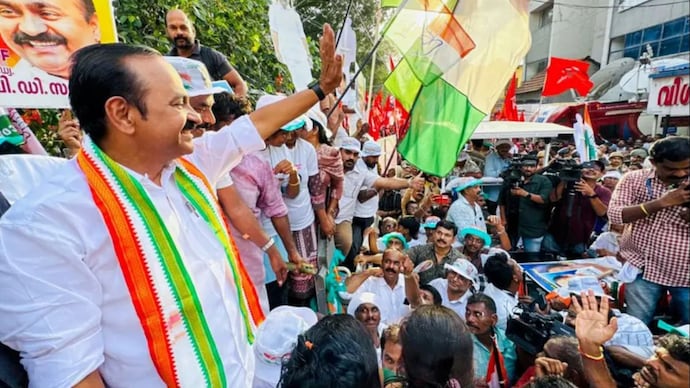


As Kerala prepares for a new political chapter under the UDF after its emphatic electoral victory, an IAS officer’s sweeping wishlist for reforms has exploded into a heated social media debate, with opinions sharply divided over pension age, nightlife, Malayalam-medium education and district reorganisation.
Dilip K Kainikkara, the Tirur Sub-Collector and a 2022-batch IAS officer, touched off the debate through a Facebook post shortly after the UDF’s emphatic electoral victory in Kerala.
Arguing that the next few years present a rare opportunity for politically difficult reforms, Kainikkara wrote that the government should use the period before the next election cycle to push through long-term structural changes, even if they trigger immediate backlash.
“Now Kerala is heading into three years without elections till 2029. This is the right opportunity for reforms that may face short-term opposition but are essential for society,” he wrote.
What followed was an avalanche of reactions. Some were supportive, some were sarcastic, some were ideological, while some were deeply emotional.
‘RETIRING PEOPLE AT 56 IS IRRATIONAL’
The proposal that generated the sharpest backlash was Kainikkara’s suggestion to raise the retirement age for government employees from 56 years.
“We are a society with very good health indicators and high life expectancy. Retiring people at 56 and immediately starting pension payments is irrational in every sense,” he wrote, adding that even increasing it to 58 years would be a “great rationalisation” of government human resources.
Within hours, the comments section was filled with anxious reactions from job aspirants and critics.
“If the retirement age becomes 60, even the vacancies available now will disappear,” one user wrote.
Another asked, “What will happen to PSC rank holders and students preparing for government jobs if recruitment stops for years?”
Some mocked the proposal outright.
“Make the pension age 99. Then all problems will be solved,” one sarcastic comment read.
Yet voices were backing the suggestion, too.
“One-year increases at intervals may actually work,” another user argued, suggesting a phased implementation instead of a sudden jump.
MALAYALAM VS ENGLISH
If the pension debate was heated, the language debate was explosive.
Kainikkara suggested that Malayalam-medium education should largely remain limited to lower primary schooling, while upper primary, high school and higher secondary education gradually shift towards English-medium instruction.
“We don’t want to create new class differences on top of the existing ones,” he argued.
The remark triggered fierce resistance from users who saw it as an attack on Malayalam and Kerala’s linguistic identity.
“Is there some hatred towards Malayalam?” one user asked.
Another user launched into a lengthy rebuttal, saying Kerala had fought for decades to establish Malayalam as a language of administration and education, and accused the officer of weakening hard-won language rights.
“Countries across the world are strengthening mother tongues. At a time when people are resisting linguistic imposition elsewhere, why should Malayalam be confined only to LP classes?” the user wrote.
But supporters of the proposal argued that English-medium education was increasingly unavoidable.
“If English-medium becomes universal, it would be a great change for good,” one comment said.
Another user tried striking a balance, saying students should continue learning in Malayalam while scientific terms and technical concepts remain in English.
NIGHTLIFE IDEA DIVIDES USERS
Kainikkara’s push for nightlife and related economic activity also triggered a culture clash online.
The IAS officer argued that encouraging nightlife could significantly boost tourism and attract investments in the service sector.
Some users welcomed the idea enthusiastically.
“A great boost for tourism,” one comment read.
Others strongly resisted it.
“Every place has its own cultural identity. Evolution should not be forced,” another user responded.
One user jokingly wrote, “That nightlife idea is haram for us. We won’t allow it.”
Another pointed out that the police force itself may oppose such a move because it would dramatically increase their workload and public scrutiny.
‘DIVIDE MALAPPURAM’
The officer’s suggestion to bifurcate large districts, especially Malappuram, also triggered intense discussion.
Kainikkara argued that smaller districts would improve administrative ease and public access to government services.
“Malappuram district should definitely be divided,” one user commented, while another suggested forming separate Malappuram and Tirur districts.
But critics questioned whether Kerala could financially sustain the creation of more districts and administrative infrastructure.
“If districts increase, recurring costs will also rise. How practical is this for a state like Kerala?” another user asked.
SCHOOL REFORMS, AI AND ‘A+ LIBERALISATION’
The IAS officer also attacked Kerala’s school grading system, arguing that indiscriminate awarding of A+ grades had diluted academic standards.
He called for grading reforms and a review of the unconditional all-pass system to ensure students achieve basic learning outcomes.
The education discussion quickly spiralled into wider demands for reform.
Some users called for AI, robotics and 3D printing to be introduced into school curricula.
Others demanded vocational training after Class 10, flexible higher education systems that allow students to work part-time, and a stronger focus on practical life skills such as first aid, waste management and traffic discipline.
One user even proposed that arts, sports and entrepreneurship achievements should be reflected separately on school certificates instead of merely contributing grace marks towards science subjects.
‘UTOPIAN’ OR ‘BRAVE’?
As the debate intensified, reactions increasingly became political.
Some users accused the officer of floating impractical “utopian” ideas disconnected from Kerala’s economic realities.
Others questioned whether such suggestions would have emerged had the LDF returned to power instead of the UDF.
But supporters praised Kainikkara for speaking openly about politically sensitive issues that many bureaucrats avoid discussing publicly.
“Many people hesitate to openly discuss these topics. That courage itself matters,” one supporter wrote.
Another user said the post reflected “administrative experience and study” and described the officer’s willingness to invite public debate as a sign of genuine public engagement.
What began as a Facebook “wishlist” has now turned into one of Kerala’s most animated post-election public conversations, exposing deep divisions over language, jobs, culture, governance and the direction in which the state should move under its next government.