

Uganda-returned woman, isolated in Bengaluru, tests negative for Ebola
Following the woman's test results, authorities confirmed that there are no Ebola cases in the country so far. Meanwhile, the government is strictly reviewing the prevailing situation and screening international travellers.
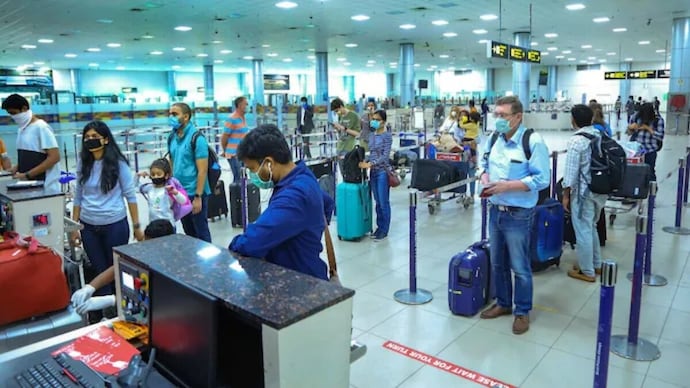


In a major relief for health authorities and the public in India, the test results of a 28-year-old woman who returned from Uganda and was isolated in Bengaluru due to a suspected Ebola infection have returned negative. Following the test result, the Centre confirmed that no case of Ebola Virus Disease (EVD) has been detected in the country so far.
The woman, who had recently travelled from an Ebola-affected region in Africa and later developed mild symptoms such as body ache, had been shifted to the state-run Epidemic Diseases Hospital in Bengaluru as a precautionary measure amid heightened global concern over the outbreak.
The Ministry of Health and Family Welfare said the woman was placed under isolation "as a matter of abundant caution" after reporting symptoms.
A sample was subsequently sent to the National Institute of Virology (NIV), Pune, for laboratory testing.
"The test result has returned negative for Ebola Virus Disease," the ministry said, adding that "No case of Ebola Virus Disease has been confirmed in India".
NO SEVERE SYMPTOMS OBSERVED
Officials said the woman remained stable throughout observation and did not exhibit severe symptoms associated with the disease.
As per established health protocols, authorities initiated monitoring and isolation procedures because of her recent travel history to Uganda, one of the countries affected by the ongoing Ebola outbreak.
The government previously issued an advisory for its citizens to avoid all kinds of non-essential travel to countries, including the Democratic Republic of Congo, Uganda, and South Sudan, where over 220 suspected deaths due to Ebola have been reported.
The development comes at a time when governments and health agencies across the world are on alert following the World Health Organization’s declaration of the Ebola outbreak in these countries as a "Public Health Emergency of International Concern" (PHEIC).
The Africa Centres for Disease Control and Prevention has also designated the outbreak as a "Public Health Emergency of Continental Security" (PHECS).
HEALTH MINISTER REVIEWS PREPAREDNESS
In response to the global situation, Union Health Minister JP Nadda reviewed India’s preparedness and surveillance mechanisms in a high-level meeting with senior officials.
During the review, Nadda directed authorities to ensure that Ebola screening arrangements at all airports, seaports and land border crossings remain "fully vigilant and robust".
He also instructed the Indian Council of Medical Research (ICMR) and the National Centre for Disease Control (NCDC) to maintain readiness for “tracking, testing, and surveillance” in case of any suspected infections.
Following Nadda’s directions, the Union Health Secretary chaired a joint review meeting involving multiple ministries and concerned agencies to strengthen coordination and response mechanisms.
INDIA STEPS UP VIGIL
The Centre has also advised all states and Union Territories to intensify surveillance, hospital preparedness and screening of international travellers arriving from affected regions.
In Karnataka, the health department has already activated precautionary protocols.
Authorities have advised people returning from Ebola-affected countries to monitor their health and self-observe for 21 days.
Rapid Response Teams (RRTs) have also been tasked with surveillance and contact monitoring activities.
The Rajiv Gandhi Institute of Chest Diseases in Bengaluru has been designated as the isolation centre, while the Epidemic Diseases Hospital will function as the quarantine and treatment facility. Similar arrangements have also been put in place in Mangaluru.
The Centre has stressed that while the risk of transmission outside the affected African region remains low, India’s public health system will continue heightened surveillance and preparedness measures.
Authorities have urged citizens not to panic or spread misinformation and to rely only on official updates as monitoring and screening continue across the country.