

Political move amid resignation buzz? Siddaramaiah accepts caste survey report
Approving the report could trigger resistance from influential dominant communities, while delaying or rejecting it could draw criticism from backward class groups and AHINDA supporters. Either way, the next government could find itself navigating a politically sensitive situation.
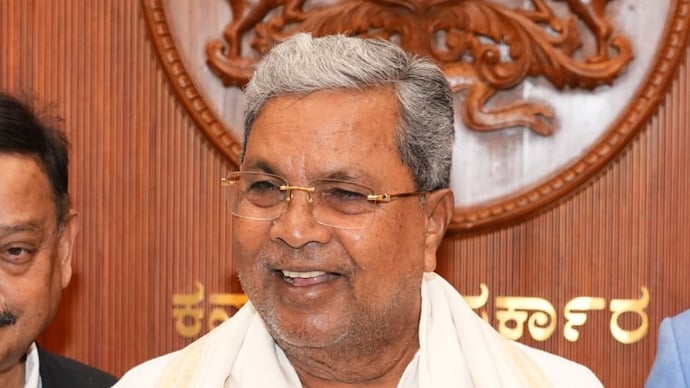


Amid intense speculation over a possible leadership change in Karnataka, Chief Minister Siddaramaiah’s decision to accept the Backward Classes Commission survey report a day before his expected resignation is being viewed as more than a routine administrative step.
The report was submitted today by Backward Classes Commission Chairman Madhusudan Nayak after the Chief Minister fast-tracked the process amid rapidly evolving political developments in the state.
The move is being seen as a calculated political decision aimed at securing his legacy while placing the next government in a politically difficult position.
SIDDARAMAIAH SEEKS LEGACY
The caste survey has been one of Siddaramaiah’s long-standing political and ideological commitments.
As an AHINDA leader, representing minorities, backward classes and Dalits, Siddaramaiah has built much of his political identity around social justice and backward-class empowerment.
Accepting the report before stepping down could allow him to send a strong political message that, till his last day in office, he remained committed to communities that form the core of his AHINDA politics.
Political observers believe Siddaramaiah is seeking to leave behind a legacy project that reinforces his image as a champion of backward classes. The timing of the move also allows him to claim ownership of a politically sensitive issue while shifting the burden of implementation to his successor.
CASTE SURVEY’S TUMULTUOUS JOURNEY
The caste survey has had a contentious journey. Earlier, the report submitted by Jayaprakash Hegde faced strong opposition, particularly from influential Vokkaliga and Lingayat communities.
Leaders from both groups had questioned the findings, alleging that the survey was outdated and unscientific, and that it misrepresented the demographic strength of various communities.
Leader of Opposition, R Ashoka, had also accused Siddaramaiah of using the caste census as a political distraction to cover internal failures and avoid sharing power with Deputy CM DK Shivakumar.
Following the backlash, the government constituted the Madhusudan Nayak Commission and ordered a fresh exercise, which was completed within the deadline set by the government.
SIDDARAMAIAH’S CALCULATED MOVE
However, merely accepting the report does not automatically translate into policy. For implementation, it must be placed before the Cabinet and approved by the Council of Ministers.
This is where Siddaramaiah’s move gains political significance.
When the new Chief Minister – Shivakumar is the frontrunner – takes over, the incoming government will have to decide whether to accept, change, or reject the report.
That decision is unlikely to be straightforward as several Lingayat and Vokkaliga leaders have already expressed reservations over the survey.
CATCH 22 SITUATION FOR SUCCESSOR
Approving the report could trigger resistance from influential dominant communities, while delaying or rejecting it could draw criticism from backward class groups and AHINDA supporters.
Either way, the next government could find itself navigating a politically sensitive situation.
By accepting the report at this stage, Siddaramaiah appears to have aligned himself with backward class aspirations while leaving the politically difficult decisions to his successor.
For Siddaramaiah, the move is being seen as more than administrative — it reinforces his attempt to ensure that his political legacy is defined by his long-standing identity as a leader of social justice.