

PM Modi personally monitoring NEET paper leak issue, Centre tells Supreme Court
The bench also asked the ministry to explain the mechanisms in place to ensure continuity of expertise and institutional knowledge in the examination system. It sought details on how specialised personnel and subject-matter experts are deployed and retained to guarantee the secure and efficient conduct of examinations.
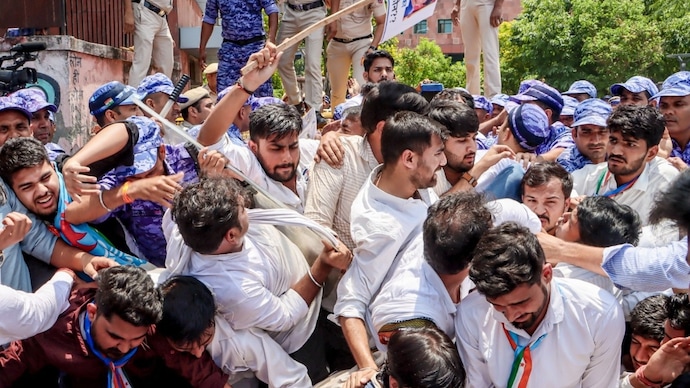


The Supreme Court on Thursday heard arguments in the NEET UG paper leak case, during which the Centre informed the court that Prime Minister Narendra Modi is personally monitoring the issue related to “lacuna" in the examination system.
Appearing for the Centre, Solicitor General Tushar Mehta told the bench, “PM is personally monitoring the lacuna," underlining that the government was taking the matter at the highest level.
During the proceedings, Justice J Narasimha raised concerns over the effectiveness of the existing safeguards and questioned how such a lapse could occur despite the presence of a high-powered committee overseeing the examination system.
The judge remarked that the incident pointed either to shortcomings in the committee’s original recommendations or failures in their execution. “If such an incident has occurred despite a high-powered committee being in place, there is either something wrong with the original recommendations or there has been inadequate implementation,” he observed.
The Supreme Court noted that the notice earlier issued to the Union Health Ministry would now stand substituted with the Ministry of Education. The court directed the Education Ministry to explain the framework through which examinations are conducted and completed every year.
The bench also sought details on the systems in place to preserve institutional memory and expertise in the examination process. It asked the ministry to clarify how specialised personnel and subject experts are identified, deployed and retained to ensure the smooth and secure conduct of examinations on a recurring basis.
The Court observed that such incidents place emotional and psychological strain on students and their families, who invest years of hard work, preparation and hope in the examination process.
The court also directed the Central Government to submit an affidavit on the NEET-UG 2026 paper leak case and scheduled the next hearing for the second week of July 2026.
HOW CENTRE PLANS TO MOVE FORWARD
In a bid to prevent any repeat of paper leaks or procedural lapses, the Centre is considering a series of stringent measures for the NEET-UG re-test. With the Prime Minister’s Office (PMO) now directly overseeing developments, the Education Ministry is reportedly exploring the possibility of involving the defence forces in the transportation and logistics of question papers to strengthen security and ensure the integrity of the examination process.
As the proceedings continue, the Supreme Court appears to be looking beyond immediate remedial measures and focusing on deeper institutional reforms within the examination system.
While the NTA, the Centre and the high-level committee have outlined a range of reforms, security upgrades and expert-driven measures, the court has emphasised the need for clear accountability, continuity of expertise and robust structural safeguards. The outcome of the case is likely to have far-reaching implications for the functioning of the NTA and the conduct of major national examinations, including NEET-UG, in the years ahead.