
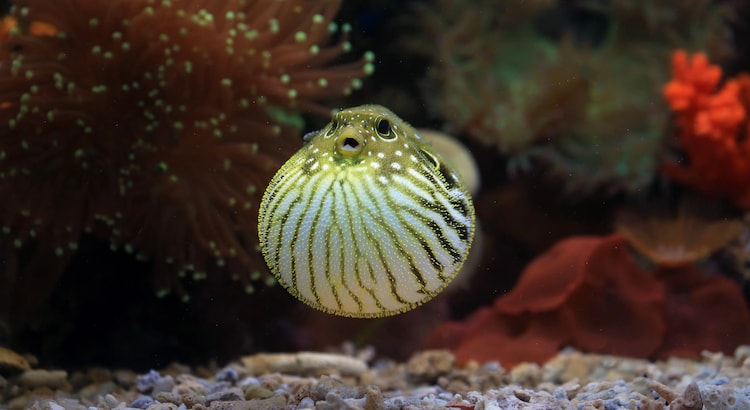
Modern dating has a new label and it's called puffer-fishing
There's a new dating trend on the dating block, and it's nothing to do with fish or any related fetish. It's more about a behaviour several people often come across. Read on to find out what experts think about it.
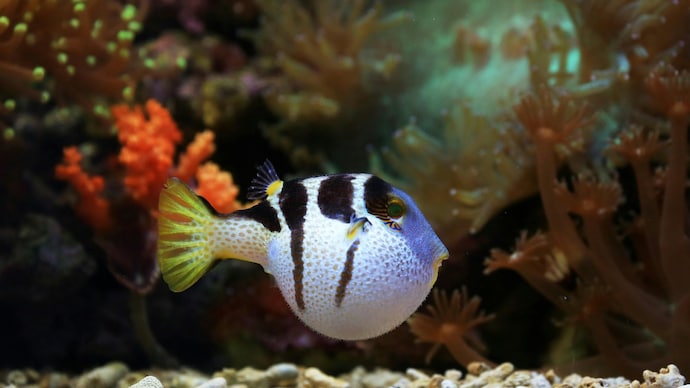
Puffer fishing is a dating behaviour that can create rifts in a relationship (Photo: Pexels)

In 2026, dating is a bit complicated. Or maybe more than a bit. Okay, a lot.
It appears as though dating trends are being discovered faster than lightning. By the time you read and understand one, in the next breath, people are hoping on to the next.
And yes, we are here to talk about yet another dating trend. It’s called “puffer-fishing.”
It’s not about fishes, food preferences, or anything related to the sea.
What's 'Puffer-fishing'?
This isn’t exactly a new behaviour people are suddenly exhibiting — just has a newly viral label to it.
Puffer-fishing describes a pattern where someone begins to emotionally distance themselves or display avoidant behaviour the moment a relationship starts feeling serious, intimate, or emotionally real. So much so that the person might even start ghosting or simply break up.
And this draws a parallel to how a puffer fish behaves when it senses danger — turning into a prickly, puffed-up ball as a defence mechanism against any perceived threat. It creates distance for itself from the world.
Puffer-fishing as a concept was popularised by Kati Morton, author of Why Do I Keep Doing This?. Morton says she first came across the term in her twenties through her own therapist, after repeatedly ending short-lived relationships herself. Her therapist suggested that the pattern may have stemmed from a deeper fear of emotional vulnerability and intimacy.
“She said, ‘You’re a puffer fish. If somebody gets too close and you start to feel vulnerable, you stick your spines out instead of communicating.’”
Peak puffer fish behaviour
According to Ruchi Ruuh, a Delhi-based relationship expert, the signs are often subtle at first. In fact, puffer-fish can initially come across as deeply affectionate, emotionally available, and intensely invested.
The confusion usually begins when the relationship starts moving from casual chemistry to real emotional intimacy.
“There’s a sense of hot-and-cold energy. You may notice someone craving closeness one moment, only to suddenly feel overwhelmed or trapped by the very connection they were seeking. As things get serious, they may become emotionally unavailable, hyper-fixate on your flaws, or begin acting distant without explanation,” she says.
Oh, and when it comes to difficult, or should we say “real” conversations, those become especially telling. Instead of communicating discomfort honestly, a puffer-fish may shut down, pull away, avoid confrontation, or disappear emotionally altogether. Don't be surprised if they start ghosting.
They disappear, then casually return expecting the relationship to pick up where it left off. Classic puffer-fish behaviour.
But who is really to blame?
An individual’s growing-up years can be telling.
Ruuh breaks this down:
“People who grow up seeing emotional intimacy as a healthy and normal expression, with regard to their boundaries, find it emotionally non-threatening. For others who grow up in an environment where emotional needs were dismissed, caregivers were inconsistent, being vulnerable was unsafe, or love felt conditional or transactional, closeness activates fears. They may feel their reciprocity will not be regarded, or that other people’s emotional expression is a trap to control them.”

But that doesn’t mean everyone who says, “I need some space,” is a puffer-fish. It’s not always unhealthy. Healthy space comes with clear, timely communication to avoid any misreading of the situation, along with a healthy dose of reassurance.
Are puffer-fish bad?
Not always.
Ruuh has a balanced view on this: “Having avoidant traits doesn’t make someone a bad person. One should observe whether they notice their behaviour once it is pointed out. Do they become self-aware? Do they make an effort to work on it?”
A relationship can certainly become unhealthy if the withdrawal is frequent, communication disappears, and one partner becomes overtly anxious because of this behaviour.
There is no right or wrong.
Many people who withdraw are not indifferent; they are just overwhelmed.
And a little work on thyself can go a long way.
Firstly, recognising the triggers that lead to this avoidant behaviour. One needs to learn to sit with discomfort in order to tolerate vulnerability without escaping, and learn to communicate the discomfort rather than disappearing.
Future of a puffer-fish
It’s not all murky waters.
Experts believe that people can learn to have more secure relationships with self-awareness, being in an emotionally healthy relationship with themselves, therapy, and learning accountability.
“A person cannot build long-term intimacy while repeatedly fleeing from it. It’s important to understand that it’s okay to struggle with emotions or vulnerability, but not taking responsibility for how that affects another person is not useful,” Ruuh adds.
Maybe that’s the thing about puffer-fishing: the goal is not to never feel afraid of intimacy again. It is learning that vulnerability is not danger and that not every difficult emotion requires an escape route.
So, keep swimming little Nemos.
- Ends