
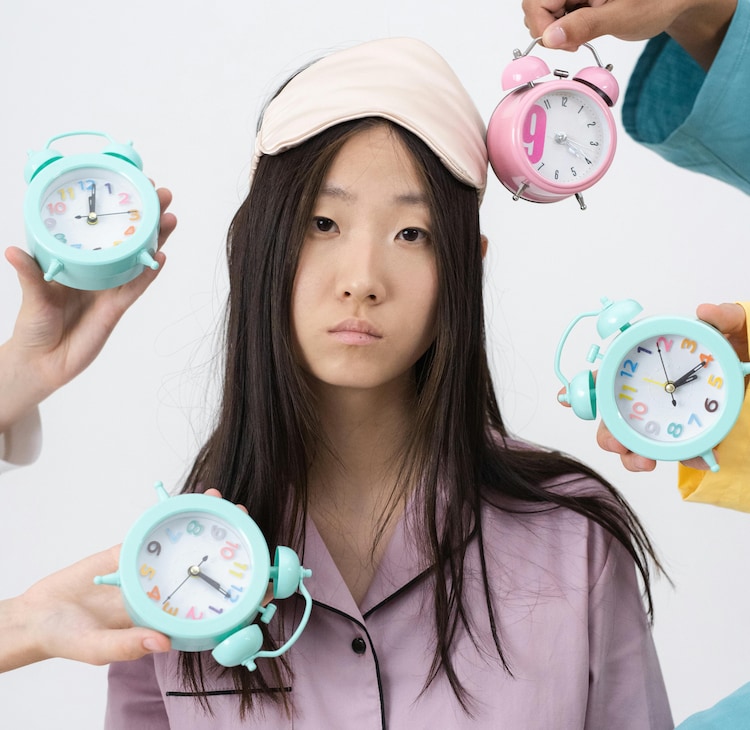
'Still sleeping?' The most annoying question in Indian homes
Tell us you've never been judged for sleeping a little extra or taking an additional nap, and we'll stop right here. The truth is, Indians love shaming others for sleep, even though it is one of the most essential things the body needs to function properly.
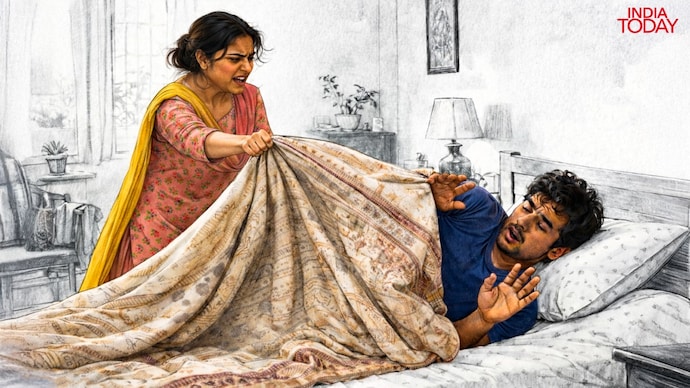
Sleep is a universal necessity, yet somehow people still manage to turn it into something worth judging | Photo: Generative AI

New Delhi,UPDATED: Apr 17, 2026 11:52 IST
Be honest, how many times have your parents taunted you for sleeping till 9 am? How many times have you been called lazy or even unproductive for taking an afternoon nap? How many times have you seen raised eyebrows when you said you need eight hours of sleep to function properly?
We know you've lost count because it happens practically every other day.
Sleep is something every human being needs, yet in our culture, it comes with a surprising amount of judgment.
People love bragging about surviving on just a few hours of sleep and still getting through the day. And it's not just older generations; even people our age do it. You probably know that one colleague who glorifies late-night work and then shows up proudly for an early morning meeting.
Even Alia Bhatt was questioned when she recently shared that she gets around eight to nine hours of sleep every day. After the actor's remark, Sadhguru responded with a question that caught her off guard: "That's a fourth of the day. When will you live?"
Rest is treated like a luxury, while exhaustion is often worn like a badge of honour.
In short, Indians love sleep shaming. Judging how others sleep may seem harmless, even playful, but it points to a bigger problem: the belief that being constantly busy matters more than being healthy.
But why do Indians do it so much?
Society loves people who look productive and always rewards visible hard work, whether that means putting in long hours or pushing through discomfort. So naturally, sleep takes a back seat, even when it comes at the cost of our health.
According to Dr Sharadhi C, consultant – psychiatry, Aster CMI Hospital, Bengaluru, in many Indian families, sleep-shaming happens because people often link waking up early with discipline, success, and good character, while sleeping longer is seen as laziness.
"This thinking comes from traditional values, older routines, and a culture that praises hard work and visible effort. Social comparison also plays a role, as people judge others to feel better about their own habits."
Further, she tells India Today, "Psychologically, it shows a need for control, validation, and following social norms, where people believe their way is correct and expect others to behave the same way."
And then, there is the generational pride around struggle, which, as per Dr Sharadhi, plays a strong role in sleep-shaming in India, as many older people grew up with limited resources, strict routines, and the belief that success comes only through hard work and sacrifice.
This creates a mindset where suffering is respected, and comfort is questioned.
Not just this, but we also misunderstand taking rest quite often. This happens because we confuse it with laziness instead of seeing it as a basic need for health and recovery.
There is also limited awareness about how rest helps the brain process information, repair the body, and improve focus and performance.
"People may feel guilty resting because they tie their self-worth to how much they do, not how well they feel. This leads to ignoring signs of fatigue and undervaluing rest as an important part of a healthy life," mentions Dr Sharadhi.
Understand the real cost of sleep-shaming
When people are repeatedly mocked for needing sleep, they often start ignoring their body's signals. They stay up longer than they should, wake up earlier than needed, or feel guilty for simply resting.
Over time, poor sleep can take a serious toll on mood and mental health, focus and memory, immunity, heart health, hormones, metabolism, work performance, and even relationships.
"It can increase stress, anxiety, and even lead to burnout, especially for those already dealing with demanding schedules. It also spreads misinformation by promoting the idea that less sleep equals success, which is not true," the expert explains.
It is also vital to understand that when it comes to sleep, there is no one-size-fits-all. Some people feel great after seven hours. Others need nine. Teenagers naturally tend to sleep later. New parents are sleep-deprived. Night-shift workers live against the clock. People recovering from illness need more rest.

The need for change
Isn't the world already exhausting enough? Long commutes we can't avoid, digital overload we can't escape, academic pressure, demanding jobs, and financial stress that now has many people chasing side hustles. All of it leaves so many of us running empty, and that's exactly when we need support, not sarcasm for sleeping and recharging.
What needs to stop is commenting on how much someone sleeps and glorifying burnout while treating rest like a flaw.
Dr Sharadhi adds that this mindset needs to change because sleep is not a luxury but a basic need for the body and mind to function properly. Respecting different sleep patterns and encouraging healthy rest can improve overall well-being, performance, and happiness, and create a more supportive and understanding environment for everyone.
Before you go back to sleep
Sleep is not laziness. No, it is not weakness, and definitely not a character flaw. It is a basic human function.
So the next time someone casually says, "Still sleeping?", "You youngsters are always tired," or "When we were your age, we woke up before sunrise," know that it's not just banter. It's a problematic mindset.
- Ends