A (not too) serious look at '81: A roller-coaster ride
Though essentially intended as a satire, "a (not too) serious look at '81" is strictly confined to the bounds of feasibility. 1980 was, in many ways, a unique year, but by the time it drew to a close, events were starting to follow a predictable path. Correspondent Dilip Bobb risks a satirical backward glance at 1981.


Though essentially intended as a satire, "a (not too) serious look at '81" is strictly confined to the bounds of feasibility. 1980 was, in many ways, a unique year, but by the time it drew to a close, events were starting to follow a predictable path. Correspondent Dilip Bobb risks a satirical backward glance at 1981.
It was, quite simply, a year like no other that had passed before or was likely to come again. A dizzying series of political seismic shocks that dumped the country, and the Constitution, on their proverbial heads. As the Times of London recently acquired by the Maharishi Mahesh Yogi commented in its May 1 editorial: "It was as if some slow-burning fuse had silently reached its end in 1981 and triggered off a political explosion in India of unfathomable proportions."
In fact, the signals that 1981 was destined to be an unending roller-coaster ride surfaced almost as soon as Parliament re-opened for its budget session in early February. On opening day, all members of the Congress(I) boycotted Parliament in protest against the "uncooperative attitude of the Opposition" in resisting arrest under the Preventive Detention Act.
On April 1, just over one year after her triumphant return as prime minister, Indira Gandhi's government made international headlines when it announced that under a Presidential Order, a national referendum would be held to decide whether to switch over to a presidential form of government. Though unprecedented and unconstitutional, the Government justified the decision on the grounds that Parliament had ceased to function and drastic measures were needed to keep the wheels of government moving.
At noon on historic that day, a stunned nation heard Mrs Gandhi's shrill voice on national television and radio announce the referendum and the reasons for its necessity. Parliament, she declared, had "outlived its usefulness" and unless the "internal anarchy" that Opposition leaders had spearheaded was not controlled immediately, the country was doomed. She also highlighted the external threat to India in the form of the "aggressive military ambitions" of neighbouring Pakistan, where President Zia had just been ousted in a military coup led by an obscure corporal named Haha Khan.
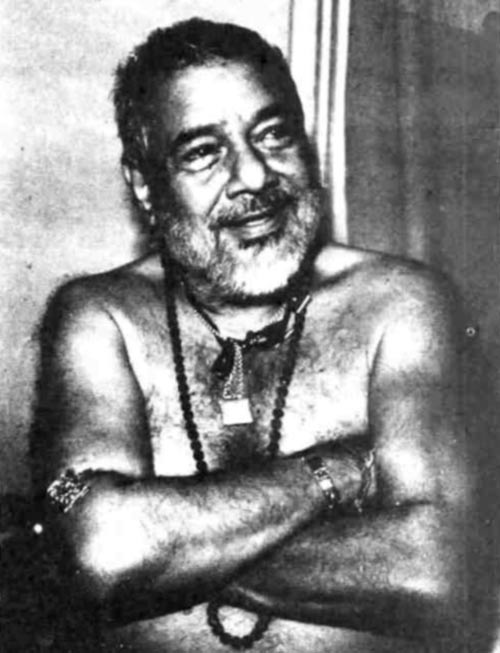
Opposition Problems:Naturally, the announcement was the spark for a countrywide outbreak of protests by opposition parties, the most notable being Raj Narain, general secretary of the newly-formed BJP(S), who refused to wear any clothes until the presidential1 system was abolished. Charan Singh's Lok Dal split right down the middle over the issue, leading to the formation of two separate parties - Lok and Dal. Charan Singh, as president of Dal. promptly defected and joined the ruling party, calling on all loyal kisans to support the presidential form of government, through his mouthpiece.Bharat. TheAslihalf of his newspaper, and Rs 35 lakh from the Kisan fund, had been forcibly taken away by the Lok Party.
Predictably, the newspapers were busy asking themselves the most puzzling question of the day. Why had President Sanjiva Reddy signed what clearly amounted to his own political death warrant since he still had 16 months before his presidential tenure ended?
The speculations were set at rest when Reddy announced that his stepping down was in response to a "call of conscience", just as the late V. V. Giri got the better of him in a "voting of conscience". But an intrepid reporter of an underground leaflet (censorship of the Press had already been self-imposed by the All India Newspaper Editors Conference) came up with the fact that the famous Char Minar in Hyderabad had been leased out in the name of a trust called All Andhra ex-Presidents' Trust, and both Reddy and relatives of V. V. Giri had found berths in it. The arrangement was leaked to the press by a disgruntled translator who had been fired for translating every word that Reddy said into English even though they had been spoken in English.